
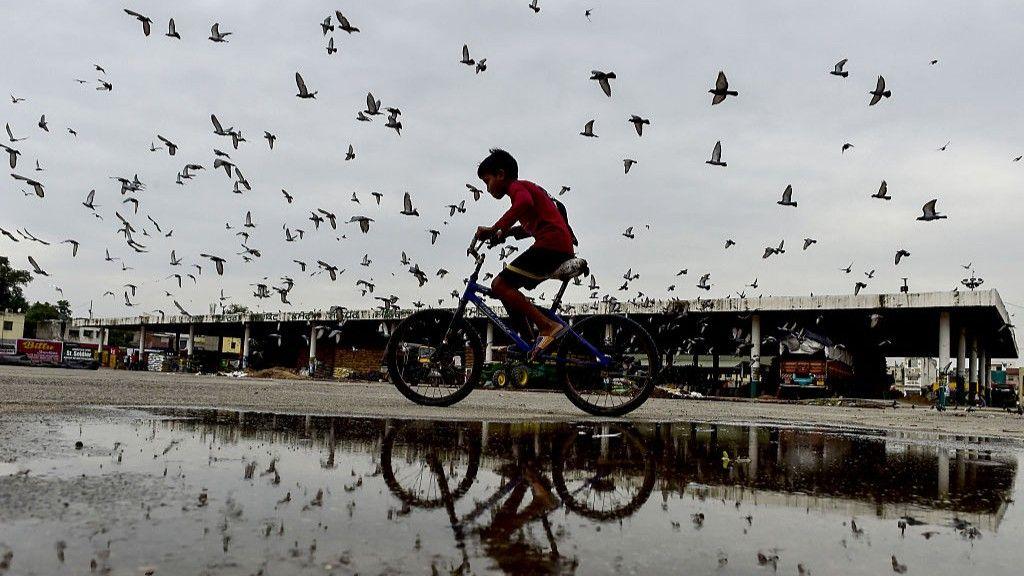
A new legal restriction prohibiting the feeding of pigeons in public areas within the western Indian city of Mumbai has sparked significant conflict among local authorities, health advocates, and individuals who care for birds.
This month, hundreds of individuals confronted police on two occasions while demonstrating against the shutting down of a long-standing site for feeding pigeons, known as a kabutarkhana. (Kabutar is the Hindi term for pigeon.)
Some removed the tarpaulin sheets covering the area and vowed an ongoing hunger strike. Law enforcement temporarily arrested approximately 15 individuals at a different demonstration, according to media accounts.
Officials implemented the restriction because of worries regarding health risks caused by pigeon feces.
The issue is not specific to Mumbai. In Venice, feeding pigeons in historic squares is prohibited. Singapore enforces significant penalties, while New York and London have established designated areas for feeding.
In India, cities such as Pune and Thane in the state of Maharashtra—where Mumbai serves as the capital—have introduced fines for feeding pigeons. Delhi is considering a similar approach.advisory against feedingthe avian creatures in communal areas.
The strict measures have upset animal lovers and those who feed birds, as pigeons have been deeply embedded in India’s cultural heritage.
Movies frequently feature scenes of people feeding grain to pigeons to create an image of cities such as Mumbai and Delhi, where these birds are commonly seen on balconies and air-conditioning units.
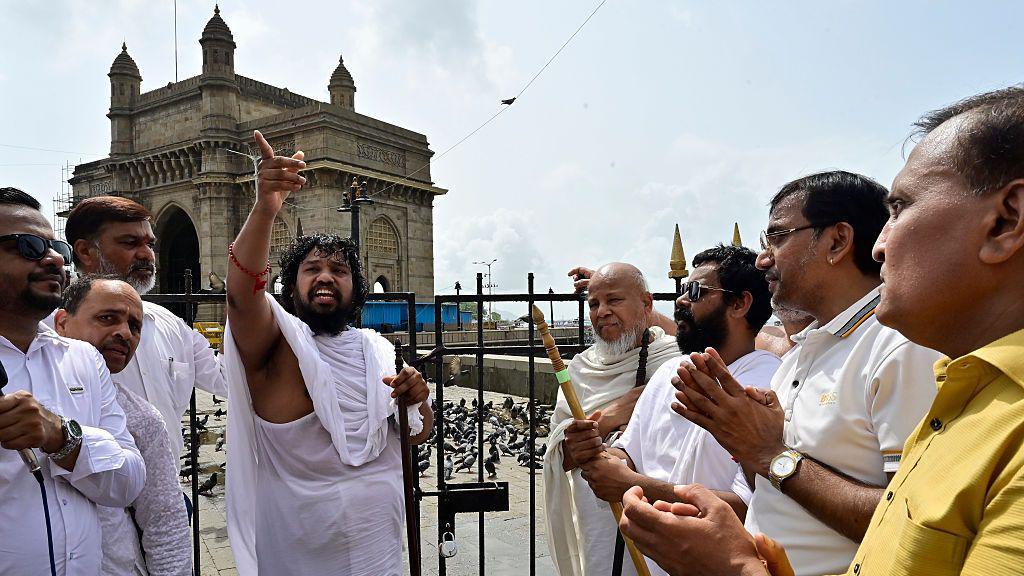
Some of Mumbai’s kabutarkhanas are renowned historical buildings and are believed to have started as charitable areas where people could contribute grain.
Religious feelings are also at play. In Mumbai, the Jain community, which views feeding pigeons as a sacred responsibility, has actively expressed their opposition.
In other places as well, numerous people have a connection with pigeons – regarded as emblems of peace and faithfulness.
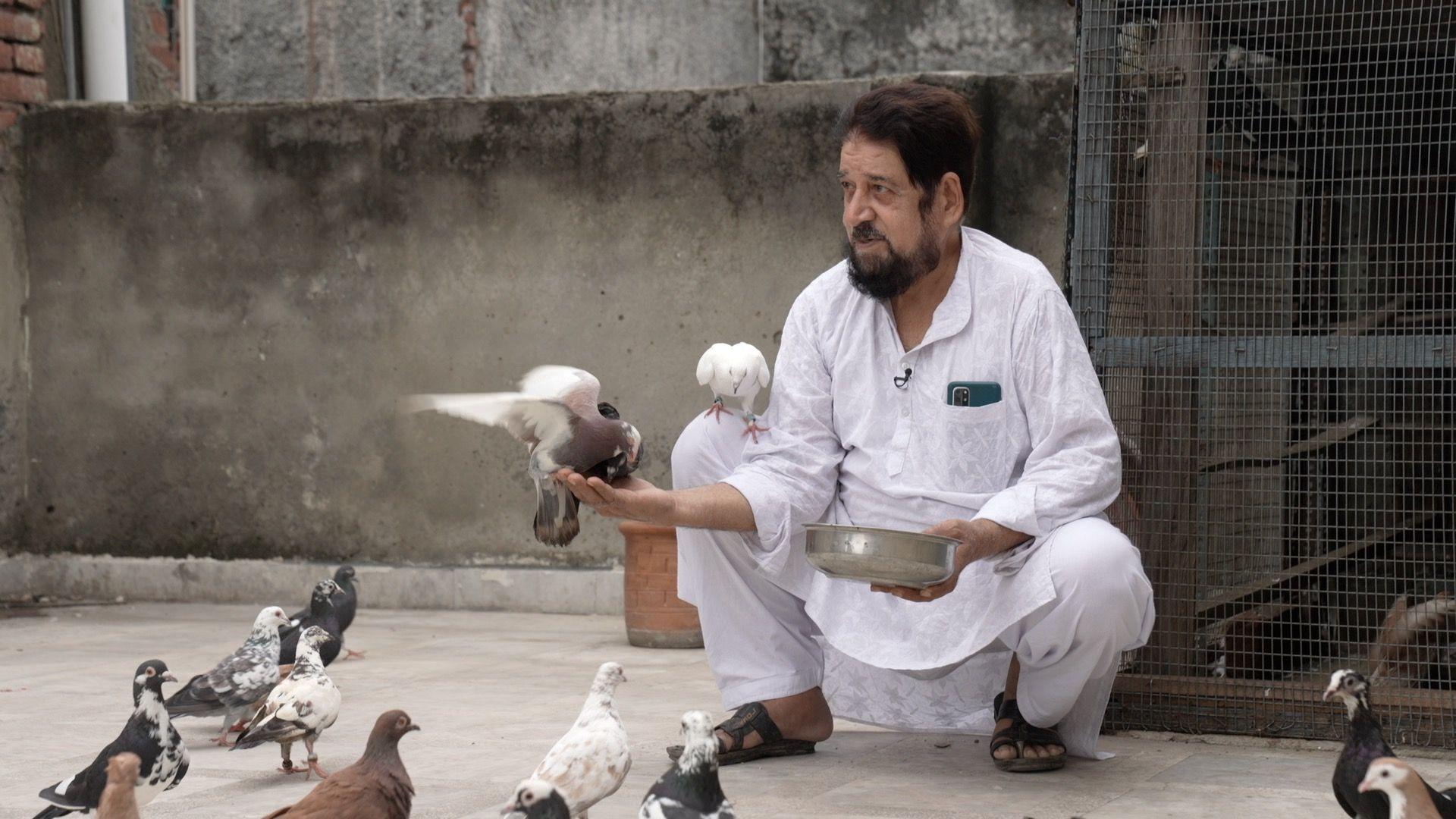
In Delhi, Syed Ismat claims he has been nourishing the birds for 40 years and views them as his family.
“They are pure. Maybe the purest of all beings. All they seek is a bit of compassion,” stated Mr. Ismat.
But these feelings are countered by research that indicates that extended exposure topigeon droppingscarries risks of respiratory andrespiratory illnesses.
The increase in India’s pigeon numbers in recent years has raised this danger, leading to the implementation of restrictions.
A biodiversity specialist from Delhi, Faiyaz Khudsar, states that the easy access to food has caused an increase in the pigeon population in various nations.
In India, he mentioned, the issue is made more difficult by a reduction in birds such as the goraiya, also referred to as the house sparrow, which are being gradually replaced by pigeons.
“Due to easy access to food and the absence of predators, pigeons are reproducing more rapidly than before. They are surpassing other city birds, leading to a loss in biodiversity,” Mr Khudsar stated.
- Within the world of Old Delhi’s sole female pigeon trainer
- Using counterfeit eggs to manage pigeon numbers
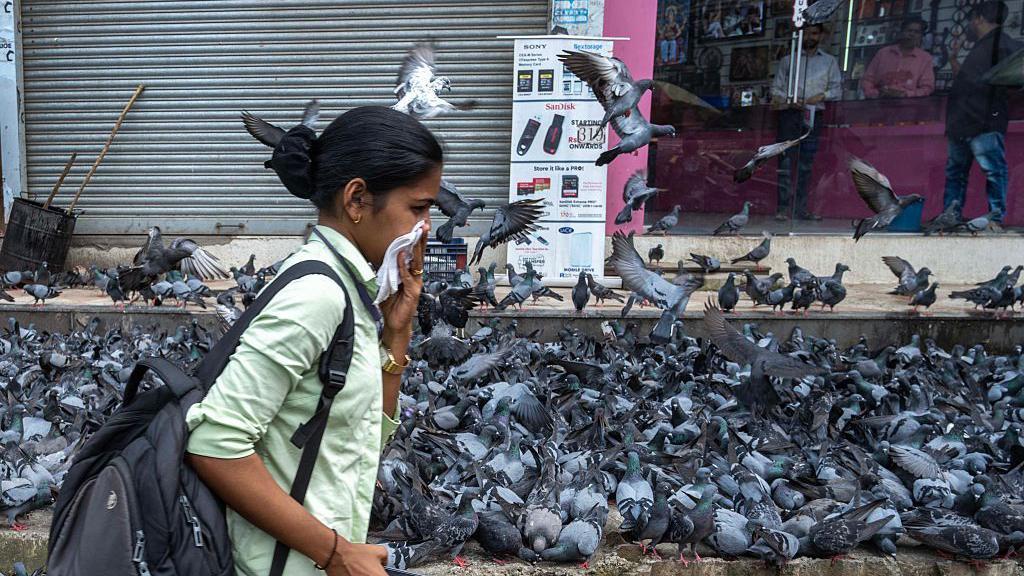
The 2023 Report on the Status of Birds in India statespigeon populations have increased by over 150%since 2000 – the most significant increase among all bird species – departing from residences and open areas due to their excrement, as every bird can generate as much as 15kg (33lbs) annually.
Research indicates that these fecal samples contain at leastseven categories of zoonotic diseaseswhich may lead to illnesses like pneumonia, fungal infections, and potential harm to the lungs in people.
Nirmal Kohli, a 75-year-old individual living in Delhi, began experiencing a continuous cough and faced difficulty in breathing several years back.
Eventually, a CT scan revealed that a portion of her lung had collapsed,” says her son Amit Kohli. “The doctors attributed it to exposure to pigeon droppings.
Last year, an 11-year-old boy diedin Delhi due to hypersensitivity pneumonitis – a condition that leads to lung inflammation. Physicians stated the cause was extended contact with pigeon droppings and feathers.
RS Pal, a lung specialist, mentioned that such situations are frequent.
“Even if you don’t feed pigeons directly, their droppings on window ledges and balconies can lead to hypersensitivity pneumonitis,” he stated.
We also observe bacterial, viral, and fungal infections among individuals who frequently handle pigeons.
These worries prompted the Mumbai municipal authority to introduce the feeding restriction last month and initiate an operation to tear down the feeding centers.
Demolition work has been paused, but the Bombay High Court has rejected a request to overturn the feeding restriction, stating that public health is “paramount” and directing strict measures against unauthorized feeding.
Delhi’s mayor, Raja Iqbal Singh, stated that affection for birds should not be prioritized over the health and welfare of people.
“Feeding areas frequently become unclean, causing bad odors, infections, and vermin. We are striving to reduce feeding,” he stated.
However, numerous animal enthusiasts hold a different opinion.
Mohammad Younus, who provides grains to a feeding station in Delhi, claims that every animal has the potential to transmit illnesses when cleanliness is not ensured.
“For the last 15 years, I’ve been surrounded by pigeons. If anything were to occur, it would have affected me as well,” he stated.
In Mumbai, a Jain monk stated in Marathi that thousands of pigeons would face starvation because of the feeding restriction.
Megha Uniyal, a champion for animal welfare, highlighted the lack of clarity regarding the enforcement of the restriction on feeding pigeons.
“Regarding the regulation of pigeon feeding, it is a term used by officials, but no one truly knows what it actually means,” she stated.
Amid these conflicting claims, initiatives are underway to discover a balanced approach.
Ujjwal Agrawal, from People for the Ethical Treatment of Animals (Peta) India, proposes restricting pigeon feeding to specific morning and evening times.
“This provides sufficient time for community organizations to clean the area and ensure cleanliness. In this manner, we honor both public health and emotional connections,” he stated.
The Mumbai High Court has formed a panel of specialists to propose options, and local municipal authorities indicate that regulated, timed feeding could be permitted according to their recommendations.
For Syed Ismat, the answer involves reevaluating the connection between birds and city environments.
“Perhaps it’s time to rethink how we share our cities, not only with pigeons but with every kind of life,” he stated.
Further reporting by Sharanya Dayal in Delhi
Follow News India onInstagram, YouTube, Twitter and Facebook




 jasdooit
Leave a comment