
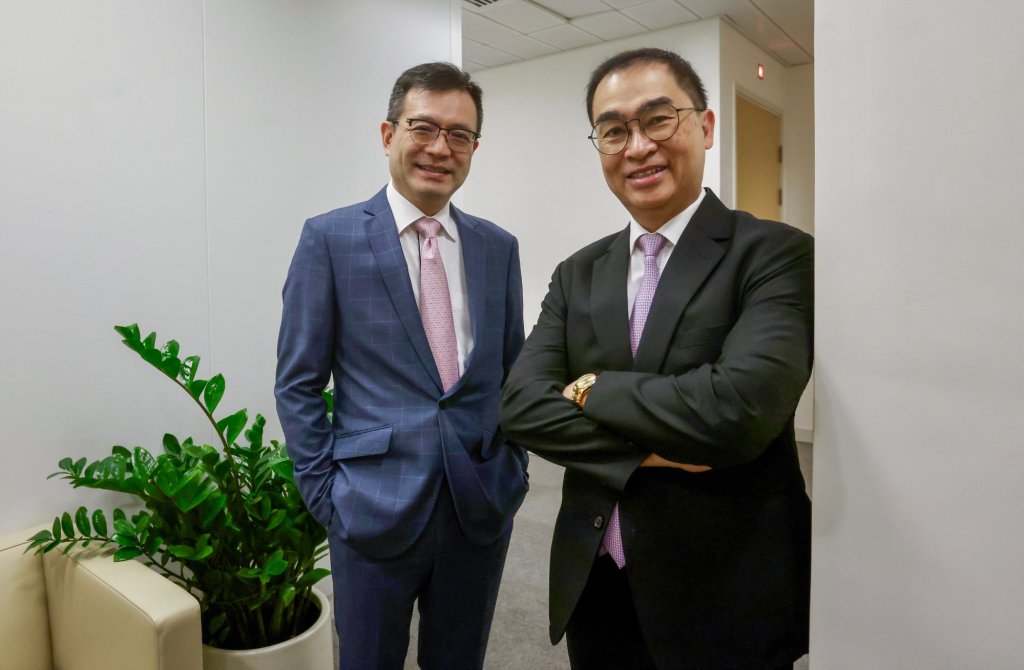
The government aims to reduce obstacles, but challenges like the difficulty of obtaining patients’ complete medical records still exist.
Patients in Hong Kong may gain advantages by participating in additional clinical trials conducted in mainland China, while individuals on the other side of the border could also benefit, as stated by the CEO of a government-affiliated institution that is examining these initiatives and aiming to enhance biomedical innovation within the Greater Bay Area.
Professor Bernard Cheung Man-yung, head of the Greater Bay Area International Clinical Trial Institute, stated that his group would look into projects that served patients.
“Can a patient from Hong Kong travel to the Greater Bay Area, or specifically Shenzhen, to participate in a clinical trial, or can a mainland patient come to Hong Kong to take part in a research study? This is something we will investigate,” Cheung mentioned in an interview last week.
Are you curious about the most significant issues and developments happening globally? Find the information you need withSCMP Knowledge, our latest platform offering handpicked content including explainers, FAQs, analyses, and infographics, presented by our acclaimed team.
The Greater Bay Area initiative is the central government’s plan to link Hong Kong, Macau, and nine additional cities in Guangdong Province into a major economic hub.
The proposal to set up the institute was initially introduced in Chief Executive John Lee Ka-chiu’s policy speech in 2023. It sought to offer a comprehensive clinical trial support system for medical research organizations, aligning with the city’s goal of becoming a center for health and medical innovation.
Since it opened last November within the Hetao Shenzhen-Hong Kong Science and Technology Innovation Cooperation Zone, the institution has been responsible for aligning resources between local public and private sectors and supporting mainland and international pharmaceutical companies in conducting clinical trials.
However, it is not involved in the daily activities of specific cases.
Individuals may gain access to more sophisticated treatments through clinical studies, offering optimism to patients who do not benefit from current medical options.
Cheung mentioned that patients could gain advantages from participating in trials located outside the country, as some procedures and therapies were exclusively available at particular hospitals.
However, certain matters would have to be resolved prior to the practice being implemented on a larger scale, he mentioned.
If a patient travels from the mainland to Hong Kong for a trial, can he return to his hometown right away, if an observation period is required?” Cheung asked. “What can be done if he feels unwell on the mainland?
In the long term, the institute was also looking into advancing clinical trials within outpatient clinics, which serve a significant population of patients with chronic conditions, Cheung mentioned.
At present, the city’s medical research studies are primarily carried out in large hospitals, including those connected to the two medical universities.
Professor Stephen Chan Lam, from the Department of Clinical Oncology at the Chinese University of Hong Kong, mentioned that enrolling participants from outside the region in clinical trials could enhance the number of subjects in research.
Research could be conducted more efficiently, and there would be motivations for drug companies to establish themselves in Hong Kong,” Chan stated. “We could draw individuals to Hong Kong for investment, research, and even to open regional offices.
He mentioned that the primary challenge for patients participating in cross-border clinical trials is the difficulty in obtaining full medical records and documents across the jurisdictions of Hong Kong and the mainland.
In order to comply with the clinical trial regulations set by key regulatory bodies, including the United States Food and Drug Administration and China’s National Medical Products Administration, researchers are required to retain all original patient medical records throughout the trial period—known as “source documents”—for inspection.
They cover any unexpected hospital admission when a patient suddenly becomes ill in their hometown.
If a patient is hospitalized in Zhuhai or Shenzhen, it would be extremely challenging for Hong Kong to gather all the original records,” Chan stated, referring to individuals who participated in studies based in Hong Kong. “At present, there is no system in place for us to access this information.
In the same way, there is no system in place for hospitals on the mainland to access a patient’s full medical history from Hong Kong.
He mentioned that establishing a system for sharing medical records across borders would need high-level governmental involvement.

When questioned about the advancements in enhancing data transfer efficiency between Hong Kong and the mainland, Cheung mentioned that both governments were “actively” engaged in conversations regarding the matter.
“The government aims to eliminate unnecessary obstacles. However, there are two key principles: safeguarding individual privacy … and national security,” he stated, without providing additional details.
The institution recently revealed its initial international initiative, which includes a treatment for HIV being collaboratively created by the University of Hong Kong (HKU) and Immuno Cure Biotech, a firm operating in both the city and the mainland.
The HIV vaccine is part of the five clinical trials that the institution has supported, which also include studies on liver and lung cancers. Seven additional initiatives are in the planning stage.
To date, the institution has engaged with 72 pharmaceutical companies, higher education institutions, and research centers for talks.
Yuen Man-fung, a chair professor and head of the gastroenterology and hepatology division at HKU, stated that the city has benefits for carrying out clinical trials related to liver diseases because of a relatively high patient population and the city’s long-standing experience and successful history in research.
He mentioned that the institution would assist in connecting aspiring researchers with pharmaceutical companies looking to carry out trials in the city.
“This platform would essentially assist local researchers, particularly in developing talent,” he stated.
More Articles from SCMP
Swatch apologizes for ‘slanted eyes’ advertisement following online criticism in China
The promising tech talent of Hong Kong faces challenges amid the US-China competition.
This piece was first published in the South China Morning Post (www.scmp.com), a top news outlet covering China and Asia.
Copyright (c) 2025. South China Morning Post Publishers Ltd. All rights reserved.




 jasdooit
Leave a comment