
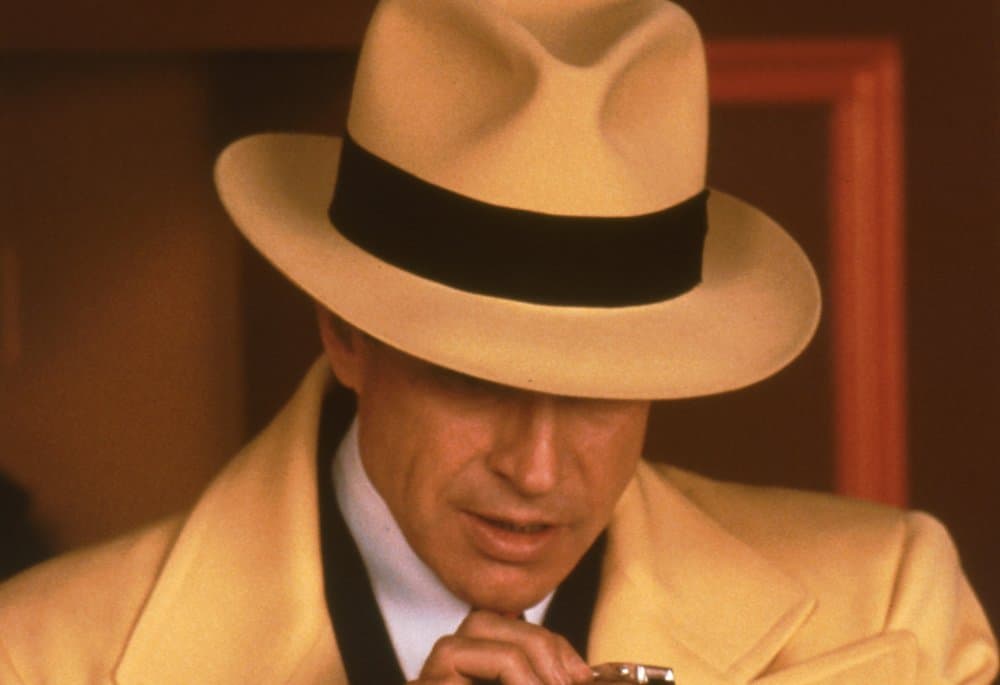
The unique method through which Disney funded its collection of films in the 1980s and early 1990s, including the 1990 movie featuring Warren BeattyDick Tracy.
Dick Tracywas frequently regarded as a significant shift in Disney’s cinematic approach during the 1990s. Featuring and directed by Warren Beatty, the 1990 comic book film marked the financially cautious studio taking its first steps into high-budget blockbuster production, with the aim of emulating the success of the previous year’s massive hit,Batman.
For Disney, investing $46 million in one film – the production cost ofDick Tracy– was virtually unknown in 1990. To spend at least the same amount again on promoting it? It would have been the last studio in town to do so back then. While this was the same year Fox was investing $75 million intoDie Hard 2, and Carolco was pleased to pay $65m forTotal Recall, these were the figures that left Hollywood industry analysts in shock. ‘How could a film with such a high budget ever turn a profit?’ was the common question.
Disney had faced the void of this withWho Framed Roger RabbitIn 1988, despite its blend of live action and animation, the film’s negative cost came in just below $60 million. It was a big success, which might have encouraged the studio a bit. However, it was clear that the company’s live-action division was more at ease with movies costing between $15 to $30 million, targeting mid-market content that didn’t need a summer blockbuster release.
Dick Tracywas a shift in direction, and its inability to generate significant revenue at the box office would force Disney back into financial difficulties for much of the decade. However, what is frequently ignored is how Disney managed to secure the $46 million needed to cover the costs.Tracyat the beginning. In fact, that’s how Disney was funding most of its films during that period. Enter stage left, the Silver Screen Partners.
The narrative begins several years prior. In 1982, a broker named Roland W. Betts, who was employed by the stockbroker EF Hutton, proposed a limited partnership concept. Under the name Silver Screen Partners, this initiative aimed to let investors channel their money into films, ensuring they would receive their financial returns before the studio claimed its profits.
In many respects, it was a pioneering approach. By the 2000s, numerous studios began seeking to divide the expenses and risks of big films through co-financing deals. In the 1980s, Silver Screen Partners was among the first, initially gathering capital for upcoming movie projects for HBO, which was aiming to enter the film industry. Although HBO didn’t capture all the benefits if a film became a hit, it wasn’t taking on the entire risk, as another party was sharing the financial burden.
The initial limited partnership was launched in 1982, and individuals quickly showed interest. It was highly oversubscribed, with 13,000 investors contributing $83 million. That $83 million was then used to finance the westernFlashpoint, launched in 1984 and featuring Kris Kristofferson along with his beard.
Among the eight films that the initial group of Silver Screen Partners invested in, the most prominent was 1986’sThe Hitcher, featuring Rutger Hauer. Other films included the comedy led by Judge ReinholdHead Office, Patsy Cline biopic Sweet Dreams, and the Tom Hanks-ledVolunteers. There were no standout successes in that area, but there was evidence that the model was effective. HBO had reduced its risk; investors had recouped their investment. And there was a desire for further efforts.
Round Two
HBO therefore aimed to proceed with a second round of investment, and Wall Street also wished to expand the opportunity for individuals to directly finance films. However, within Hollywood, people had started to take note of the developments. The film industry was increasingly perceived as high-risk – this was the era when Coca-Cola decided to acquire a movie studio (Columbia) and was sufficiently alarmed by its financial losses to sell it a few years later to Sony. Moreover, movies were becoming progressively more costly. Thus, there emerged a potential solution: a substantial pool of funding that could be accessed, which many others desired.
Therefore, even though HBO might have wished to proceed with another round, Roland W. Betts’s attention was naturally drawn when Disney showed interest.
Disney had not experienced a successful series of live-action films during the first half of the 1980s, so it decided to bring in two executives from Paramount – Michael Eisner and Jeffrey Katzenberg – along with the late Frank Wells from Warner Bros to guide the company towards a different path. Together, the three had been part of successful projects such asThe Exorcist, Indiana Jones and the Temple of Doom, Beverly Hills Cop and Superman II. Although Disney had produced a few good films during that time, such asTron, Dragonslayer, Herbie Goes Bananas, and The Black Holewere more popular than viewed during that period. Disney’s film division had been facing declining profits during the first half of the 1980s, and fell into a loss in 1983.
But eyes were opened when 1984’sSplash– featuring Tom Hanks and Daryl Hannah – became a major success, just as the new team was getting comfortable in their offices. Surprisingly, as Variety noted at the time, this was Disney’s first major box office success since 1964’sMary Poppins. Katzenberg, Eisner, and Wells acted swiftly to reverse the situation, with altering the method of financing Disney’s movies being a part of this effort.
Silver Screen Partners II ultimately became solely a Disney venture, much to HBO’s dismay. The new Disney leadership aimed to secure approximately $150 million for investment in 10 to 15 films. The plan was for Silver Screen Partners II to contribute roughly a quarter of the funding for these movies, enabling Disney to significantly boost its production volume. Investors in this arrangement had no say in Disney’s film selections beyond writing checks, unlike HBO, which had previously allowed some influence over its movie lineup. That was not the case here.
No need to worry, though. For Richard F. Williams, who worked as a broker at EF Hutton, the Disney name acted as a powerful catalyst for interest from the other side of the table. “The Disney name is magical,” Williams told the Chicago Tribune. “It generates a lot of interest in Florida,” he added, “it’s an excuse to go see a Disney movie and claim you own it.” This also highlights what made the Silver Screen investment opportunity unique. Most limited partnerships established for feature film financing were offered only privately. Here was an early form of crowdfunding in action: a public opportunity to invest in a film, regardless, to some extent, of whether you had millions in your bank account.
More than 20,000 people participated in the second round, generating $193m which Disney promptly began to invest. Among the 15 films it supported, several have since faded from memory, includingBaby: The Secret of the Lost Legendfeaturing William Katt and Sean Young, or an early film starring John Cusack,The Adventure of Natty Gann, featuring Meredith Salender. There is also one of Disney’s most notorious films, a dark animated fantasyThe Black Cauldron, which has the awkward reputation of being the movie that almost led to the closure of the animation department (but that’s a really intense tale for another day).
However, this time there were also achievements, and the new government secured some victories in a relatively short period.The Return to Oz, The Color of Money, Down and Out in Beverly Hills, Ruthless People, Stakeout, and Tin Men were part of that group of movies, and some of them became financial successes. By sharing the risk, Disney was able to take more chances, and it soon decided it wanted to go back to the Silver Screen Partners concept.
This, once more, caused HBO to feel uneasy. The first Silver Screen release had “placed us in the film industry significantly,” stated Maurice Singer, the company’s film production head at that time, to the Los Angeles Times. The company had aimed to access that third round of financing after Disney had secured the second.
“We like to believe we set the stage for Disney,” Singer – reasonably – remarked. Although Silver Screen Partners had significantly less influence over the films under its Disney agreement – characterized as a passive investor, and much more involved with HBO – it was clear that the movies from the second round were larger in scale than those from the first. HBO was not fortunate.
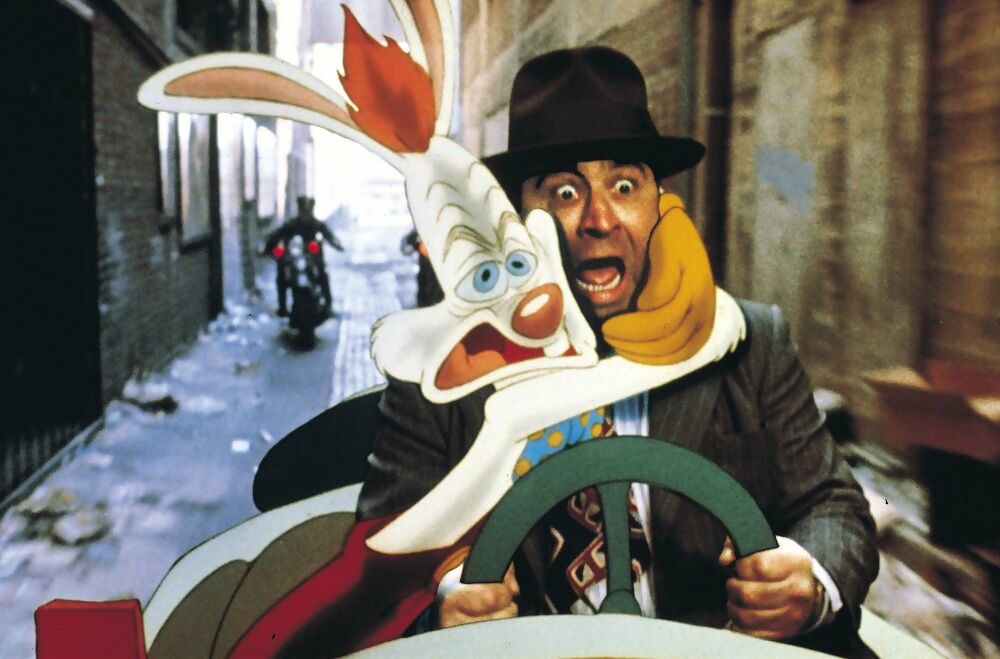
Silver Screen Partners III would once again be available only to Disney, marking the most prosperous fundraising campaign ever. Encouraged by the studio’s achievements, $300 million was secured. This funding supported 19 additional films, and the success rate was on the rise. The aforementionedWho Framed Roger Rabbitmoved past the line due to the funding, along withThree Men and a Baby, Cocktail, Big Business, Good Morning Vietnam, and Honey, I Shrank the Kids. That’s some return.
But this is where things began to become more complex; at this point, Silver Screen Partners was providing partial funding for the majority of Disney’s releases, and the fourth and final project – which contributed a significant portion of the financing for the animated blockbusterBeauty And The Beast– would result in a divergence. The reason? The concept had become overly successful, and Disney’s leadership had been swayed by other financial offers providing a more favorable arrangement.
The studio aligned itself instead with what it referred to as Touchwood Pacific Partners I,which the Los Angeles Times characterizedIn October 1990, it was described as “the primary source of funding for all live-action films at Disney’s three studios – Disney, Touchstone, and Hollywood Pictures.” Importantly, as the name implied, this time the focus was to seek funding beyond the United States – with the new collaboration mainly attracting investments from enthusiastic Japanese investors. As Erwin Okun, Disney’s spokesperson at the time, stated: “the entire film industry has been growing more global. And, honestly, the Japanese offered better conditions.”
Around 30 films later, events slowed by the end of 1993, following a decade in which Disney had relearned the skill of producing a successful movie. Ironically, it was about to begin a brief period of fewer live-action releases, while its animation department entered its second era of excellence.
The financial structure would also change, as Hollywood sought funding from abroad. During the 1980s and 1990s, the studios stopped being controlled by companies based in California, leading to new sources of funding emerging from international owners and investors who had significantly larger resources.
Disney was not among those who sold out: but it did undergo changes. And, following itsDick Tracypeer over the parapet, when it once more entered the realm of costly blockbuster films, with the $75 million 1997 action hitCon Air, it would cover the cost itself. Return the money to the box.
The post How Disney somewhat raised funds for its 80s and early 90s big films appeared first on Film Stories.


 jasdooit
Leave a comment