
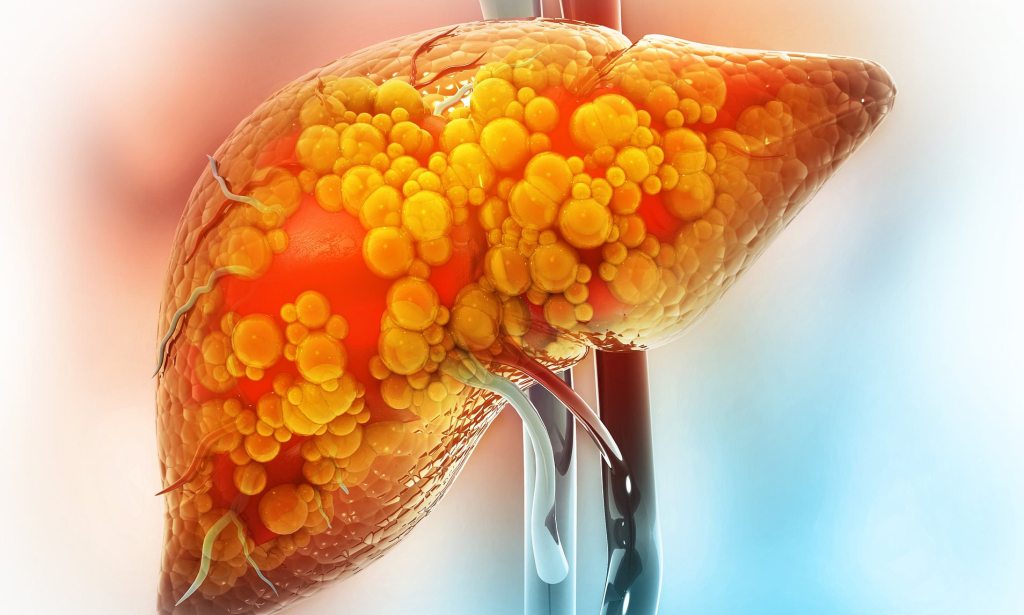
Unhealthy bacteria in the gut may be contributing to the rise in severe liver casescancer, researchers have disclosed in a troubling new study.
When individuals consider liver disease, many assume it results from overconsumptionalcoholintake—but specialists indicate that anything capable of boosting fat accumulation in or on the liver, like an unhealthy diet, may elevate the likelihood of the condition.
As per the British Liver Trust, liver disease is the sole significant illness experiencing a steady increase in mortality rates, with statistics having increased fourfold over the last 50 years.
However, Canadian scientists may have found a method to manage blood sugar levels and decrease liver harm, particularly in obese individuals at higher risk.
In the research, featured in the journalCell MetabolismScientists managed to discover and separate a molecule generated by gut bacteria that causes the liver to produce excessive sugar and fat.
Professor Jonathan Schetzer, a specialist in biomedical sciences at McMaster University and the lead researcher of the study, stated: ‘This represents a completely new approach to addressing metabolic conditions such as fatty liver disease.’
Rather than focusing on hormones or the liver specifically, we are stopping a microbial energy source before it causes damage.
He stated: For almost a hundred years, we have understood that muscles and the liver exchange lactate and glucose. What we have found is a new pathway in this cycle, where gut bacteria are also involved.
In 1974, the married scientists Carl and Gerty Cori showed how muscles generate L-lactate, prompting the liver to create glucose that returns to energize the muscle—referred to as the Cori cycle.
Canadian researchers applied this theory in the present study to examine the role of a less familiar compound known as D-lactate within the body.
They discovered that individuals who are overweight have increased amounts of this molecule, primarily produced by gut bacteria, which has been proven to elevate blood sugar and liver fat more significantly than the typical L-lactate.
To determine if they could halt this effect, the scientists created a ‘gut substrate trap’ that they expected would attach to D-lactate in the digestive system and stop it from being taken in.
They discovered that mice given this biodegradable trap experienced lower blood sugar levels, improved insulin sensitivity, and less liver inflammation and fibrosis—the formation of fibrous tissue in response to injury—compared to mice that did not receive the trap.
These modifications were noted despite no alterations to eating habits or physical weight.
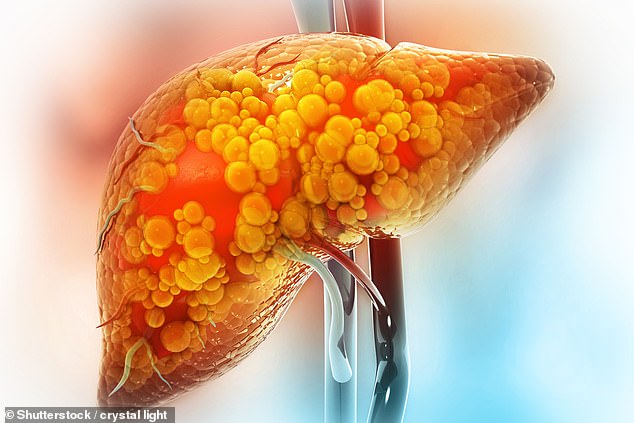
A prevalent type of liver condition, impacting approximately 1 out of every 5 individuals in the UK, is metabolic dysfunction-associated steatotic liver disease (MASLD), previously referred to as non-alcoholic fatty liver disease.
The illness results from the accumulation of fat in the liver that leads to inflammation.

In the long run, this results in scarring that may ultimately lead to cirrhosis.
If not addressed, it may result in liver failure or cancer, with individuals who are overweight and those with type 2 diabetes facing a greater likelihood of developing the condition.
Data from The Liver Trust showed that 11,000 people died from liver disease in the past year—most of these cases might have been avoided through early treatment and adjustments in lifestyle.
Professor Philip Newsome, head of the Roger Williams Institute of Liver Studies at King’s College London, previously stated to the Daily Mail: ‘Individuals who acquire MASLD are frequently overweight or suffer from diabetes.’
There is a rise in liver disease cases in the UK, with the problem being that symptoms typically go unnoticed until it’s too late.
He mentioned that it is a widespread and hazardous misunderstanding that only alcohol leads to liver scarring, since excessive fat and poorly managed blood sugar levels can result in the same damage.
Although MASLD typically does not lead to any symptoms, making it only identifiable when tests are conducted for a different health concern, certain individuals may feel tired, unwell, and experience pain or discomfort in the abdomen beneath the right side of the ribs.
In the United Kingdom, there is a significant feeling of urgency to address the rising obesity problem in order to reduce the burden on the National Health Service.
As per new statistics, almost two-thirds of adults in England are classified as overweight, with an additional 260,000 individuals joining this group in the past year.
In the meantime, over a quarter (26.5 percent)—approximately 14 million individuals—were categorized as obese.
Last month, general practitioners were permitted to prescribe weight loss injections, collectively referred to as GLP-1s, for the first time as part of an effort to address the crisis.
Approximately 1.5 million individuals are currently receiving weight loss injections via the NHS or private facilities, with millions more qualifying for treatment.




 jasdooit
Leave a comment