
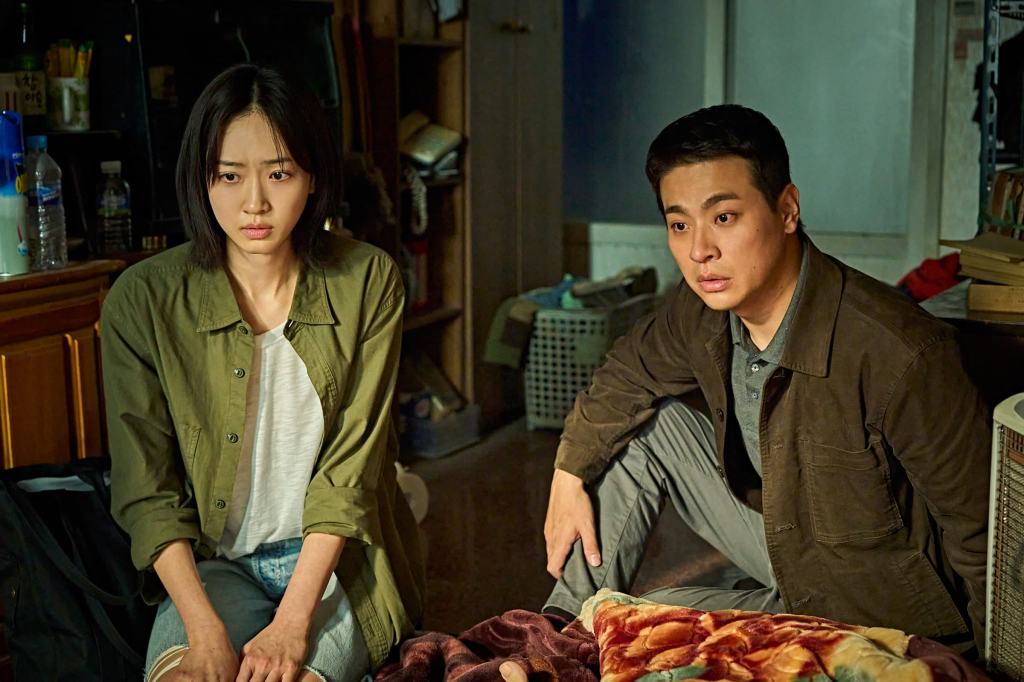
On the 29th of last month (local time) during the Venice Film Festival, director Park Chan-wook discussed the challenges facing cinemas and stated, “If a time comes when we cannot obtain funding, I will create a film even using a smartphone.” In an age where even established directors are concerned about their survival due to the ongoing decline of movie theaters, director Yeon Sang-ho—who directed *Train to Busan* and *Hell*—promptly started exploring new methods.
The movie *Face*, based on the director’s first graphic novel (released on the 11th), is gaining attention for its distinctive production approach. Despite having well-known actors like Park Jung-min, Kwon Hae-hyo, and Shin Hyun-bin, the film’s budget was just 200 million South Korean won. The filming wrapped up in roughly three weeks and 13 takes, which is about a quarter of the usual time required for a feature film. The crew consisted of a small, specialized team of approximately 20 individuals. Actor Park Jung-min sparked discussion after disclosing that he took part without receiving any payment for his acting.
During last month’s production meeting, director Yeon stated, “In today’s era of numerous media platforms, I believe that without diversifying our production approaches, we won’t be able to create films anymore.” The benefit of low-budget movies lies in their adaptability. He further mentioned, “Big-budget films tend to be less flexible, but this time, we were able to quickly implement ideas that emerged on set. Interestingly, we ended up filming more extensively than other projects.”
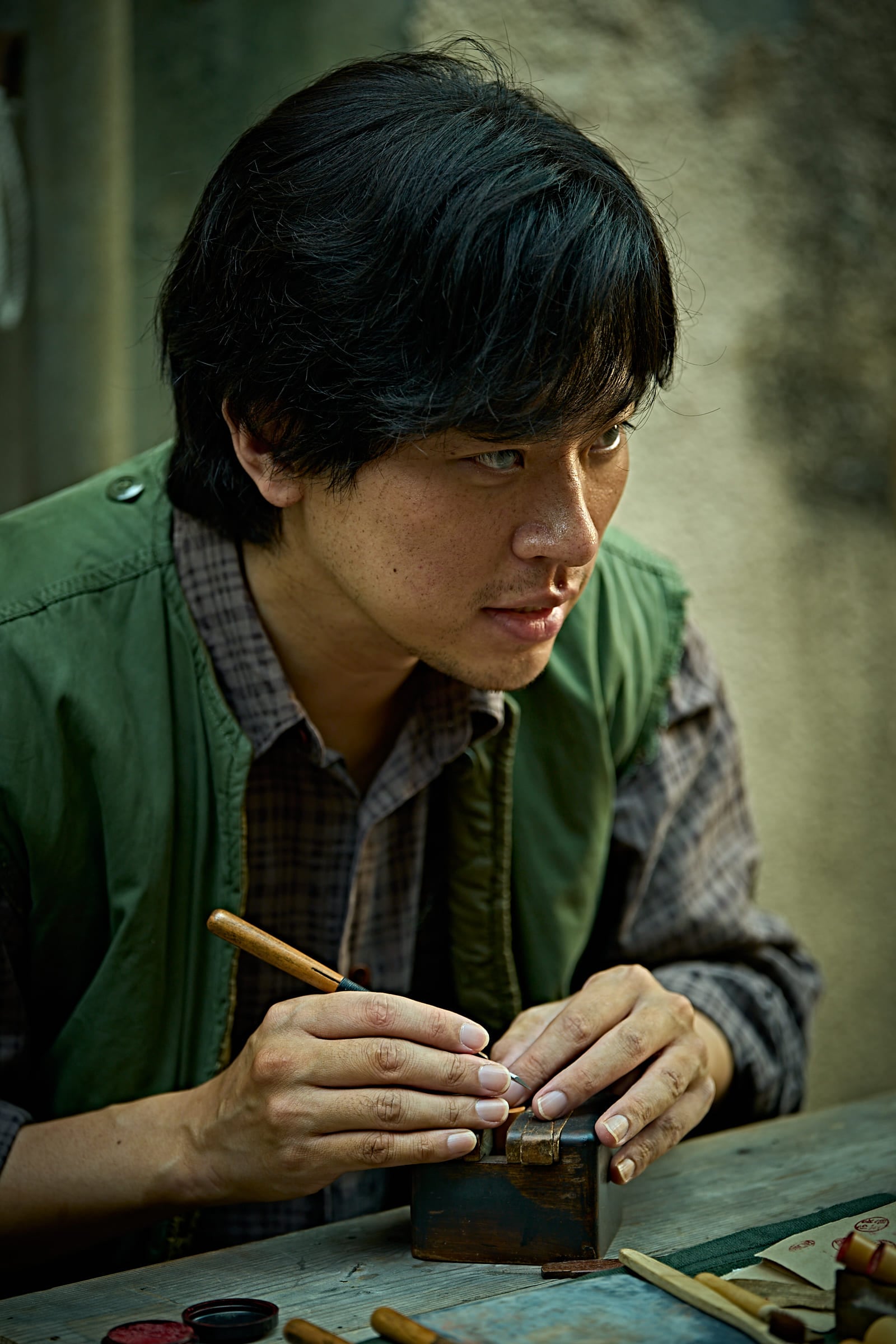
Although it has a limited budget, it shows great thoroughness. A phone call is received by Im Young-gyu (Kwon Hae-hyo), a blind and accomplished seal carver, and his son Dong-hwan (Park Jung-min). It turns out that Dong-hwan’s mother, who was thought to have left home, was discovered as skeletal remains after 40 years. Dong-hwan, together with the producer who was making a documentary about his father, starts to uncover the truth behind his mother’s death.
A distinctive enigma surrounding the discovery of the mother’s face maintains the audience’s intrigue until the very conclusion. The movie switches between the present day and the 1970s, with the mother, Jeong Young-hee, shown on screen without revealing her face until just prior to the end. They individually seek out people who claimed she worked at a textile factory near Cheonggyecheon, but each one only remarks, “Her face was unattractive.” They express disdain and revulsion, stating, “She was an ugly woman like a monster,” and “She was referred to as a dirty rag.”
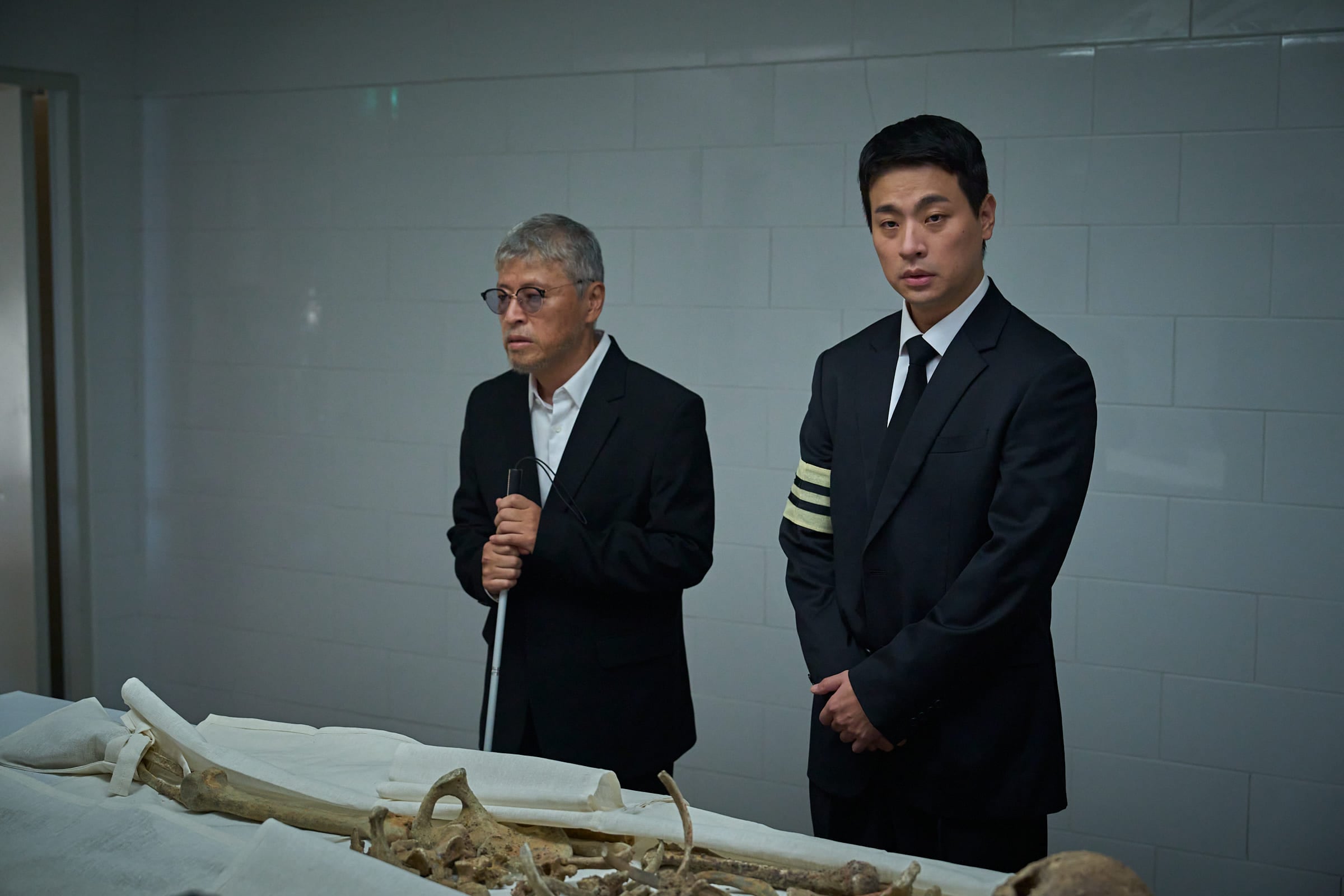
Similar to director Yeon’s initial films *The King of Pigs* and *Fake*, it is constantly disquieting and bleak. The movie continuously challenges the notions of beauty and ugliness. The main character, Im Young-gyu, is blind, yet he responds more acutely to beauty and ugliness. If “standards of beauty” are identical for those who are visually impaired and those who are not, where does the beauty we perceive originate?
A narrative set in a 1970s Cheonggyecheon garment factory also serves as an allegory representing modern Korean history. Im Young-gyu, who triumphed over hardship and became known as a “living miracle,” represents Korea’s growth-focused ideology. It compares the sacrifice of an individual who had to be forgotten behind remarkable accomplishments to the sorrow of a family.
Recently, the works of director Yeon have faced criticism for “starting strongly but ending weakly,” yet this film creates a lasting impression by unveiling the mother’s identity only in the final scene. It is a movie in which Yeon Sang-ho, who was dubbed the “Netflix crown prince” for his continuous collaborations with Netflix on projects such as *Hell* and *Cursed Battery*, appears to revisit his original artistic self. Director Yeon stated, “I believe that theaters are not disappearing but evolving. New theaters will bring about new kinds of films.”
※ This article has been translated by Upstage Solar AI.



 jasdooit
Leave a comment