
Officials from the Russian government have declared what might be a significant breakthrough in the battle against colorectal cancer.cancer, although information is limited.
Veronika Skvortsova, the leader of Russia’s Federal Medical and Biological Agency (FMBA), stated recently that the nation’s cancer vaccine, Enteromix, demonstrated a potential 100% effectiveness in early-stage testing.
She mentioned to the Russian news agency Tass that the vaccine “is now prepared for use; we are waiting for official approval” from Russian authorities. Nevertheless, the assertions have not been confirmed independently.
Enteromix demonstrated effectiveness in reducing colorectal tumors and delaying the spread of cancer during clinical trials. Russian officials also reported ‘encouraging advancements’ in creating vaccines for the aggressive brain tumor glioblastoma and certain forms of melanoma, including ocular melanoma, at later stages.
It remains uncertain if the vaccine was tested on humans, as preclinical studies in the U.S. use animals whose anatomy differs significantly from that of humans. The vaccine is based onan mRNA platform, the same one that supports Covid vaccines in the US.
The Covid-19 mRNA vaccine provides a small portion of genetic code to the cells. The cells interpret these directions and briefly produce a safe part of the virus, called the spike protein.
The immune system identifies this protein as foreign and learns to generate antibodies and other protective mechanisms against it, thus equipping the body to combat the actual virus if it is ever encountered. The technology is not restricted to viruses alone. The platform can be customizedto target cancer cells.
It remains uncertain how the Russian vaccine functions or its true level of effectiveness. Although government officials have highlighted favorable outcomes, they have not made public the data from preclinical trials.

The Enteromix vaccine still requires approvalprior to being accessible to patients, it must be approved by the Ministry of Health.
Russian officials stated that the vaccine reduced tumors in the colon and slowed the spread of the illness by 60 to 80 percent during early-stage testing.
State-run media has asserted that it is 100 percent effective in certain cases.
Dr. David James Pinato, a clinical scientist and specialist in medical oncology at Imperial College London, statedNewsweek:’I am worried about the quality of the data being made public, from a scientific point of view, as I am not able to fully grasp the current level of development of this Russian cancer vaccine.’
He stated, “If these are indeed preclinical findings, they are remarkable and intriguing. They represent another possible outcome that might eventually result in a medication down the line, but it’s certainly not something that should be recommended for use in patients at this stage.”
Numerous tailored mRNA-based cancer vaccines are at different phases of clinical testing and are advancing to Phase III trials in the United States and other countries. However, none have obtained FDA approval as of now.
Russian authorities did not clarify the term ‘preclinical,’ which typically involves testing in animals and laboratory cultures. The government failed to present any research proving this recent achievement or earlier phases of development.
It remains uncertain whether the Russian vaccine is targeted at younger individuals or adults who are most vulnerable due to their age.
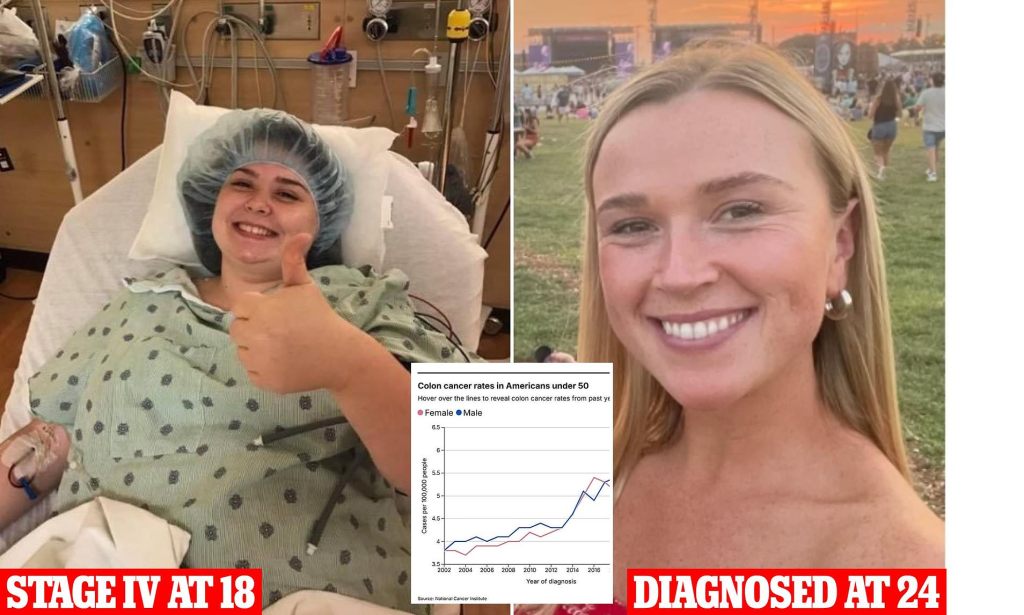
The incidence of colorectal cancer is increasing among individuals in their 50s and younger, a concerning pattern for physicians who typically encounter this form of cancer in patients aged 60 and above.
Starting from 2004, the rate has increased consistently by 1.6 percent annually among individuals between the ages of 20 and 39.

The increase is even more significant for individuals in their early 40s, with a two percent annual rise since 2012, while those in their early 50s experienced a 2.6 percent yearly increase. The prolonged growth reached its peak ina 50 percent rise in comparisonIn diagnoses between 2021 and 2022, it increased from 11.7 to 17.5 cases per 100,000 individuals.
In 2023, roughly 153,000 individuals received a diagnosis of colorectal cancer, with approximately 52,000 fatalities reported.approximately 19,000 cases and 3,750 fatalitiesin people under 50.
Older age is the primary major risk factor for colorectal cancer, a disease that originates in the inner layer of the colon but has the potential to rapidly spread to other parts of the body.
If detected at an early stage, about 91 percent of patients are expected to survive. However, as the condition progresses to stages III and IV, the survival rates decrease to 73 percent and 13 percent, respectively.
A 2016 reportdiscovered that over three-quarters of younger individuals with colorectal cancer received their diagnosis only after the disease had progressed, a percentage significantly higher than in older patients (63 percent).
The mortality rate is decreasing for individuals aged 50 to 64 and those 65 and older, but it is rising among adults between 20 and 40. However, death rates have been increasing in people under 55.by about one percentannually since the mid-2000s.
Issues such as ongoing tiredness, stomach discomfort, or alterations in bowel movements are often overlooked by younger patients and doctors alike, seen as typical problems like stress, irritable bowel syndrome, or piles, resulting in considerable delays in getting proper attention.
Since individuals under 45 are below the suggested age for regular cancer screening, there is no protective measure in place to detect hidden, early-onset cancers at an early stage.

As a result, by the time a diagnosis is eventually confirmed, symptoms are frequently already severe, and the illness has typically advanced to a later stage, leading to less favorable results.
Cancer formation is not a sudden occurrence, but rather a gradual, multi-stage process that may span several decades, starting when a sequence of genetic mutations builds up within a single cell in the colon over time.
Each genetic change offers a survival benefit, enabling several cells to slowly become uncontrollable, starting with the development of a precancerous polyp and ultimately leading to a cancerous tumor.
An extended lifespan offers more opportunity for these accumulating genetic mistakes to occur during regular cell division.
The body’s innate DNA repair processes grow less effective, and the immune system struggles more to detect and eliminate abnormal cells before they turn into cancerous ones.
The conventional trend has left a recent increase in cases among younger adults, including an increasing number in their 20s and 30s, particularly confusing and concerning for cancer specialists.
If a young individual is found to have an advanced Stage III or IV tumor, it suggests that the biological factors leading to cancer have been rapidly accumulating, compressing a process that typically spans 20 to 30 years into a much shorter timeframe of 10 or 15 years.
The exact cause behind this rapid cancer progression is still a critical issue in cancer research, with top theories suggesting factors such as contemporary eating patterns, environmental modifications, and alterations in the gut bacteria.
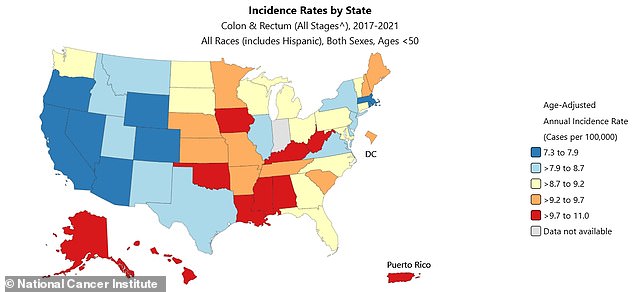
As per the most recent statistics, the number of early-onset colon cancer cases in the United States is projected to increase by 90 percent among individuals aged 20 to 34 between 2010 and 2030.
Teen rates have increased by 500 percent since the early 2000s.
The American Cancer Society predicts that 154,270 individuals in the United States will receive a colon cancer diagnosis this year, with 52,900 fatalities expected.
This occurs because, frequently, the immune system in animal models such as rodents or other species used to clinically test these vaccines does not replicate the complexity of the cancer genome or the human immune system.
Among the most encouraging approaches for preventing and treating cancer are vaccine-based treatments, which seek to identify and eliminate cancer cells.
But the American government recently declared that it wouldcancel nearly $500 millionin funding that aids in the creation of mRNA vaccines for influenza, COVID, or other contagious illnesses.
The effort to reduce financial support does not cover cancer research.
Nevertheless, certain researchers fear that the Trump administration could impose restrictions on mRNA vaccines, possibly resulting in a decrease in cancer-related research.
Dr. Ryan Sullivan, a cancer vaccine scientist and doctor at Massachusetts General Hospital, statedStatClearly, billions of individuals have been administered an mRNA vaccine. The implication that mRNA vaccines are hazardous is baseless.
I worry that this might spread to mRNA vaccines as a whole. Once there’s some momentum behind government actions, they tend to expand further.




 jasdooit
Leave a comment