
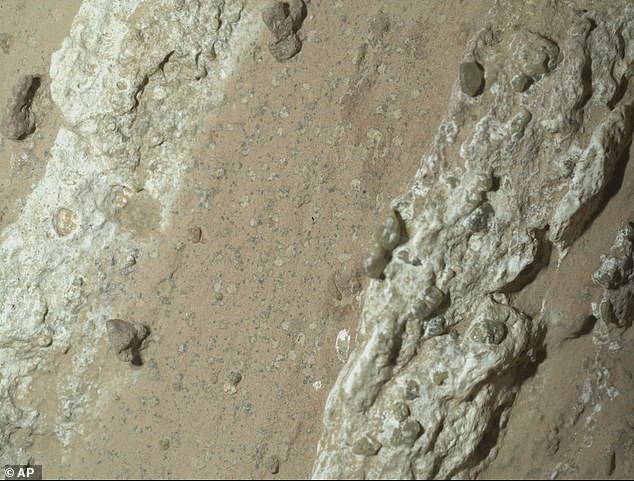
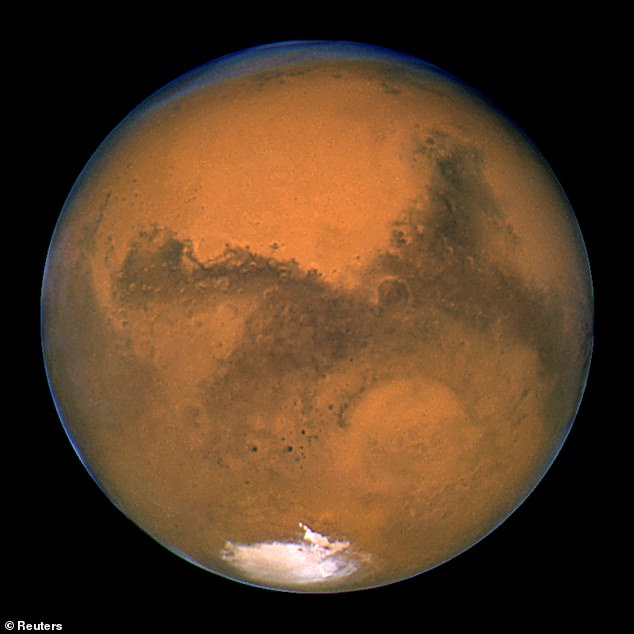
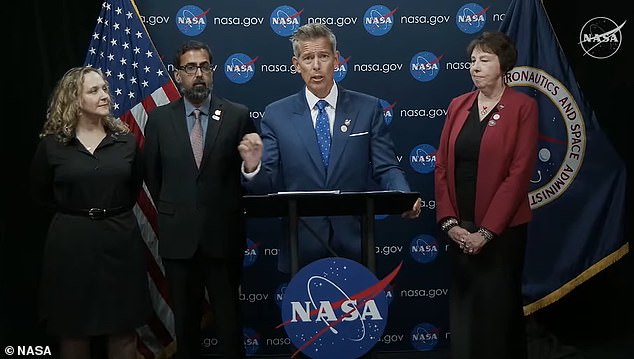
Yesterday, NASAmade the surprising declaration that its researchers have discovered the ‘most compelling proof’ to date of life’s presence onMars.
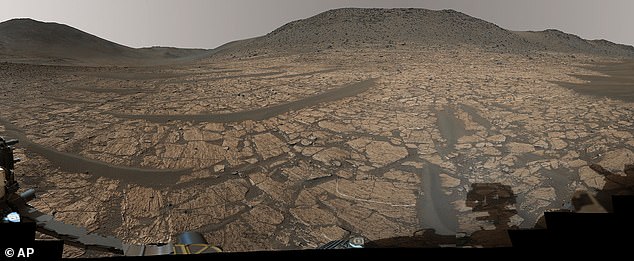
Last year, NASA’s Perseverance rover identified a dry river channel located north of the Martian equator, which is marked by reddish circular patterns referred to as ‘leopard spots’.
As stated by NASA administrator Sean Duffy, the space organization currently thinks these markingsmight have been left behind by ancient organisms that existed billions of years ago.
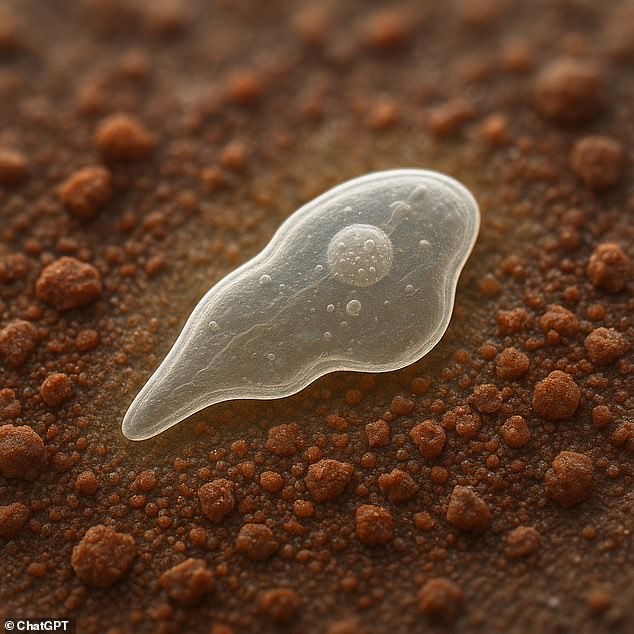
Now, researchers have uncovered what thesealienorganisms could have appeared as.
Any form of life that developed on Mars would have needed to deal with intense radiation, low gravity, and temperature fluctuations ranging from 20°C (70°F) during the day to -153°C (-225°F) at night.
Nevertheless, the researchers involved in this pioneering study believe that certain types of life can still develop.
If there was life on Mars, it would most likelycomprised of extremely basic microorganisms such as bacteria.
In the rare scenario that more advanced life forms emerged on Mars, they would have to evolve unique traits to endure this extremely unforgiving environment.
What did NASA discover on Mars?
While exploring an area referred to as the ‘Bright Angel’, NASA’s Perseverance rover identified a set of peculiar patterns that look like leopard spots.
Researchers refer to these areas as ‘reaction fronts,’ which are locations where chemical and physical processes have taken place previously.
Importantly, the onboard laboratory of Perseverance discovered that these areas contained two minerals rich in iron: Vivianite, which occurs in decomposing organic material, and greigite, which is created by microorganisms on Earth.
Dr. Keyron Hickman-Lewis, an Earth scientist from Birkbeck, University of London and a co-author of the NASA report, stated to the Daily Mail: ‘The types of organic-mineral connections seen at Bright Angel, as mentioned in this paper, are recognized to be created by microorganisms on Earth, making it a highly encouraging finding to observe something so comparable on Mars.’
Undoubtedly, I believe this is the strongest indication of life on Mars discovered so far.
Scientists are still unable to exclude the possibility that these markings might result from non-living processes, and Dr. Hickman-Lewis notes that this is not a definitive indicator.
Nevertheless, following a year of examining the data and seeking other interpretations, the scientists are now sufficiently certain to assert that this might be a ‘biosignature,’ a hard-to-find indication that confirms the presence of life.
Dr. Hickman-Lewis states: “The Mars 2020 team does not employ the phrase ‘potential biosignature’ without careful consideration.”
What might this existence resemble?
Possible indicators of life were discovered in an area known as Jezero Crater, a crater formed by an impact located slightly north of the equator.
Even though it is now a desolate area, billions of years ago, the Jezero Crater contained water that might have supported life.
If life was present in these waters, the most likely explanation is that it consisted of a basic microorganism.
Dr. Hickman-Lewis states: ‘The environment where these possible biosignatures were discovered appears to be a low-temperature, water-abundant setting, making it highly suitable for microbial life.’
In their study, which appeared in Nature, the scientists propose that microorganisms might have consumed the naturally present carbon, sulfur, and phosphorus found in the rocks.
These microorganisms would have subsequently ‘excreted’ the minerals that are now visible as leopard-like spots.
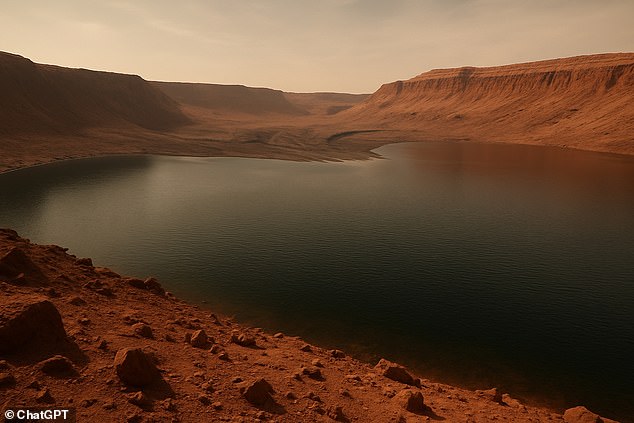
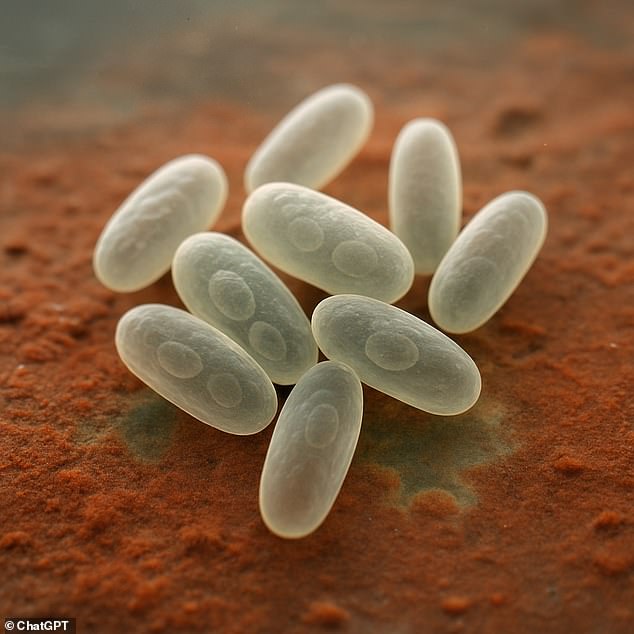
The environment on the surface would have been extremely difficult, yet scientists believe that basic forms of life might have managed to survive.
Dr. Sanjeev Gupta, an Earth scientist affiliated with Imperial College London and part of the research team, stated to the Daily Mail: ‘Liquid water existed on the surface during that period billions of years ago, making it a viable habitat.’
This could have been basic microbial life. We are able to state far more than that.
As we can only observe the remnants these microorganisms have left, it is challenging to determine their appearance or actions.
Nevertheless, it is possible to draw some broad forecasts using comparisons from Earth.
Professor Michael Garrett, an astronomer at the University of Manchester and head of the Jodrell Bank Centre for Astrophysics, who was not part of the research, said to the Daily Mail: ‘Imagine hardy bacteria, akin to Earth’s extremophiles that survive in highly salty, cold, or low-oxygen environments.’
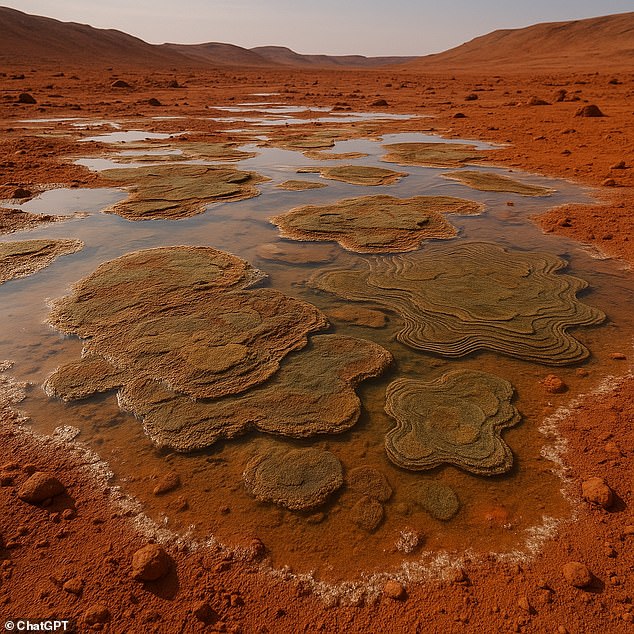
Excellent analogs include the microbial communities found in highly saline lakes or microorganisms that reside several kilometers beneath Earth’s crust, as well as those inhabiting the arid deserts of Chile.
These instances demonstrate that life can be challenging, simple, and resilient in areas where external conditions are harsh.
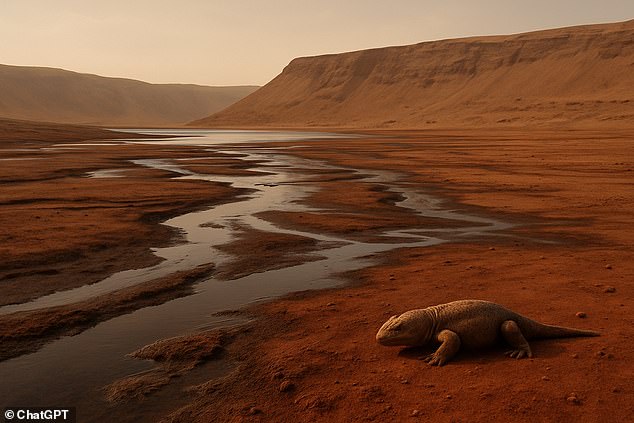
Could more advanced forms of life have developed?
If these leopard-like patterns are indeed biological indicators, the scientists suggest it is improbable that they were confined to a single location.
Perseverance is currently examining extremely old rocks beyond the Jezero Crater in search of evidence of life that may have been more broadly present.
Nevertheless, it is highly improbable that more advanced forms of life developed anywhere on Mars.
The scientists believe that microorganismsappeared on Mars at the same time that life was beginning on Earth.
Nevertheless, following approximately one billion years, Mars’ climate started to alter quickly when solar winds removed its atmosphere – resulting in a very cold and arid planet.
Professor Garrett states: “The severe conditions on Mars after one billion years would impose significant restrictions on the size and complexity of any potential lifeform.”
It took truly complex life, such as animals, another 3 billion years before theyemerged on Earth, where the environment was significantly more favorableto aid in the sustenance of energy-demanding intricate life forms.
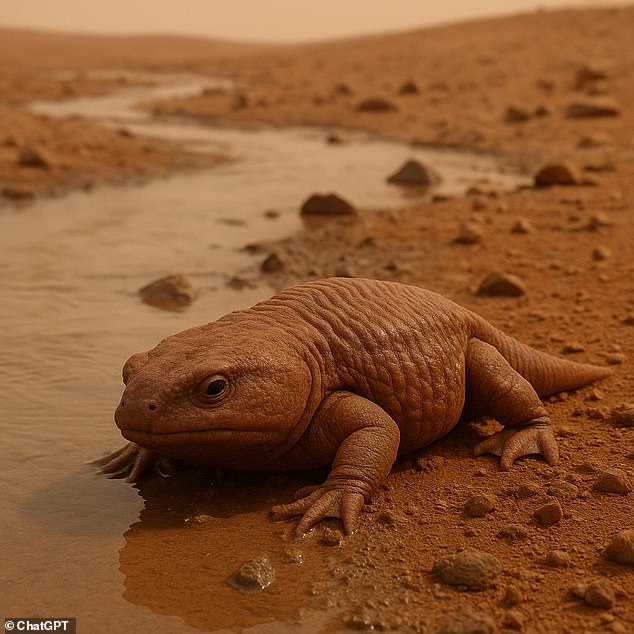
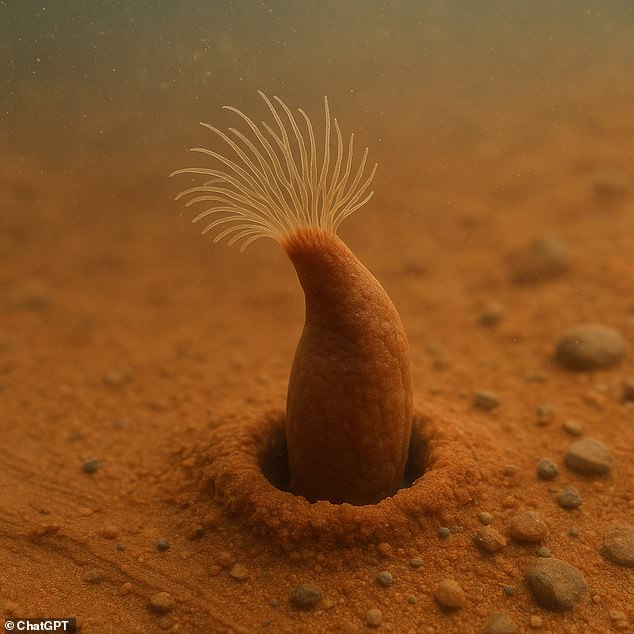
In the rare scenario that more advanced life forms emerged, Mars’ extreme environment would also impose significant limitations on their appearance.
“It would have to be modified to endure the strong UV rays from the Sun, freezing temperatures, and scarce liquid water – we rarely observe complex animal life in these conditions,” says Professor Garret.
He states: ‘If they existed, they would require protection from the sun’s ultraviolet radiation – perhaps a thick skin, or maybe spending most of their time beneath the Martian soil.’
This suggests that complex life could resemble organisms found on Earth that thrive in extremely difficult conditions, like desert lizards or basic filter-feeders that exist near hydrothermal vents.




 jasdooit
Leave a comment