
Hikers and walkers have an exciting chance to discover meteorite pieces that were spread across Scotland this summer, according to scientists.
The glowing meteor was seen by some Scots as it raced through the sky during the early morning of Thursday, July 3.
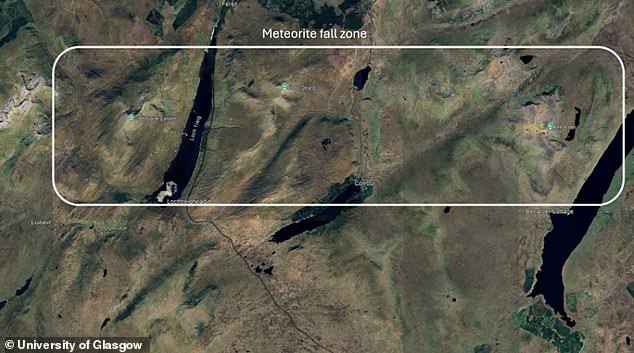
It is thought to have detonated above northern Scotland, with the ‘impact area’ spanning Loch Treig in Lochaber, Highland.
The airborne spectacle was recorded by several cameras and posted on social platforms, depicting a large yellow flash moving across the night sky.
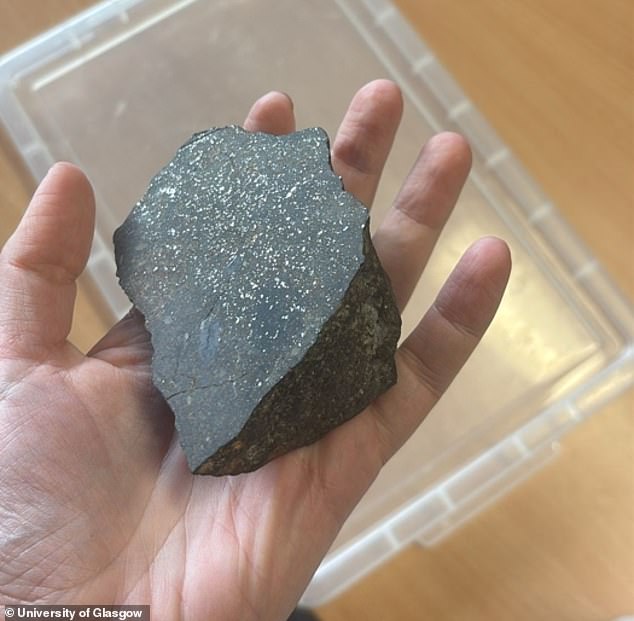
Currently, members of the public are being asked to search for the pieces, which are expected to be ‘black, glassy, and reflective’.
Meteorites—rocks originating from space that have landed on a planet’s surface—might have brought key substances that helped in the development of life as we understand it.
Professor Luke Daly, a planetary geoscientist and expert in space rocks at the University of Glasgow, referred to them as “time capsules from the early solar system.”
“They possess a vast amount of knowledge regarding the formation and evolution of our solar system,” he said.
This presents an excellent chance to gain deeper insights into the origin of this rock and its journey, helping to complete more pieces of the puzzle that is our solar system’s history.
Members of the UK Fireball Alliance have followed the meteor’s trajectory and suggest that pieces might be scattered across various locations in the Highlands.
Items weighing as much as 100 grams were dropped on the western side while it moved across Stob Coire, Easain, and Chno Dearg, with bigger pieces reaching up to 10 kilograms falling over Ben Alder.
The Ben Alder location might offer the highest possibility of finding something, as the exposed granite on the plateau could help make the dark meteorite rock more noticeable.
Professor Daly recently headed a team to Ben Alder, together with Dr Aine O’Brien, a space scientist from the University of Glasgow.
However, the group of 14 volunteers was forced to stop their work before they could retrieve any of the meteorite pieces because of unfavorable weather conditions.
“We’re requesting hikers to be on the lookout for stones that differ from their surroundings,” said Dr. O’Brien.
Meteorites are dark and lustrous, appearing nearly glass-like, and they are dense considering their size.
Given that it might contain around 30 percent iron, it could also appear somewhat reddish due to the recent heavy rainfall.
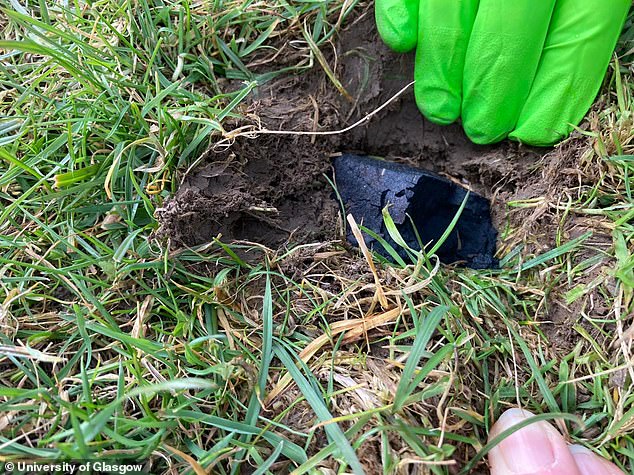
In 2021, Professor Daly headed the group that retrieved the biggest undamaged piece ofthe Winchcombe meteorite, the first of its kind to be found on UK land in almost 30 years.
We have learned from detailed examination of the Winchcombe samples that meteorites are rapidly altered upon exposure to Earth’s atmosphere.
The longer these fragments remain on the Scottish hills, the more they will be affected by the elements, making it harder for us to determine their composition.
The clock is rapidly counting down on our opportunity to gain as much knowledge as possible from these rocks, so any assistance that hillwalkers can provide could be crucial.
If an individual is fortunate enough to find a meteorite while climbing a Munro, they are requested to take a photograph and record their GPS coordinates, then send it tothe UK Fireball Alliance.
“If it’s tiny enough to be lifted, kindly avoid touching it with your hands,” said Dr. O’Brien.
Wrapping it in aluminum foil or a clean sandwich bag would be extremely useful.
If it’s too large to transport, the GPS location will assist us in retrieving it later.
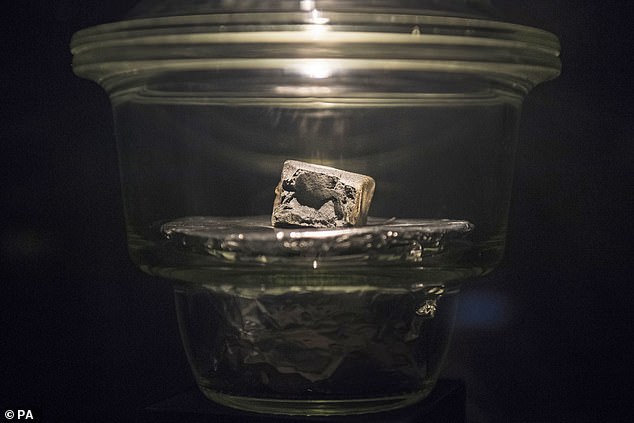
Jamie Shepherd from the UK Meteor Network stated that any discovery would be “history-making,” as the previous instance of a meteorite being found in Scotland was in December 1917.
Also known as the Strathmore meteorite, it appeared as a bright ball moving across the sky, observed by individuals from County Durham to Aberdeenshire.
The fiery sphere flew above before striking the earth and detonating, breaking the meteorite into four fragments spread across Coupar Angus and Blairgowrie in Perthshire.
The Strathmore meteorite — the biggest ever documented in Scotland — was found in four pieces, with one located at the Perth Museum and Art Gallery.




 jasdooit
Leave a comment