
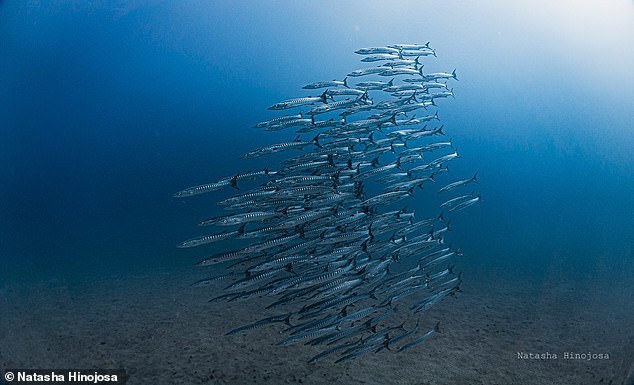
A critical ocean upwelling has failed, raising fears of severe consequences for marine life, as reported by researchers.
Each year, from December to April, northern winds generate an upward flow in the deep waters of the Gulf of Panama.
This process brings cold, nutrient-laden water to the top, safeguarding delicate coral reefs and causing a surge in marine biodiversity.
Nevertheless, scientists now claim that the Panama Pacific upwelling has not occurred for the first time in more than 40 years of data – and this might signal a lasting shift.
The scientists caution that the breakdown of this essential annual cycle might lead to ‘extremely significant’ effects – and climate change may be responsible.
Dr. Aaron O’Dea from the Smithsonian Tropical Research Institute stated to the Daily Mail, “More than 95 percent of Panama’s marine life originates from the Pacific side due to upwelling.”
It serves as the basis for our most significant marine export sector, generating almost $200 million each year.
Without the process of upwelling, it is probable that we will witness the breakdown of food chains, a decrease in fishery production, and greater heat stress on coral reefs that rely on this cooling effect.
Occurring most intensely from January to April, the Panama Pacific upwelling plays a crucial role in the marine environments of Central America.
In the past, this ocean current has begun as early as January 20 and typically continued for approximately 66 days.
As the current flows, it pulls cold water from deeper levels up to the surface, leading to a significant drop in temperatures.
During the upwelling period, the temperature of the ocean’s surface drops to as low as 19°C (66.2°F), with some instances falling as low as 14.9°C (58.8°F).
Nevertheless, this year, ocean temperatures remained above 25°C (77°F) until March 4, which is 42 days later than typical.
This chilly phase was 82 percent shorter than usual, spanning only 12 days, and it only dropped to a minimum of 23.3°C (73.9°F).
That is a clear indication that the present effort to bring cold water to the surface has not succeeded for the first time.
Dr. O’Dea states: “This system has been as reliable as a clock for at least 40 years of data – and possibly even longer.”
And certainly, we can observe its impact on coastal ecosystems and people in the area as far back as 11,000 years.
With the help of satellite data, scientists have already started monitoring the significant impact this failure has caused on the ocean environment.
Typically, the influx of nutrient-dense water leads to such swift proliferation of algae and plankton that scientists can observe it from orbit.
However, this year, the surge of life is largely missing, which may be devastating for the fish that consume these tiny organisms and for the people whose jobs rely on the abundant marine ecosystem.
If there is no consistent supply of cold water, the ecologically significant coral reefs in the area are also at risk.
When coral is exposed to excessive heat, it ejects the small ‘zooxanthellae’ algae that reside within its framework.
This algae typically imparts color to the coral and supplies it with a source of nutrition.
Without algae, the coral becomes pale and ultimately perishes in a phenomenon known as coral bleaching.
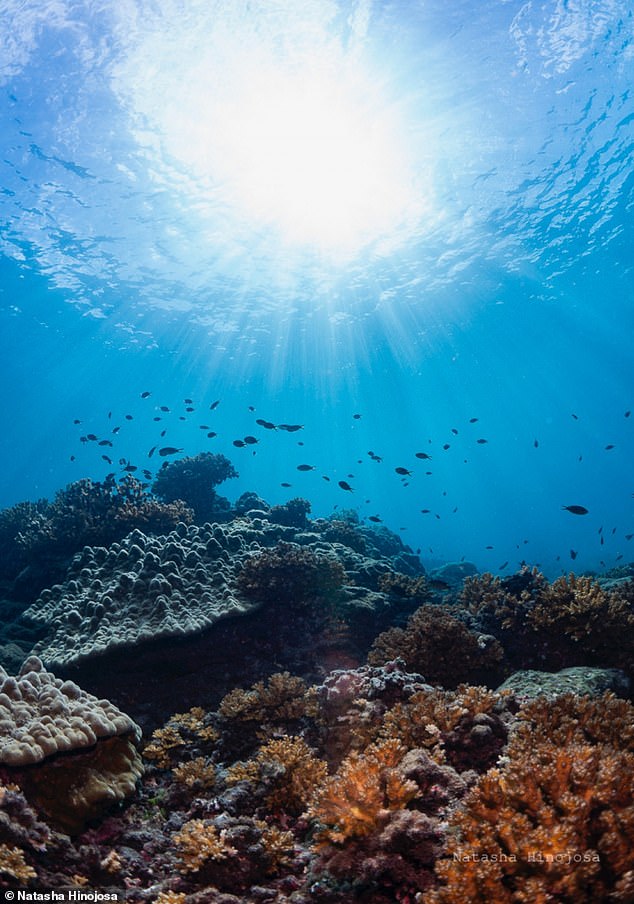
If the Panama Pacific upwelling fails to restart, it may result in extensive coral bleaching throughout the entire area.
Researchers think the failure occurred because of a ‘significant drop’ in northern winds, with 74 percent fewer instances and shorter periods when they did happen.
“When the winds emerged, they were as powerful as before, yet there just weren’t enough of them to initiate the upwelling mechanism,” explains Dr. O’Dea.
Nevertheless, Dr O’Dea highlights that the ‘key uncertainty’ lies in determining if this setback is an isolated incident or the start of a new standard.
Scientists believe the shift could be associated with this year’s La Niña phenomenon, a recurring phase of lower sea surface temperatures.
However, these changes might be indicative of a longer-term alteration in global weather trends resulting from climate change.
The scientists anticipate that the response to this query will become more evident as additional research on these tropical ocean currents emerges.
Dr. O’Dea states: ‘Climate disruption can disrupt processes that coastal communities have depended on for thousands of years.’



 jasdooit
Leave a comment