

- Do YOU have a tale? Send an email to sophie.carlin@.co.uk
A British woman is getting ready to spend the entire year onMars– yet always remaining on solid ground.
Laura Marie, hailing from Devon, will spend 378 days in a simulated environment reflecting the conditions of Earth’s neighboring planet, onNasa‘ Johnson Space Center in Houston,Texas.
The airline pilot, who moved to the United States in 2016, is among six chosen from an impressive 8,000 volunteers to participate in the American study.
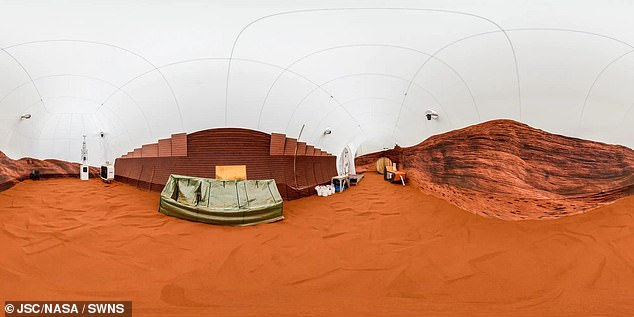
They will cultivate plants, experiment with technology intended for Mars, and stroll around within the 3D-printed Mars Dune Alpha habitat, which spans 158 square metres (1,700 sq ft).
The primary team of four—Ross Elder, Ellen Ellis, Matthew Montgomery, and James Spicer—will begin the experiment on October 19.
Ms. Marie is one of two ‘alternate’ participants, prepared to step in if either of them has to withdraw.
However, she has mentioned that she will treat her training, which is scheduled to begin next week, with the same level of dedication as if she were the first one through the door.
Although she was resolute in her approach, there was one specific home comfort that the British person admitted would be difficult to give up – the Great Outdoors.
“I’m really into nature. I spend a lot of time outdoors,” she admitted to theGuardian.
In the environment of airless space and lifeless Martian rocks, Ms. Marie confessed she would miss the sensation of wind through her hair—and the scent of grass.
This will be the second of three scheduled Crew Health and Performance Exploration Analog (Chapea) missions, aimed at collecting data for sending crews to Mars.
The initial set of volunteers started their time in the simulated environment in June 2023, exiting in July of the previous year following a successful operation.
NASA aims for the study to gather information on how such a mission would impact an astronaut’s physical well-being, mental state, and ability to perform.
The U.S. space organization also seeks to determine the most effective way to modify its space food supplies for Mars.
Madam Marie, the first British individual to ever participate in a Chapea mission, stated: ‘In science, you can’t simply do something once.’
The British national, who holds a BA in philosophy and an MSc in aerospace engineering, admitted she had always aspired to work with NASA.
She noticed her opportunity after watching the first mission on the news – and she seized it successfully.
Due to the confined conditions of the experiment, she mentioned that the final group spent a significant amount of time together as part of an extensive 13-month selection process.
“I don’t have any concerns regarding the team’s interactions. I would be comfortable isolating myself in a container with each of them,” she stated.
And they will truly only have one another, with a communication delay in place to mimic what astronauts on Mars would face when trying to reach Earth.
This implies there will be no real-time chat with mission control – a rare characteristic for any astronaut, as even the International Space Station maintains continuous communication with Earth.
The arrangement gives the team a lot of free time – something Ms. Marie intends to utilize in order to master solving a Rubik’s Cube in an exceptionally fast manner.
The British individual has also mentioned that she doesn’t merely want to settle for a simulation – indicating she would seize any opportunity to embark on an actual trip.
With NASA advancing technology to support these missions, it appears this dream may be more than just the pilot daydreaming.
“I believe the concept of a multi-planetary species is where we are moving towards,” she stated.
And whatever I can do to be a part of it – whether it’s this [simulation], or something different – I’m simply pleased to be included.
It comes after the advertisement inviting candidates for the experiment of living on Mars was published in February of last year.
The chance is not suited for the timid, as courageous volunteers face intense loneliness and being away from family.
The advanced structure that will serve as their residence for a year is designed to mimic the type of construction humans will ultimately create once they reach Mars.
Each individual is said to be compensated $10 for each hour they remain awake within the facility – totaling approximately $60,000.
“The analog mission will aim to be as realistic as possible for Mars, potentially involving environmental stressors like limited resources, isolation, equipment malfunctions, and heavy workloads,” NASA stated.
Key crew tasks during the simulation could involve virtual reality-based spacewalks, communication exercises, growing crops, preparing and eating meals, physical activity, personal hygiene, equipment maintenance, leisure time, scientific experiments, and sleeping.
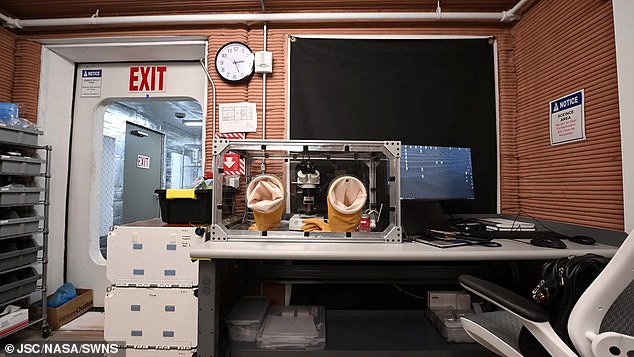
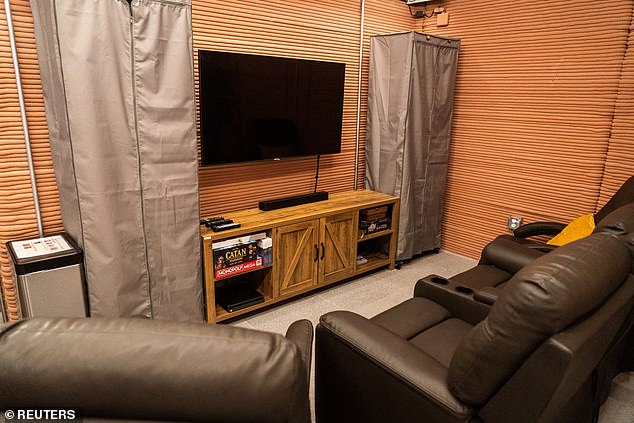
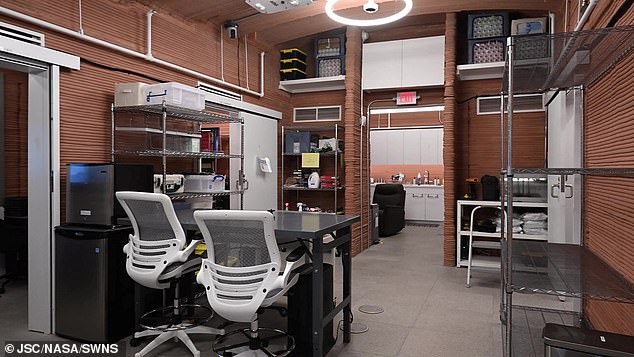
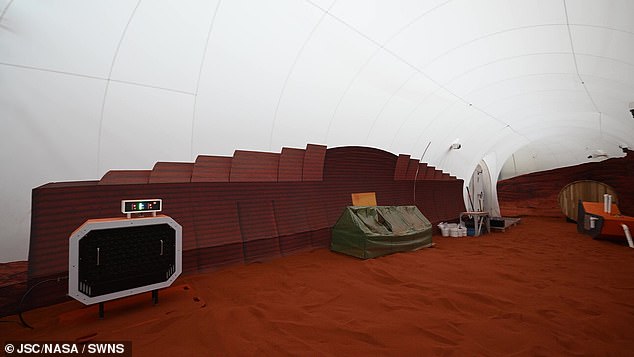
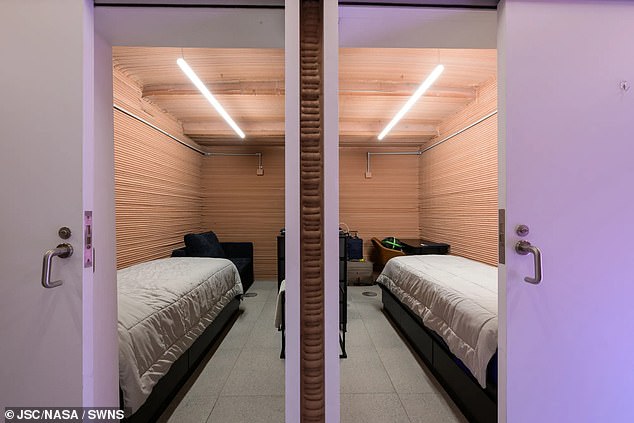
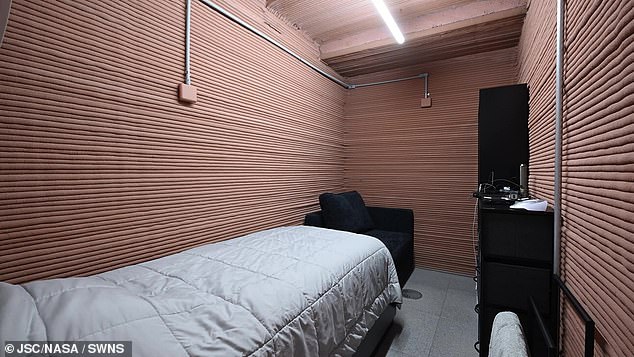
A structure known as Mars Dune Alpha was constructed using a unique concrete blend named ‘lavacrete,’ applied in layers to produce a ribbed appearance on the walls.
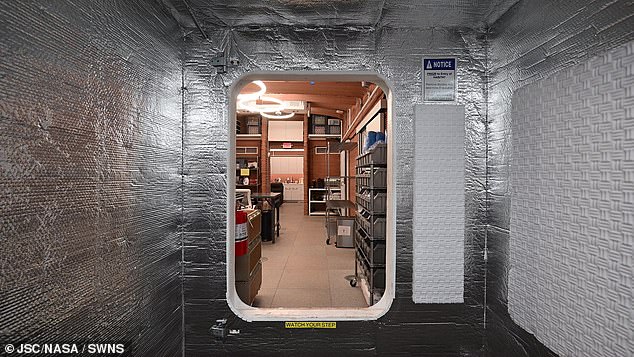
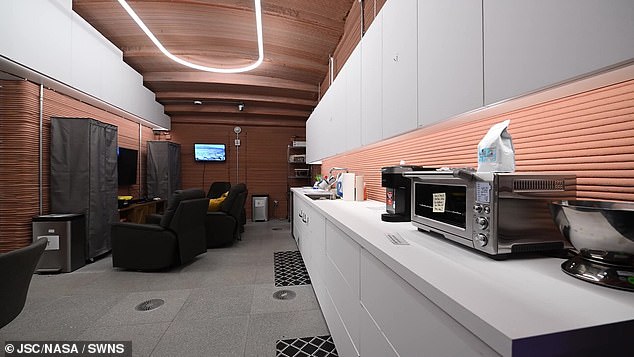
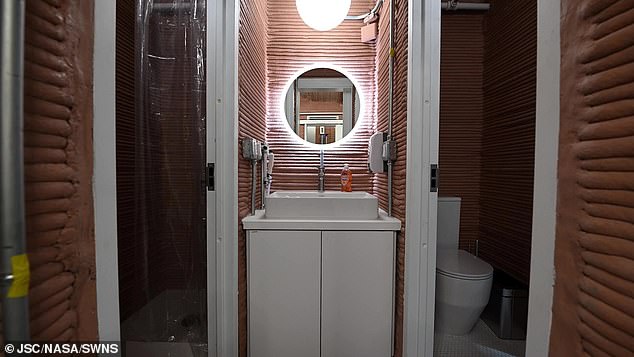
Even though residents are cut off and can’t leave unless there’s a medical emergency, the temporary shelter offers essential facilities such as a kitchen and two bathrooms, including a shower and toilets, along with a leisure space featuring leather sofas and a television.
But there are no windows to allow any sunlight inside – therefore, residents will receive vitamin D supplements.
A meal consisting of pre-made supplies is enhanced with fresh salad and produce cultivated on a ‘vertical farm’ — arranged in stacked layers.
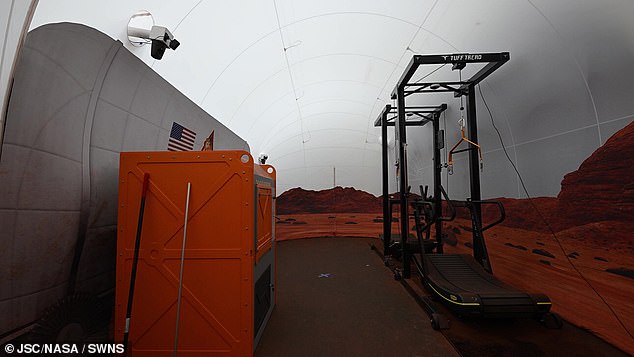
Additionally, there is fitness equipment available, such as a rowing machine and a treadmill where volunteers walk while suspended by straps to mimic the lower gravity of Mars.
It also features an airlock that connects to an “outdoor” replica of the Martian landscape, including red sand, although this area remains inside the hangar that houses the facility.
Numerous items of gear are also spread across the sandy ground, such as a weather station, a brick-producing machine, and a compact greenhouse.
- Can YOU endure 45 days within NASA’s ‘spaceship’? Learn about the challenges in a thought-provoking Mars simulation!
- Can regular Americans become space explorers at the Mars Desert Research Station?
- Can the European Space Agency’s bold vision of humans flourishing in self-sufficient ‘space oases’ on Mars come true within 15 years?
- Is it possible that humans might be residing in opulent ‘space havens’ on Mars by 2040, as suggested by ESA’s ambitious new plan?
- From food shortages to unexciting meals: Will starvation and tedium affect Mars settlers more than those on Earth?




 jasdooit
Leave a comment