

How far would you go to maintain a full head of hair?
Baldness has been a common aspect of aging for as long as humans have lived.
Still, for many people, the idea of losing their hair can cause a chill to run down their spine.
Throughout the ages, people have attempted every possible method to prevent hair loss – from intense mixtures to strange ceremonies.
Some individuals resorted to a treatment so severe that the Greek physician and philosopher Hippocrates considered it excessively extreme.
Starting with the ancient Egyptians who applied animal fats to their heads, through the 17th-century British people who experimented with chicken manure, the search for a solution has followed many unusual paths.
Certain Amazonian tribes created mixtures based on bananas, whereas Americans from the Victorian era used combinations of perfume and camphor spirit — all in an effort to preserve their hair.
Fortunately, contemporary science has substituted folklore, traditional myths, and speculation with treatments that have been scientifically validated.
Nevertheless, the measures individuals were willing to take…
Ancient Egypt
The ancient Egyptians, known for their elaborate hairstyles, started looking for a solution to hair loss over 4,000 years ago.
One example of a “remedy” included chanting a magical incantation to the sun deity and subsequently consuming a blend of onions, iron, red lead, honey, and alabaster.

A common treatment for hair loss involved applying the oils from different animals to the scalp.
Ancient Rome
The Roman leader Julius Caesar was recognized for his strong concern regarding his physical look.
It is said that he let his hair grow long at the back and then brushed it forward in an attempt to hide his thinning hairline.
Caesar, who ruled between 46 and 44 BC, was believed to use a specific scent known as ‘Telinum,’ created by combining flowers, fruits, oils, and even ‘gladiator sweat.’
The Amazon
The indigenous people of Taiwan living in the South American rainforests held the belief that issues related to the scalp and hair loss could be addressed using heated banana extracts.
Although this approach may not have been effective for hair loss, they were on the right track.
Bananas benefit hair as their potassium, natural oils, and vitamins work to condition and hydrate the hair, enhance flexibility, and reinforce the hair shaft.
They also promote scalp health, resulting in softer, glossier, and easier-to-manage hair, while simultaneously minimizing dryness and damage.
17th Century Britons
In 17th century Britain, health publications recommended that men experiencing hair loss apply chicken manure to their scalp to avoid becoming bald.
They also recommended using cat feces to eliminate hair from unwanted areas.
Chicken manure was a typical treatment listed in modern medical manuals such as Peter Levens’s The Path-Way to Health, which also recommended using ash from bird droppings mixed with lye on the scalp.
1876-1913 America
In 19th-century America, thorough hair brushing was the most recommended method of hair care.
Employing a firm brush was intended to maintain the hair’s softness and luster, whereas a gentle brush was thought to encourage hair growth.
Male pattern baldness was also addressed by applying a blend of perfume, camphor spirit, and cantharides tincture to the scalp every evening.
Another preventive method involved combining the tincture of cantharides with Jamaica Rum, Glycerin, Ammonium Bicarbonate, Rosemary Oil, and Distilled Water.
Ancient Greece
In the majority of instances, hair loss in men and women is attributed to male hormones.
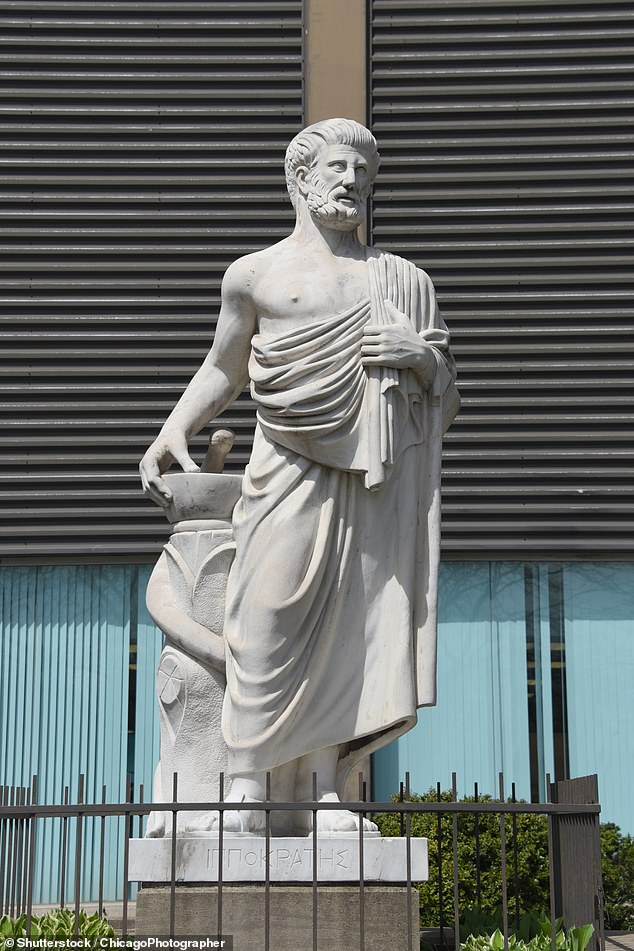
However, it was Hippocrates, known as the “Father of Modern Medicine,” who initially identified a link.
Hippocrates observed that males who were castrated prior to puberty did not experience hair loss.
We are now aware that this is caused by the lack of testosterone, which typically transforms into dihydrotestosterone, or DHT, the key component linked to hair loss.
Hippocrates created various remedies for hair loss, such as a blend of horseradish, cumin, pigeon feces, and nettles applied to the scalp.
However, the treatments were ineffective and he lost the remaining hair.
In 1995, scientists from Duke University reached the conclusion that ‘although castration could be a remedy, it is not economically viable.’
Modern hair loss solutions
Hair loss is a complex issue with various contributing factors, making it difficult to find a single definitive solution.
However, specifically tailored combinations of effective hair loss treatments can frequently reduce hair loss and encourage hair regrowth.
Another choice is a hair transplant, a surgical process that moves hair follicles from a denser, ‘donor’ region (typically the back of the head) to areas experiencing hair thinning or baldness.
It has the potential to restore a more complete hairline, but necessitates an adequate supply of donor hair and may carry risks such as scarring, discomfort, and inflammation.
- Have Japanese scientists potentially found the ultimate organic solution for hair loss through everyday plant-based ingredients?
- Worried about hair loss? Learn about Dr. Ophelia Veraitch’s unique solutions for bringing back fullness and density!
- Could a groundbreaking injection treatment promote the return of thick hair and offer men experiencing hair loss a fresh start?
- In what ways are young males dealing with the emotional challenges associated with hair loss?
- Is this advanced headband the groundbreaking solution for hair loss, claiming a 93% effectiveness rate without messy remedies or surgical methods?




 jasdooit
Leave a comment