


A research finding shows that one drop of a unique eye drop can fix presbyopia without requiring glasses or surgical intervention.
As reported by the British Guardian on the 14th, a group of researchers from the Buenos Aires Presbyopia Research Center in Argentina shared their results at the European Society of Cataract and Refractive Surgeons (ESCRS) conference taking place in Copenhagen, Denmark, on the 8th.
As per the research group, using the eye drops they created, most patients are able to read more letters on an eye test, with the impact lasting as long as two years.
The unique eye drops created by the research group include two drugs: pilocarpine, which is typically used to reduce pressure inside the eye for individuals with glaucoma, and the anti-inflammatory medication diclofenac.
Pilocarpine causes the pupil to shrink and decreases the tension of the muscle responsible for changing the shape of the lens, enabling the lens to focus more effectively on close objects. This process is comparable to tightening a camera lens. Diclofenac helps prevent inflammation, pain, or bleeding that might result from extended use of pilocarpine.
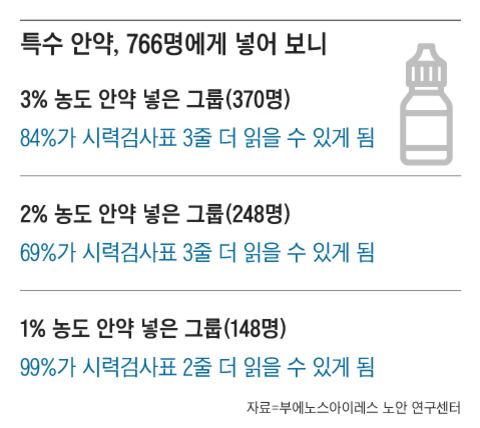
A research group examined the impact of these unique eye drops on 766 individuals, averaging 55 years old, from Argentina. The subjects were split into three categories and given the eye drops twice a day, six hours apart, with different strength levels. In the group receiving 1% concentration (148 people), 99% were able to read at least two more lines on the vision test. In the 2% concentration group (248 participants), 69% could read at least three additional lines. In the 3% concentration group (370 individuals), 84% were able to read at least three more lines.
The research group mentioned, “We have found a new safe, efficient, and easily tolerated approach that can substitute conventional treatments for presbyopia.” The patients experienced enhanced vision for as long as two years, with an average period of 434 days.
※ This article has been translated by Upstage Solar AI.


 jasdooit
Leave a comment