
Recent geological findings discovered in the United States indicate that a major celestial occurrence could have led to the demise of a previously flourishing civilization over 12,800 years ago.
Researchers examining soil samples inCalifornia, Arizona and New Mexicouncovered shocked quartz, small mineral particles distorted by intense pressure, originating from approximately 10,800 BC.
Shock metamorphism occurs when minerals experience rapid, high-pressure conditions, like those caused by a meteorite collision or a major atmospheric explosion.
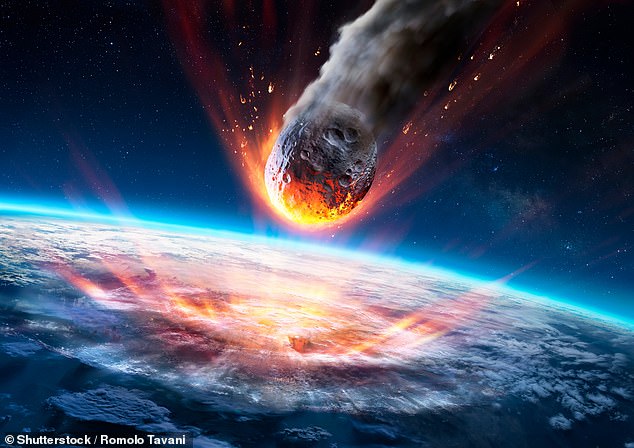
The existence of this substance at the locations suggests that an airburst or collision probably destroyed significant areas of the continent, causing fires, disrupting the climate, and leading to the extinction of numerous large Ice Age creatures that lived there.
The age of the shocked quartz aligned with the swift decline of the Clovis people, a highly skilled hunter-gatherer society that had ruled over large parts of North America for many years.
Archaeological findings have revealed that their unique stone tools suddenly disappear from the record following this era.
This period also signified thestart of the Younger Dryasa sudden and significant drop in temperature that continued for approximately 1,200 years.
Several scholars, among them the renowned writer Graham Hancock, have suggested for a long time that a massive “Doomsday comet” entered Earth’s atmosphere, obstructing sunlight, interfering with ocean flows, and rapidly causing a prolonged cold period in the Northern Hemisphere.
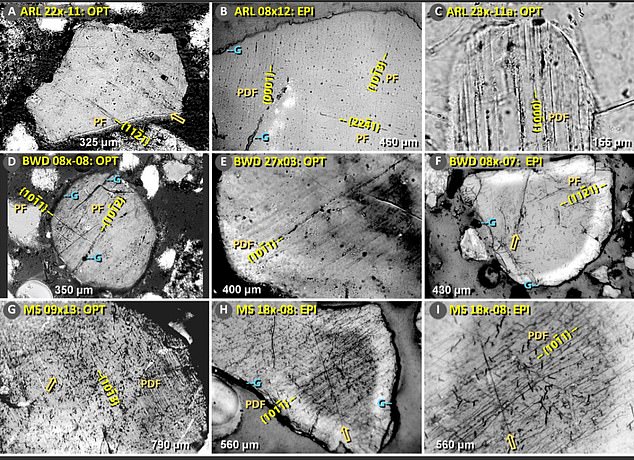
Shock metamorphism occurs when the atomic structure of minerals is permanently altered due to intense pressures, typically millions of times higher than standard atmospheric pressure.
In the recent research, the particles were meticulously removed from sediment layers that were accurately dated to the beginning of the Younger Dryas.
“The beginning of the Younger Dryas (YD) closely aligned with two major occurrences: the abrupt disappearance of over 70% of North American large animals (35 genera), such as mammoths, camels, horses, and saber-toothed cats, along with the decline of the Clovis technocomplex,” states the research published inPLOS ONE.
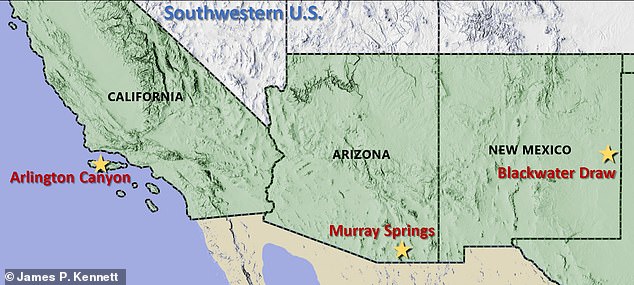
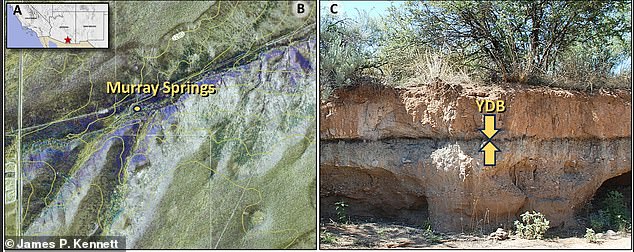
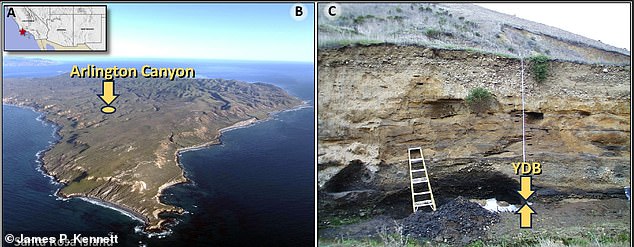
The group gathered sediment samples from Blackwater Draw in New Mexico, Murray Springs in Arizona, and Arlington Canyon on Santa Rosa Island in California.
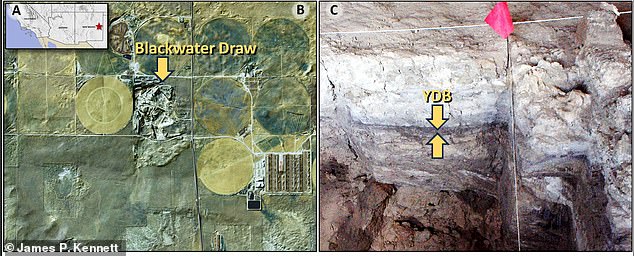
Blackwater Draw is a site associated with the Clovis culture, where the initial Clovis artifacts were discovered just beneath a black mat that is 12,800 years old, indicating the start of the Younger Dryas period and the conclusion of the Clovis technological complex.
Evidence from the site, including a nearby Clovis-killed mammoth, indicates a substantial environmental disturbance occurring at the same time as the extinction of large animals and a notable drop in human population.
Murray Springs safeguards ancient Clovis tools and remnants of vanished large animals.
Those are also placed behind a black mat, which includes a slaughtered mammoth and hundreds of footprints quickly covered following the suggested Younger Dryas event.
Archaeological evidence suggests a period of human absence following the Clovis era, which aligns with ideas of population reduction and sudden cultural and environmental shifts at the start of the Younger Dryas.
Arlington Canyon produced human remains from the Clovis period under a black mat, indicating a 600- to 800-year interval before later human presence, suggesting a post-Clovis lull even in possible refuges.
The website also documents the extinction of pygmy mammoths approximately 12,800 years ago, establishing it as an important place for examining the effects of environmental changes during the Younger Dryas period.
The group employed 10 distinct laboratory methods to detect glass-filled fractures in quartz and subsequently performed computer models to calculate the pressures and velocities required to create these impacts.
They discovered that the shocked quartz collected from the southwest United States was similar to samples obtained from nuclear airburst locations, Meteor Crater, and other Younger Dryas sites in Syria, the eastern United States, the Netherlands, and Venezuela.
Numerous quartz particles exhibited evidence of being subjected to very high temperatures, exceeding the melting temperature of quartz, which is 3,123 °F.
Certain sections of the grains stay disordered, while others have undergone recrystallization.
Earlier studies have demonstrated that melted silica found in shock fractures suggests shock events caused by airbursts or impacts, implying that these YD grains can be categorized as ‘thermally and mechanically shocked quartz.’
“These locations are some of the most thoroughly recorded in North America, offering key insights into the connection between the decline of the Clovis technocomplex and the disappearance of large animals,” the group stated.
The existence of airburst or impact-related substances at these important sites enhances the temporal and spatial connection between the suggested celestial event and significant environmental and cultural transformations.
- Might these ancient relics uncover a complex culture, destroyed by massive floods, pushing the origins of civilization to 20,000 years ago?
- Could a comet impact from 12,800 years ago suggest the existence of ancient societies destroyed by celestial disasters?
- What groundbreaking new discoveries might change the discussion about ancient meteorite impacts and their worldwide extinctions?
- A groundbreaking finding disrupts the timeline of ancient sites! Have archaeologists finally solved an ancient enigma?
- Discovering the Marvels of Yana: How did this frozen grave keep the world’s best-preserved baby woolly mammoth intact for more than 50,000 years?




 jasdooit
Leave a comment