
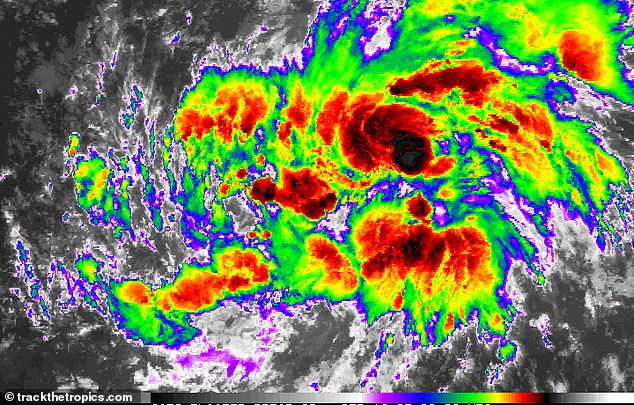
A tropical system emerging in the Atlantic Ocean is drawing interest as itindicates a 90 percent probability of cyclone development within the next seven days.
The system, known as Invest AL92, is presently situated in the central tropical Atlantic, traveling westward at a speed of 17mph.
Meteorologist Ian Oliver from Fox Weather stated to USA Today, ‘This system is highly probable to develop into Tropical Storm Gabrielle at some point during the middle or later part of this work week, and it is expected to keep gaining strength into a hurricane.’
This system has been more structured since Monday and is anticipated to progress within a positive setting for continued growth.
The National Hurricane Center (NHC) stated on Tuesday that a tropicaldepressionor a tropical storm is expected to develop within the next day or two.
A low-pressure system found in tropical regions, characterized by organized thunderstorms and wind speeds of 38 mph or lower, is referred to as a tropical depression. In contrast, a tropical storm has stronger winds ranging from 39 to 73 mph and receives an official name once it approaches the stage of becoming a hurricane.
Forecast models indicate the storm is likely to head north long before it arrives in the Caribbean, although certain impacts remain possible.
As the storm has not yet fully formed, weather experts face additional uncertainty, making it advisable to remain cautious.
This is an ongoing situation… Further updates to follow.
The emergence of a new tropical storm would mark the end of an exceptionally calm period in the Atlantic region, which saw the hurricane season’s peak on September 10.
Nevertheless, meteorologists cautioned that tropical activity is expected to increase in the coming weeks as circumstances in the Atlantic grow more conducive to formation.
Even though the peak of the Atlantic hurricane season has already occurred, roughly 60 percent of tropical activity usually takes place following September 10, as reported by the NHC.
Jennifer Francis, an atmospheric scientist with the Woodwell Climate Research Center, statedABC NewsLast week, the waters in the Gulf and Caribbean were described as ‘extremely warm.’
In the past, approximately two-thirds of Atlantic hurricane activity has taken place between August 20 and October 10, with NOAA forecasting higher-than-average activity for the remaining part of the season in its August report.
The most recent Global Tropics Hazards and Benefits Outlook issued by the Climate Prediction Center (CPC), published last week, indicated an increased likelihood of tropical cyclone development beginning on September 17.
Models suggested a 40 to 60 percent likelihood of storm formation in the central Atlantic near the Cape Verde Islands, moving westward toward the Lesser Antilles, with the possibility of impacting the broader Atlantic region.
Meteorologists also forecasted a 20 to 40 percent chance of tropical cyclones developing in the northwest Caribbean and Gulf of America during the upcoming two weeks.

Odds in the eastern Atlantic are anticipated to increase slightly, with a notably powerful tropical wave expected to develop off the African coast near September 20, potentially increasing the likelihood of formation to between 40 and 60 percent.
- Could a strong tropical wave near Africa lead to a surge of Atlantic hurricanes by the end of the month?
- Could the Central American Gyre trigger the initial tropical storm of 2025, causing heavy rains in South Florida prior to the start of hurricane season?
- Will the threatening Central American Gyre create another turbulent storm that fuels unrest in the Caribbean?
- Why is the National Hurricane Center on high alert when storm dangers in the Atlantic present a severe threat to the Caribbean?
- As the hurricane season continues, might another powerful storm be quietly building up strength near the African coastline?




 jasdooit
Leave a comment