
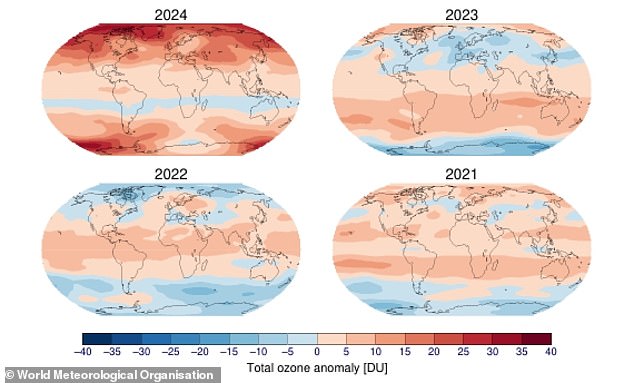
It is now forty years since researchers identified the expanding gap in our planet’s ozone layer.
However, a new and encouraging study has shown that this protective layer – approximately 20 miles above the Earth’s surface – may already be on the path to restoration.
Officials from the World Meteorological Organisation (WMO) note that, in comparison to earlier years, the overall stratospheric ozone layer was more extensive across most regions of the world in 2024.
Furthermore, the ozone depletion that forms over Antarctica each spring was significantly below the 1990–2020 average.
“The ozone layer is recovering,” stated Antonio Guterres, theUnited Nations Secretary–General.
This accomplishment highlights that when countries listen to scientific advice, advancement can be achieved.
If development keeps up at the present rate, the ozone layer might soon return to its 1980 levels (prior to the emergence of the ozone hole).
Experts anticipate that complete recovery might occur approximately in 2066 over the Antarctic, in 2045 over the Arctic, and in 2040 for the rest of the globe.
The ozone layer acts as Earth’s ‘natural sunscreen,’ shielding humans, flora, and fauna from damaging UV–B rays.
Without it, we would face a much higher likelihood of skin cancer, cataracts, and harm to the environment caused by too much UV radiation.
In the 1970s, researchers began to express worries regarding the impact of synthetic substances called chlorofluorocarbons (CFCs) on the ozone layer.
Alarmingly, CFCs were incorporated into various items such as refrigeration systems, air conditioning units, fire extinguishing foam, and even hair spray.
A global agreement known as the Montreal Protocol was established in 1987, resulting in the elimination of more than 99 percent of these ozone-depleting substances.
Nevertheless, it was already too late — a significant gap had formed in the ozone layer above Antarctica.
In addition to CFCs, the ozone hole has also remained open due to global warming.
“A side effect of climate change is that the temperature of the ozone layer is decreasing slightly,” stated the British Antarctic Survey.
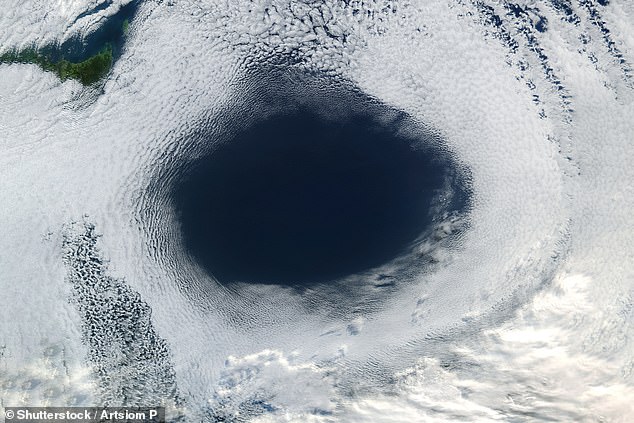
This implies that a greater number of stratospheric clouds can develop above Antarctica, thereby postponing the healing of the ozone hole in the region.
Currently, encouraging data indicates that the depth of the ozone hole was below normal in 2024, with a peak ozone mass deficit of 46.1 million tonnes on 29 September.
“The beginning was fairly gradual, with delayed ozone depletion noted throughout September, followed by a relatively quick recovery once the peak deficit was attained,” the WMO stated in its report.
The ozone depletion remained below average until mid-November.
Although this is encouraging, the specialists mention that our efforts are “not yet complete.”
“There is still a crucial requirement for the global community to maintain thorough and systematic observation of stratospheric ozone, as well as of substances that deplete it and their alternatives,” stated Matt Tully, Chair of WMO’s Scientific Advisory Group on Ozone and Solar UV Radiation.
- Has the much-anticipated healing of the Antarctic ozone hole finally become possible, with recent encouraging signs of improvement this year?
- Is the recovery of the ozone hole over Antarctica offering researchers renewed optimism about the planet’s environmental prospects?
- What makes the early end of this year’s ozone hole over Antarctica giving rise to optimism about complete recovery?
- Has human effort managed to finally halt the severe loss of the ozone layer following almost four decades of continuous harm?
- Is the decreasing ozone hole an indication that a remarkable recovery has begun following years of concerning loss?




 jasdooit
Leave a comment