
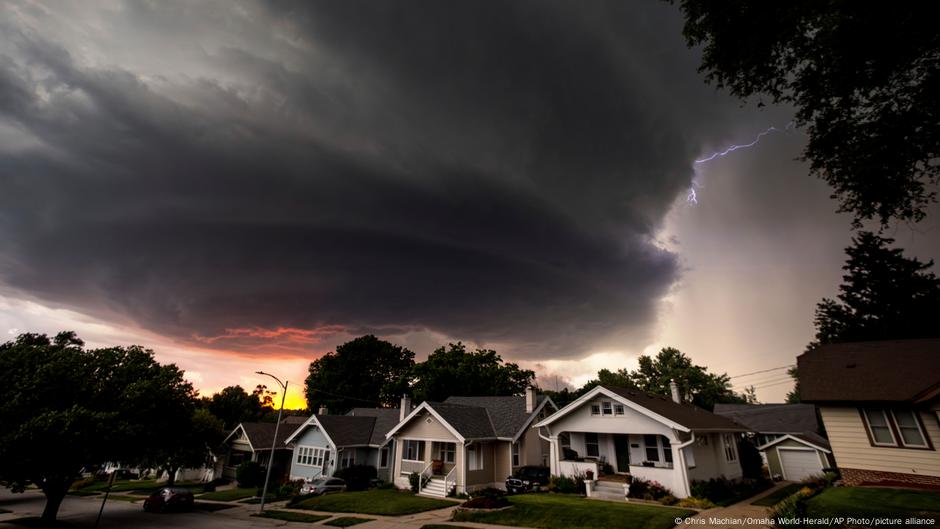
A threatening email signaled the start of the end for a meteorologist’s career. Specialists believe that false information about climate change and conspiracy theories are promoting online hostility.
One morning, Chris Gloninger checked his emails and discovered a message from a viewer requesting his home address, stating they wanted to give him a greeting he would never forget.
“My heart was pounding, and I felt frozen,” said Gloninger, who was then delivering the weather forecast on a television station in Des Moines, located in the Midwestern state of Iowa.
The email mentioned the case of a man who was detained for attempted murder ofJustice Brett Kavanaugh of the Supreme Court, after arriving at his house with a gun and handcuffs.
For Gloninger, this was the last incident following a series of harassments since he took on the role of chief meteorologist. He contacted the authorities and quickly went to a hotel with his wife.
Increase in online hostility directed at weather forecasters
As some of the most prominent figures in climate change messaging, TV weather presenters have started to encounter criticism for their stance.the rise in misinformationand theories driving online hostility.
Viewing climate changeAs the top priority of our era, Gloninger had strongly supported its significant presence in his television productions.
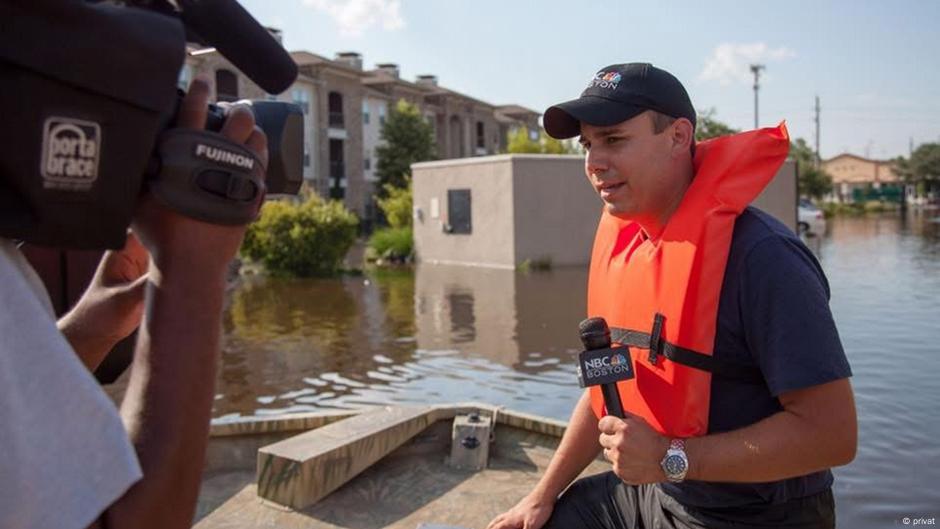
Following his appointment to the Des Moines position, he adjusted his reporting to align with the more climate-skeptical views prevalent in Iowa, a state that has remained a conservative hub since President Donald Trump’s initial election in 2016. He aimed to connect it to daily life, such as how drought could affect farmers in this predominantly agricultural region.
That was when the emails began to appear in his inbox — initially, the usual resistance, followed by increasingly harsh threats. He observed that audiences were turning the science into a political issue.
They claimed, ‘We’re fed up with this liberal agenda,’” Gloninger stated. “It should never be political, as this is a science backed by 99% of its academic community.
A prolonged record of false information
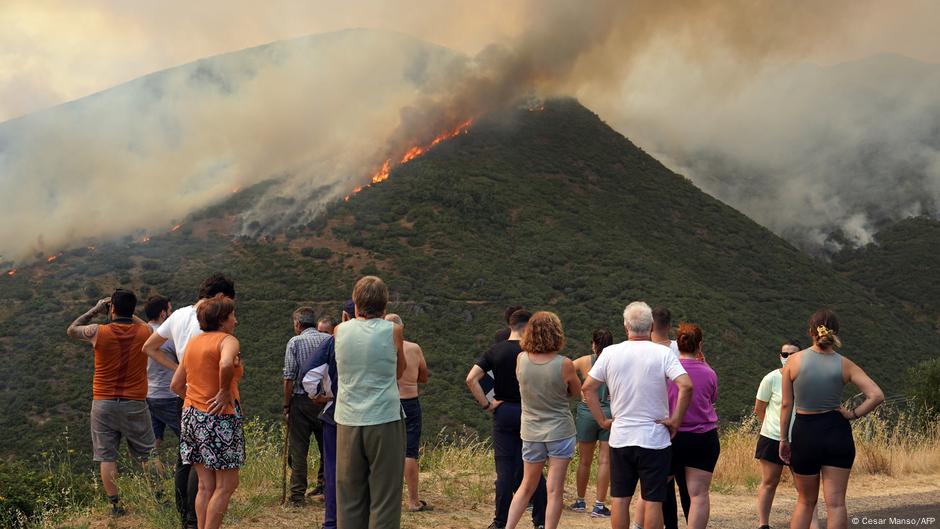
Today, climate misinformationand conspiracy theories are widespread on the internet. This is in spite of the strong scientific agreement that climate change iscausing more extreme weatherwhich will only intensify as world temperatures keep increasing.
The origins of this issue can be traced to the middle of the previous century. Although major fossil fuel companies discovered the connection between burning coal, oil, and gas and global warming as early as the 1960s, many continued to activelystrategy of denialand minimizing the scientific aspects.
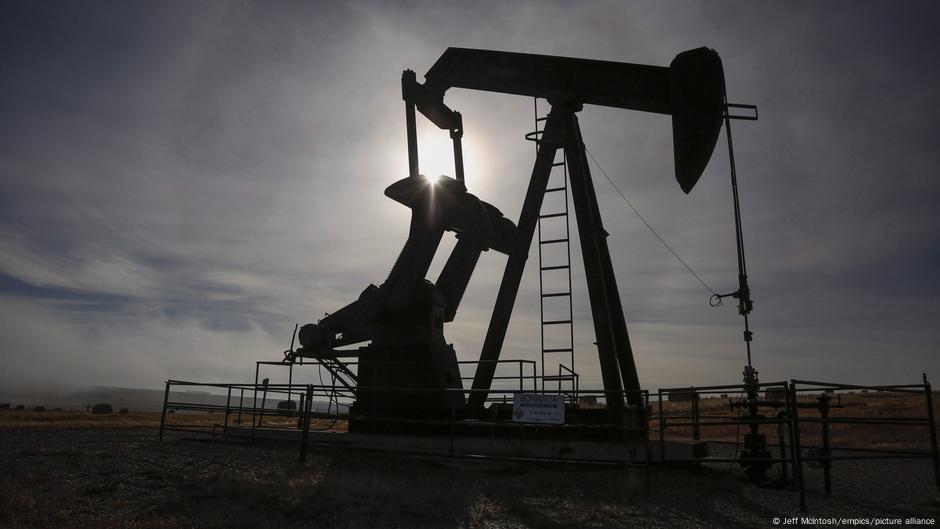
However, with glaciers melting, sea levels increasing, and severe weather becoming more intense, this denial has become harder to promote. Therefore, experts suggest that misinformation has transformed into a type of “delayism” — either by questioning climate solutions or greenwashing companies to create a misleading image of environmental responsibility.
A 2024 study revealed that fossil fuel and petrochemical companies invested millions in advertisements featuring deceptive statements regarding their dedication to renewable energy. The industry actually allocates just0.01 of global investment directed towards clean energyand is actively investigating new oil and gas reserves.
Network of false information sources
The networks behind climate misinformationhave grown highly complex, noted Ece Elbeyi, a scholar at the University of Copenhagen in Denmark.
It not only includes individuals with a stake in hindering climate action collaborating with lobbyists and research institutions, but can also involve news organizations, online agitators, Russian automated networks, and public figures spreading false information on social media sites, where systems prioritize emotionally intense content.
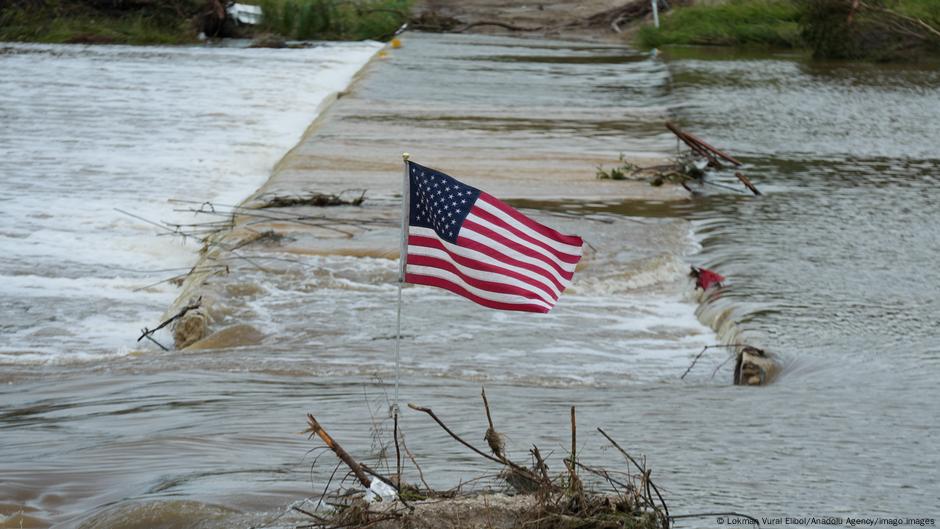
Political figures, especially those promoting nationalist or conservative ideologies, have used false information to energize their supporters, according to Elbeyi. “They may not directly reject climate change, but they present climate actions, such as global accords or carbon controls, as dangers to a country’s independence or economic liberty.”
Opposing climate action has turned into a matter of personal identity, making it harder to dispute, according to Elbeyi. They also mentioned that political identity can be a reason why someone might spread false information or send hostile messages to someone like Gloninger.
Ideal soil for conspiracy theories
Sometimes false information can turn into absurdityconspiracy theories, which may be especially appealing to individuals with significant paranoia, insecurity, or self-centered tendencies, said Daniel Jolley, an associate professor in psychology at the University of Nottingham.
Jolley mentioned that conspiracies can frequently make individuals feel more significant or reassured by portraying another influential group as “bad,” noting that they tend to increase following tragic events.
In the aftermath of fatalExtreme rainfall in Texas during the summer months, conspiracy theories flourished on the internet, blaming scientists and government organizations for creating the disaster through interferenceweather modified through cloud seeding.
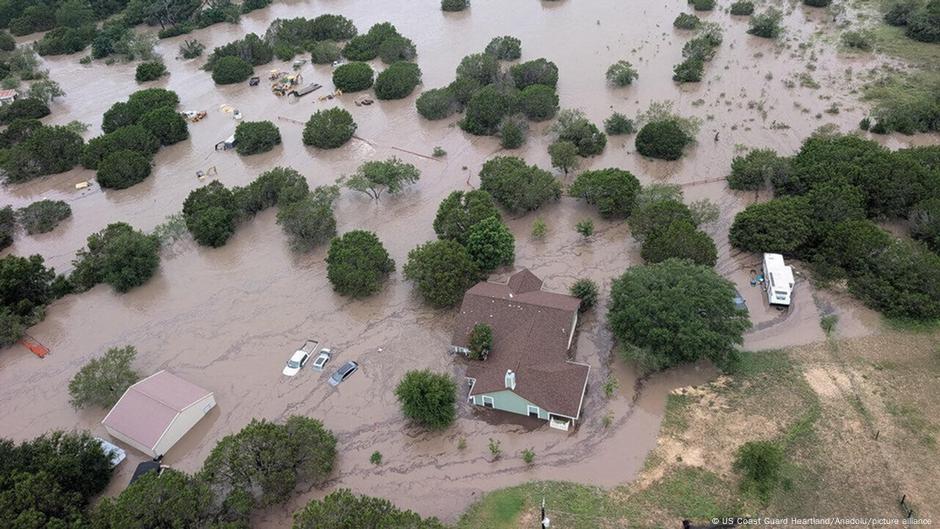
“People are attempting to clarify problems that are vast, issues that leave us feeling uncertain, worried, and at risk,” said Jolley.
Jolley predicts that as our climate changes, false information and weather-related conspiracy theories will grow more common.
Weather experts are among the most noticeable in terms of those conveying climate science, and thus frequently face the consequences of criticism, he stated.
What steps can be taken to prevent the spread of false information?
Both Jolley and Elbeyi consider education essential for recognizing false information.
Elbeyi stated that it is essential to include vulnerable communities in discussions, as false information often spreads when these groups perceive that decisions are being made without, or even against, their interests. “Such exclusion can significantly weaken public confidence in scientists and the scientific community as a whole.”
Regarding conspiracy theories, Jolley stated that fostering trust and showing empathy towards why individuals hold such beliefs is more effective than attempting to disprove them. He also emphasized the need for support for those, such as Gloninger, who face abuse.
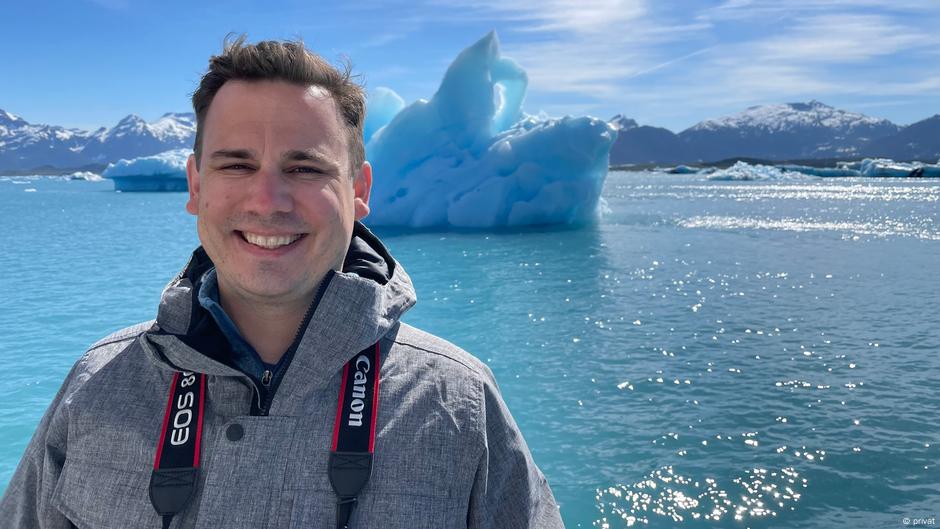
After receiving the death threat, Gloninger began therapy and was found to have post-traumatic stress disorder — or PTSD. He experienced difficulty sleeping and his health worsened, resulting in a skin issue.
The authorities apprehended the suspect and imposed a fine of $150 (€129). Meanwhile, back at the television station, Gloninger carried on with his duties. However, following a surge in emails from what he refers to as a vocal minority, he was instructed to cease discussing climate change.
Glöninger decided to quit his job instead of remaining and turning a blind eye to climate change. He mentioned that he still struggles to discuss the choice.
Nevertheless, he believed he had made a difference in raising awareness about climate change among a new, more conservative group. He has maintained a substantial file containing encouraging messages from viewers.
He believes it would be an error for climate communicators and weather forecasters to retreat at this time due to online hostility.
I believe there is less attention given to climate change due to the fear of consequences,” said Gloninger. “I urge meteorologists to focus even more on the issue.
Edited by: Tamsin Walker
Holly Young adapted this story from an episode of ‘s Living Planet podcast. Locate theaudio version here.
Author: Jennifer Collins


 jasdooit
Leave a comment