
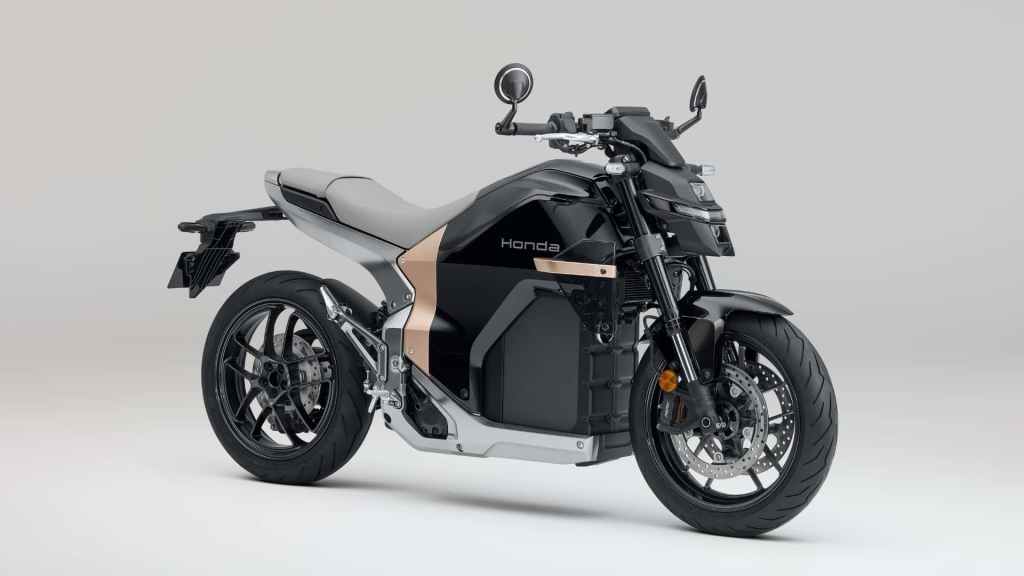
Honda introduced its WN7 motorcycle in Europe, marking the brand’s initial fast-charging electric motorcycle in the middleweight naked bike segment.
After spending some time finding its direction, Honda has been continuously moving forward in its effort to achieve carbon neutrality throughout the entire company. Although we have seen more electric vehicles from Honda than two-wheeled vehicles so far, the company has still provided small pieces of information at times regarding its advancements in the two-wheeled sector.
It’s reasonable that the transition to electric power for its mainstay and fleet two-wheelers has happened more swiftly compared to motorcycles used for leisure. That’s why theBenly e:, Gyro e:, and Gyro Canopy e:all quickly appeared, initially in Japan and subsequently in other Asian markets where their combustion predecessors were already widely favored.
But eventually, the first-ever electric motorcycle inHonda’s EV FunThe lineup is here, and they’re referring to it as…the WN7, for no clear reason. I’m joking, as it’s a somewhat unclear name. However, Honda does provide an explanation for this decision, stating that W stands for “Be the Wind” and N stands for “naked,” as it is a naked bike.
What about the 7? Honda refers to this as its output class. Although Honda has not yet provided a complete specification sheet for the WN7, it has recently shared some specific details, including its estimated power equivalent in terms of combustion. According to Honda, the WN7 delivers “performance that matches 600cc internal combustion engine models in horsepower and 1000cc internal combustion engine models in torque.”
Once more, no specific figures have been given to support these statements; this is solely what Honda has mentioned up to now. It predicts the WN7’s range to exceed 130 kilometers on a single charge, approximately 83 miles. It remains uncertain what kind of riding was considered in Honda’s study here; whether it’s purely urban driving, highway travel, or a combination, which would significantly affect the results, especially if you are aware of the different elements that can influence an EV’s range estimates.
The Li-Ion battery in the WN7 is a permanent component that cannot be taken off the bike for charging, meaning you’ll need to connect the entire unit directly, similar to how large EV bikes from other brands are charged. However, it will support CCS2 fast charging, according to Honda, which can charge the WN7’s battery from 20 to 80 percent in just 30 minutes.
What if you wish to charge it at home? According to Honda, it can be easily connected to a power source, reaching a full charge in only three hours. As expected, the WN7 features a 5-inch TFT dashboard, similar to those seen on other recent Honda motorcycles with internal combustion engines. It is also compatible with Honda’s RoadSync smartphone application, providing connectivity through this means as well.
There remain many unanswered questions regarding Honda, such as the projected cost and availability of the WN7, both in Europe and other regions. The general look of the WN7 is acceptable, especially with the bar-end mirrors and the highly contemporary front headlight assembly. A tail tidy would be beneficial for this model, but this is common with many factory bikes nowadays (and naturally, it’s also a subjective matter).
What are your thoughts on the initial information about the WN7? Do you like its appearance, or do you believe Honda could have made some changes? Share your opinion in the comments.



 jasdooit
Leave a comment