
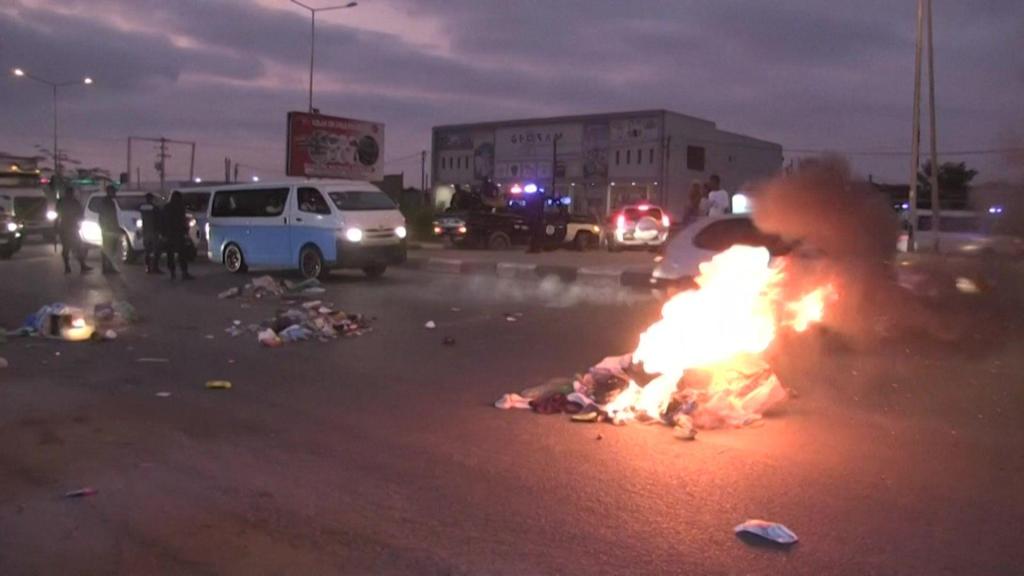
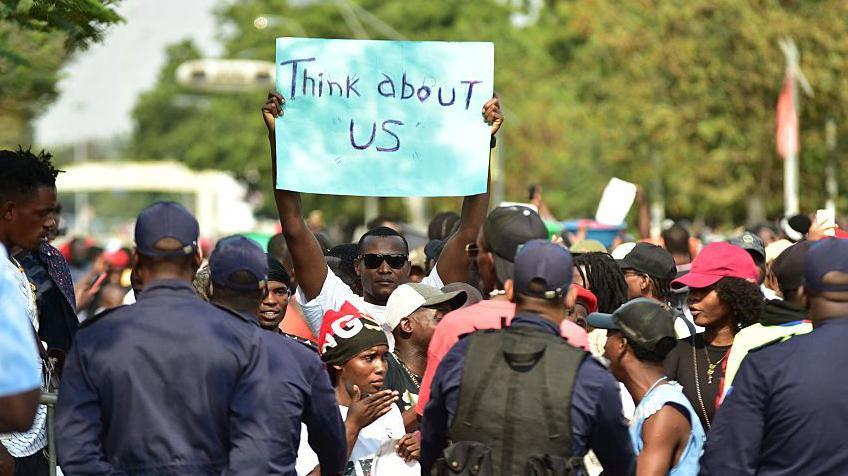
Residents in certain areas of Angola’s capital, Luanda, remain hesitant to discuss openly the events of July, when demonstrations caused parts of the city to come to a halt and unrest affected other provinces as well.
Initially a demand from taxi drivers to protest the rise in fuel costs, the situation escalated into violence over three days, resulting in at least 30 deaths and thousands being detained afterward.
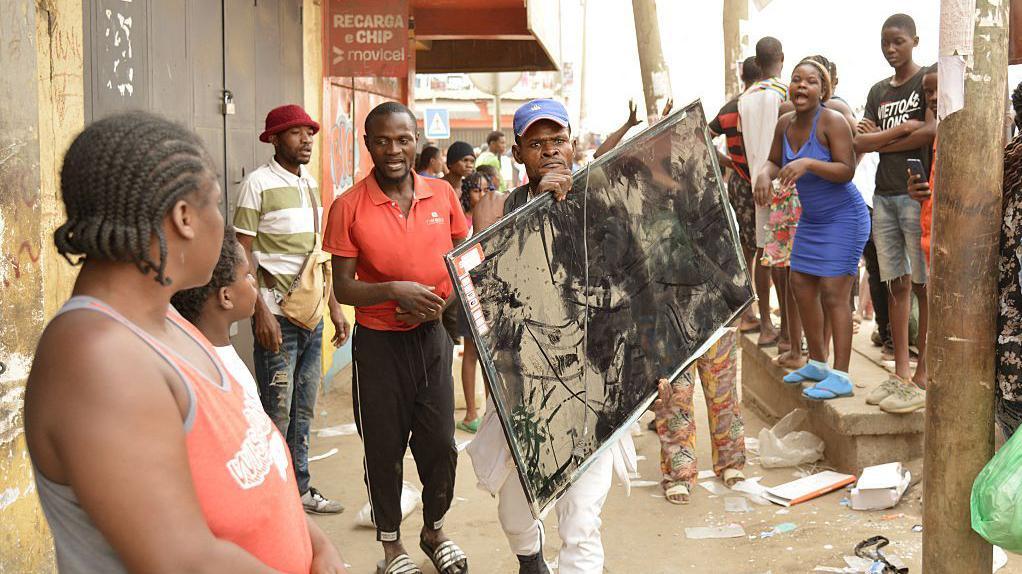
Highways were obstructed by flaming tires, stores were plundered, and conflicts broke out between protesters and law enforcement.
It marked one of the largest waves of demonstrations following the conclusion of the civil war in 2002.
As Angola, an oil-rich nation, prepares to celebrate 50 years of independence from Portugal on November 11th, protests have drawn attention to ongoing issues of poverty and inequality.
In areas where the protests were most intense, many individuals are hesitant to express their views openly, fearing retaliation or harassment due to the large number of arrests that occurred during and following the demonstrations.
“Things might have gotten a bit out of hand, but we had to create so much noise to awaken those in authority,” said a 24-year-old street vendor from Luanda, who wished to stay anonymous, to the outlet.
Having dropped out of school before finishing secondary education, he currently sells soft drinks on Avenida Pedro de Castro Van-Dúnem Loy, one of the busiest streets in the capital, in order to support his family.
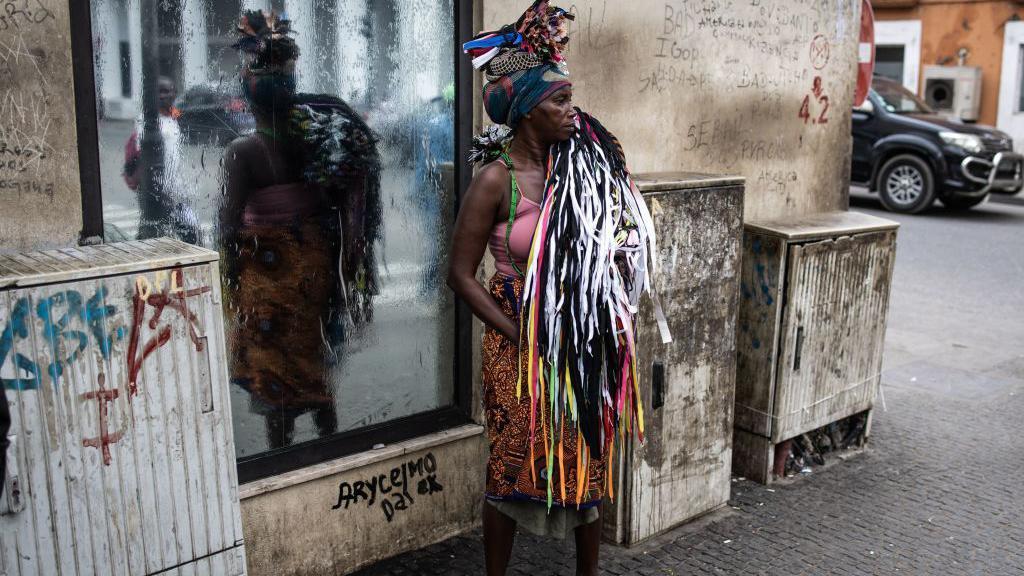
He is among the millions here fighting to make ends meet surrounded by the shiny high-rises constructed with oil wealth.
For the vendor, participating on the first day of the demonstrations was a means of expressing that “we have a voice” and that individuals like himself are entitled to a portion of the nation’s prosperity, which is “rich for some, yet miserable for many.”
High levels of youth unemployment have fueled demonstrations in this young nation, where the average age is under 16.
The unemployment rate for individuals aged 15 to 24 is 54%, according to official data. Among the 18 million young adults who are of working age, only three million are employed in the formal sector—indicating they receive consistent pay and contribute to tax collections.
In the major cities of Angola, a large number of young individuals who are out of school and unemployed emphasize the government’s challenge in addressing their hopes and ambitions.
The street vendor stated, ‘I only sell on the street if I can earn enough to purchase soft drinks.’
There are times when I don’t make any sales due to the sluggish business. Me and numerous other young individuals experience this, yet no one notices us. That’s why we can’t remain quiet.
Angolan sociologist Gilson Lázaro was unsurprised by the events in July. He thinks that the core of the protests consisted of the “dispossessed.”
“These are young individuals, the majority of them, who have nothing remaining except their lives. This is why they took to the streets without any fear,” he stated.
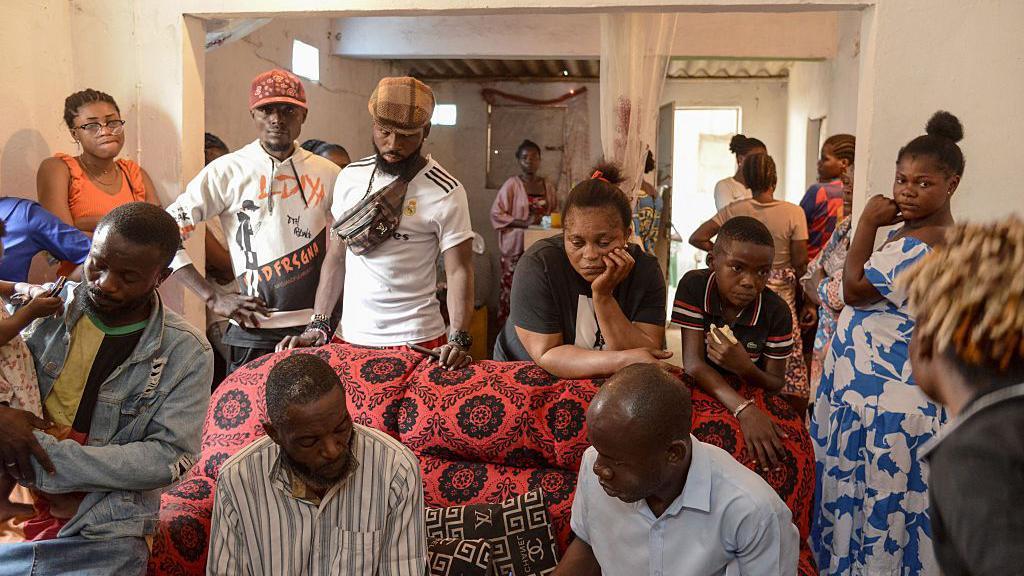
The demonstrations began unexpectedly in several of Luanda’s more densely populated and impoverished areas, where certain residents do not have access to fundamental sanitation facilities or other vital infrastructure.
Over time, protesters advanced into the capital’s primary streets, creating disorder and “revealing a social issue that has been present for a long time but has been overlooked by the political elite,” as stated by the sociologist.
“For a while now, Angola has been moving toward a severe social, economic, and particularly political legitimacy crisis. The main reason is the improper manner in which the country has been managed since the conclusion of the civil war in 2002,” Dr. Lázaro mentioned.
The Movement for the Popular Liberation of Angola (MPLA) has governed the nation for the past five decades since gaining independence.
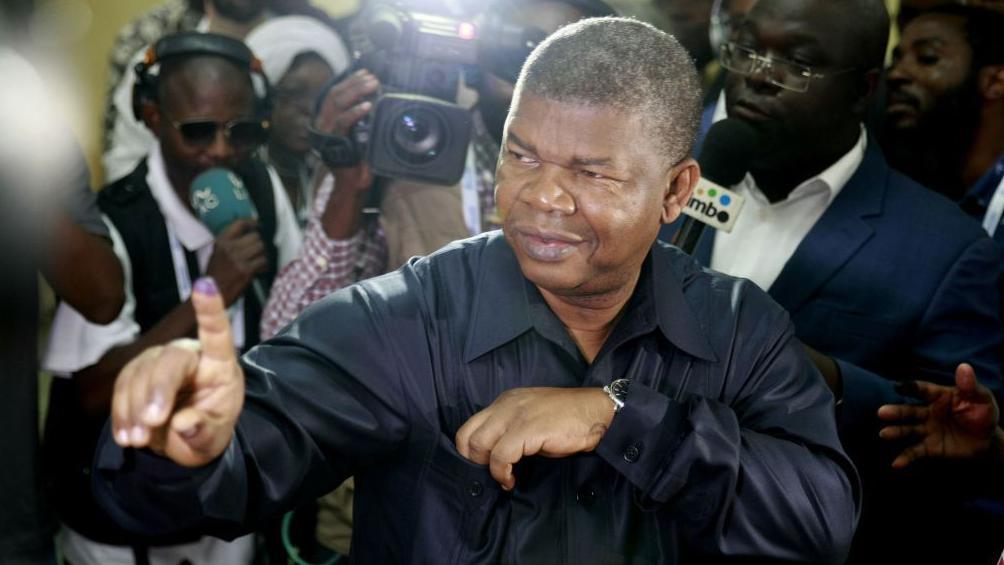
Some hope existed that João Lourenço, who became president in 2017 following José Eduardo dos Santos, who had ruled for 36 years, would bring about changes.
He is currently in his second consecutive term after the 2022 election.
Lourenço pledged to reform what he viewed as the flawed system passed down from his predecessor: addressing corruption, expanding the economy, and generating employment.
Eight years later, critics claim he has not succeeded in this regard and is having difficulty addressing the cost-of-living crisis – and although it has decreased slightly, the annual inflation rate is still high at approximately 18%. A 2024 Afrobarometer survey indicates that 63% of Angolans believe the country’s economic situation has deteriorated compared to the previous year.
Young individuals have faced the majority of challenges and have led numerous demonstrations against the government in recent years, addressing issues such as corruption, police violence, calls for local elections, and opposition to hunger and poverty.
However, nothing compared to the magnitude of the unrest in July.
Lea Komba, a 20-year-old studying political science, describes the fuel demonstrations as “intimidating yet somewhat anticipated” considering the nation’s present situation.
“We reside in a nation where youth are overlooked by those in authority. Demonstrations are the sole means to express discontent over the unstable circumstances we endure,” she stated.
The Angolan administration holds a contrasting perspective.
A government representative did not provide a response to a query regarding the protests and their consequences, yet in a national speech on August 1st, President Lourenço expressed his views.
He criticized the demonstrations as “actions taken by irresponsible individuals, influenced by anti-patriotic local and international groups via social media, resulting in grief, damage to public and private assets, limited availability of essential goods and services, and unemployment among Angolans.”
Although there have been multiple pledges to broaden its economic base, Angola continues to rely heavily on oil and gas, which are by far the nation’s primary exports and the major source of government income.
“Natural resources are beneficial, but the issue is how the income is utilized,” said Angolan economist Francisco Paulo.
If Angola adopted models similar to Norway or Saudi Arabia, leveraging oil profits to boost non-oil industries and enhance its labor force, it would bring significant benefits. Regrettably, the income is instead squandered on trivial expenditures that offer no real value.
After Dos Santos left, Angola experienced five consecutive years of economic decline from 2017 to 2021.
Growth resumed in 2022, primarily fueled by non-oil industries. However, recent economic expansion has had minimal effect on the majority of Angolans.
According to a report released this year, the World Bank calculated that over a third of people survive on under $2.15 daily.
It mentioned that although the economy was growing, it was not matching the rate of population increase, indicating that, on average, individuals were becoming less affluent.
With the upcoming independence celebrations, arrangements such as music festivals, presidential medal ceremonies, and a football match featuring Argentine player Lionel Messi are being actively organized.
However, student Ms. Komba challenges the old socialist slogan “one people, one nation,” which was created during the one-party Marxist-Leninist government in the late 1970s.
“It’s completely false to claim that everyone experiences the same reality. There is significant disparity. Youth in underprivileged regions are often forced into severe poverty, lacking access to good education or stable employment, even if they work hard and obtain a degree,” she stated.
Those young individuals make decisions based on their hunger, as it has left them with nothing to fear. They are the ones who occupied the streets.
Ms. Komba mentioned that “the authorities should examine underlying reasons, not merely the outcomes.”
The act of looting was merely a method used by young individuals to gain the focus of those in authority.
She believes that additional disturbances might occur.
From now until the 2027 elections, we can expect to witness additional demonstrations. Regardless of our preferences, political consciousness is increasing in Angola, and elections are regarded as a key opportunity for genuine transformation.
More stories about Angola:
- Angola’s João Lourenço – the individual challenging Isabel dos Santos
- Biggest pink diamond discovered in Angola in 300 years
- Revisiting the African origins of Brazil’s martial art known as capoeira
- Former Trafigura executive found guilty of corruption in a significant legal case
- Isabel dos Santos responds to UK’s ‘dirty money’ sanctions

Go to Africa.comfor additional news from the African continent.
Follow us on Twitter @Africa, on Facebook at Africa or on Instagram at africa

 jasdooit
Leave a comment