
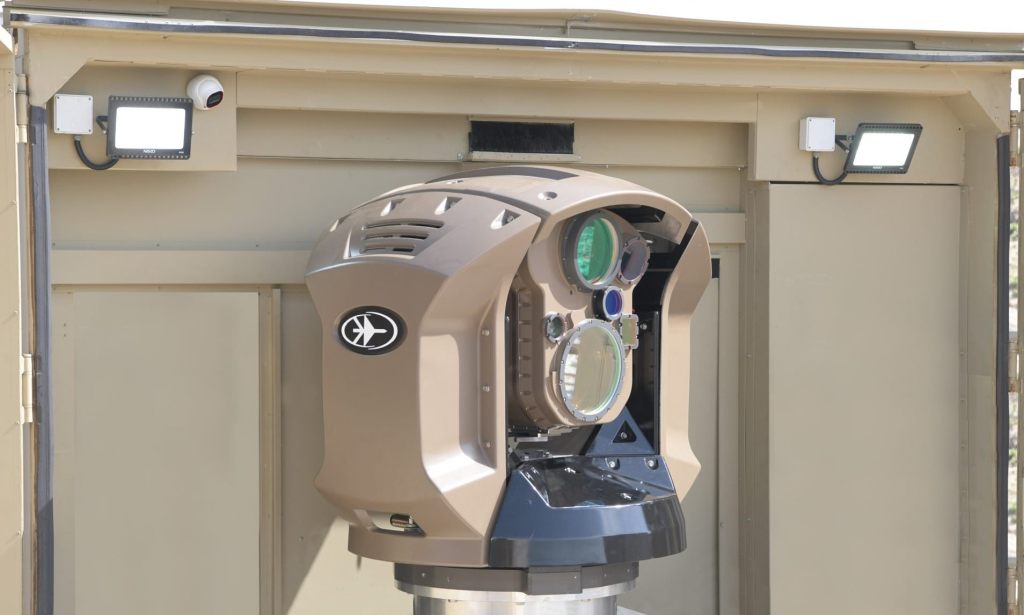
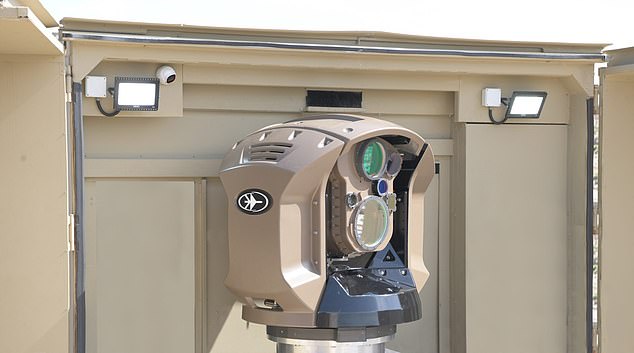
Israelhave introduced the world’s initial laser-powered defense mechanism capable of neutralizing hostile missiles and unmanned aerial vehicles at a cost of only $2 per engagement.
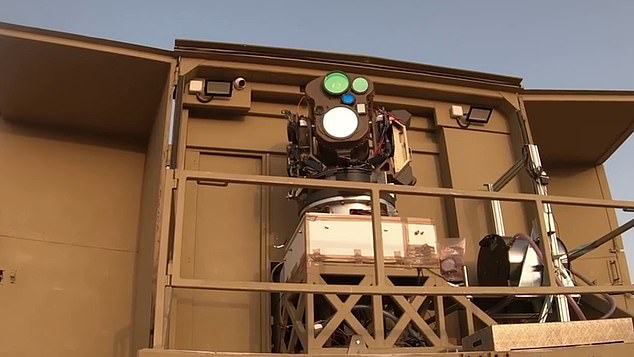
The £413 million Light Shield — also referred to as Iron Beam — emits beams of light containing between 100kW and 150kW of power, striking targets several kilometers away with high precision.
Now that development has been finalized and it has successfully passed its last tests, the advanced weapon, which ‘never depletes its ammunition’, has officially entered service.
Following more than ten years of development, the advanced weapon is set to be handed over to the military by the end of this year.
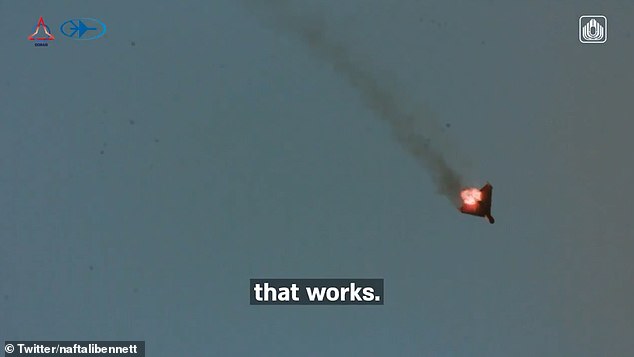
Going to X to announce the groundbreaking success,IsraeliPrime Minister Naftali Bennett shared a video showing the Light Shield in operation, destroying enemy drones mid-air.
‘For the first time in history, our latest Light Shield laser defense system effectively disabled numerous enemy drones, utilizing just a beam of light,’ he stated.
Bennett described the technology, explaining that as soon as an incoming threat—like a rocket, drone, or UAV—is identified, a powerful laser targets and neutralizes it in mid-air within approximately two seconds.
When a missile approaches, hundreds of tiny lasers are simultaneously launched toward it. A highly advanced algorithm then determines which of these lasers successfully hits the target and instructs the remaining laser beams to adjust their direction. As a result, the entire laser power is concentrated on that specific point.
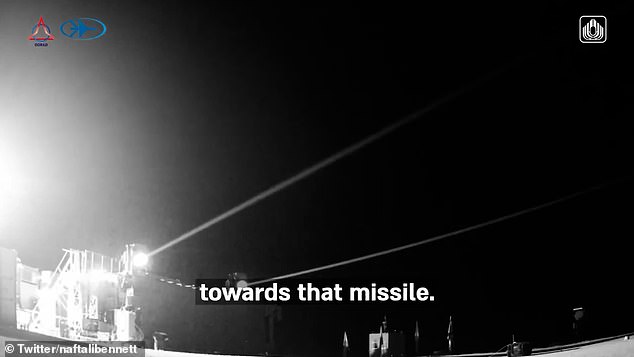
We don’t require interceptor missiles similar to an Iron Dome,” he added. “There’s no explosion in the cities, just a clean, quiet defense. And it operates at the speed of light.
Moving footage captures the system in operation, methodically scanning the sky prior to swiftly attacking an approaching drone that subsequently falls to the ground.
Laser technology provides Israel with a more economical way to address aerial dangers.
Bennett described this as the “real game changer,” noting that each Iron Dome interception typically costs approximately $70,000, while a laser interception only requires a few dollars worth of electricity.
The prime minister stated: ‘This implies that we will deplete our adversaries’ finances, their assets, while safeguarding our citizens with minimal expense’.
Additional advantages involve needing fewer personnel to manage and transport, which simplifies hiding it.
The Light Shield will not take the place of the Iron Dome or Israel’s other air defense systems, but will be incorporated into their already sophisticated arsenal, “creating a layered and highly effective defense for all of Israel.”
Bennett confirmed that they plan to deploy the laser systems across the entire nation and have also proposed selling the sophisticated technology—’but exclusively to our allies’.
“This goes beyond a military enhancement, it represents a transformation in defense technology,” he added.
Defense Minister Israel Katz stated, “Iron Beam positions the State of Israel as a leader in worldwide military technology and makes the State of Israel the first nation to have this capability.”
He stated: “This represents more than just a feeling of national pride; it’s a significant turning point for our defense sector.”
“A quick, accurate interception at minimal cost that integrates with current defense systems and alters the threat dynamic,” he said.
Nevertheless, there is a major compromise.
Although the Iron Dome is a weather-resistant system capable of protecting against missiles and rockets in rain, fog, dust storms, and low cloud conditions, the Light Shield can only function efficiently in dry weather because moisture in the air scatters and absorbs the focused light.
Although Iron Dome missiles can eliminate targets immediately, Light Shields typically need to maintain focus on their targets for several seconds before they are neutralized.
The Light Shield is designed to intercept smaller projectiles, while reserving larger ones for more sturdy missile-based systems like the David’s Sling and Arrow.
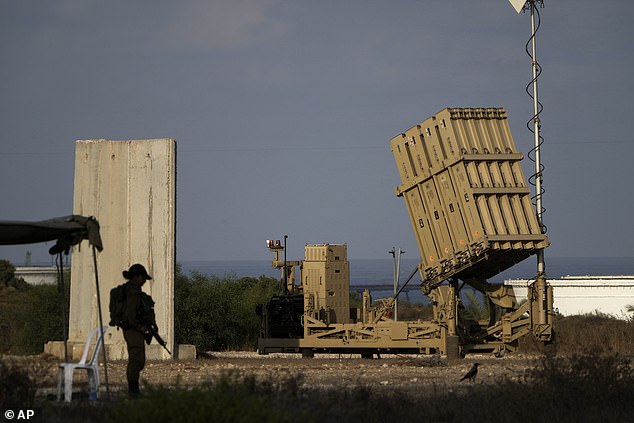
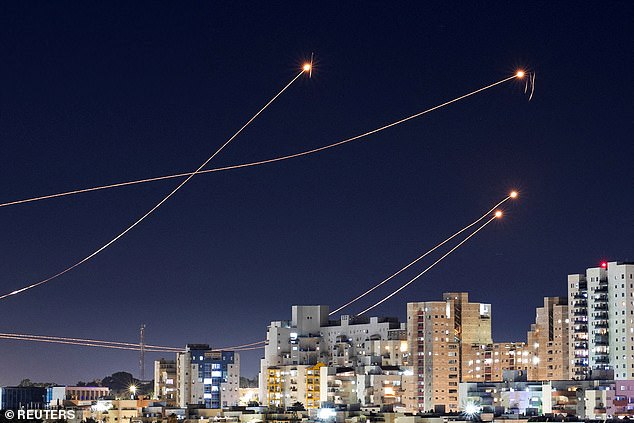
The Iron Dome is Israel’s most renowned missile defense system, capable of stopping short-range rockets along with shells and mortar fire.
Iron Dome systems are distributed throughout the nation, with every base containing three or four launch units. Each launch unit is equipped with 20 interception missiles.
A radar system identifies rockets and determines their path, while a control system predicts the point of impact. An operator then determines whether to fire rockets to stop them.
David’s Sling is designed to neutralize long-range rockets, cruise missiles, and medium to long-range ballistic missiles. It became operational in 2017, and like the Dome system, it targets only those missiles that pose a threat to civilians and critical infrastructure.
Arrow 2 intercepts short-range and medium-range ballistic missiles as they move through the upper atmosphere.
It can identify missiles as far as 500km away. Missiles from Arrow 2 can move at nine times the speed of sound – launching at up to 14 targets simultaneously.
Meanwhile, Arrow 3 engages long-range ballistic missiles at the peak of their trajectory, beyond the Earth’s atmosphere.
The most recent technological achievement was created by Rafael Advanced Defense Systems.
They also changed the name of the system in Hebrew from Magen Or, translating to “light shield,” to Or Eitan, meaning “Eitan’s light.”
The name honors Captain Eitan Oster, 22, an Israeli officer who lost his life while confronting Hezbollah in southern Lebanon in October 2024.
- Can Israel’s innovative £413m Iron Beam laser system transform missile defense through its affordable method?
- How is Israel’s Iron Dome defending against the attack of 181 missiles from Iran, illuminating the night sky with successful interceptions?
- Can Israel’s ‘Iron Dome’ defense system endure the impressive wave of Iranian rockets illuminating the night sky?
- As air raid alarms sound, how is Israel’s Iron Dome performing against Iran’s aggressive missile attack?
- Could a British Iron Dome protect the UK from upcoming Russian missile dangers, or is the cost prohibitively high?




 jasdooit
Leave a comment