
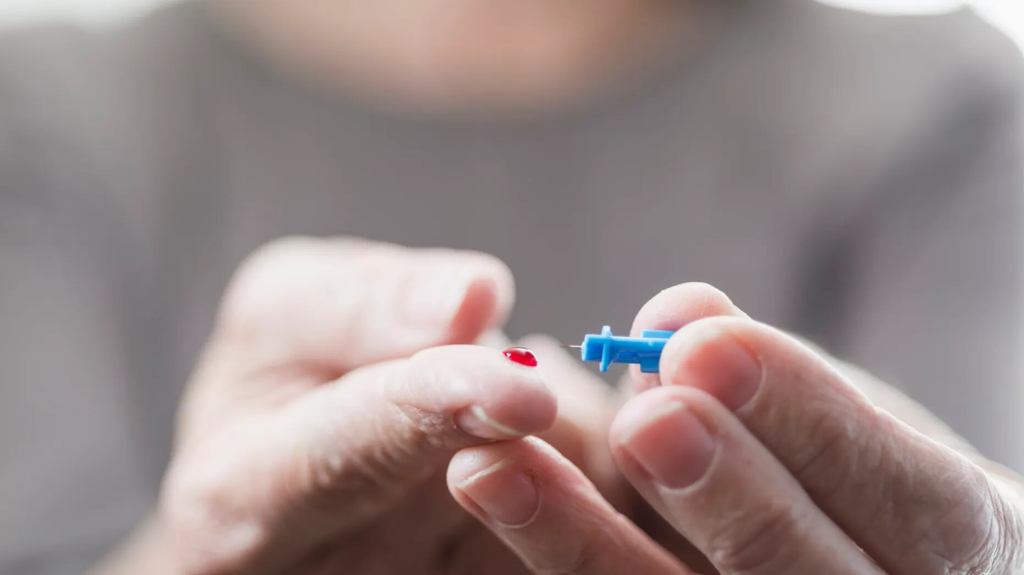
Innovative devices that can quickly identify a range of new infectious diseases, including COVID-19, Lyme disease, and AIDS, along with conditions like cancer and dementia, from just one drop of blood are consistently being created. This development is fueled by the recent swift progress in what is known as “liquid biopsy” technology, which identifies illnesses by analyzing substances found in the blood.
A group of researchers from Arizona State University (ASU) in the United States created a new tool named “NasRED” capable of identifying multiple new infectious diseases using just a single drop of blood. They presented their results in the global academic publication *ACS Nano* on the 12th of the previous month.
As per the ASU research team, the “NasRED” they created is a compact cube with each side measuring 6.7 cm. It is not only easy to carry but also offers remarkable accuracy and sensitivity. Even a very small quantity of blood—similar to one drop of ink in a volume of water equivalent to 20 Olympic-sized swimming pools—is enough for testing. The cost of diagnosis is as low as 2 U.S. dollars. The ASU research team mentioned, “This device will allow quick action before infectious diseases spread widely.”
Fuji Revio Diagnostics, a division of the Fuji Revio Group based in Japan, obtained clearance for its blood test system “Lumipulse” from the U.S. Food and Drug Administration (FDA) in May. The device is capable of identifying and diagnosing the condition even when only minimal levels of the protein associated with dementia are detected in the patient’s blood sample.
Grail, a U.S. company specializing in liquid biopsy, has recently introduced its “Multi-Cancer Early Detection (MCED) test technology,” capable of identifying cancer cells across more than 20 types up to three years prior to symptom onset. The firm is currently seeking FDA approval.
In 2023, South Korea’s GC Genome introduced “ai-CANCERCH” within the country, a test capable of forecasting the risk of more than six cancer types through a single blood sample. It efficiently determines the probability of lung cancer, liver cancer, colorectal cancer, pancreatic cancer, esophageal cancer, and ovarian cancer.



 jasdooit
Leave a comment