
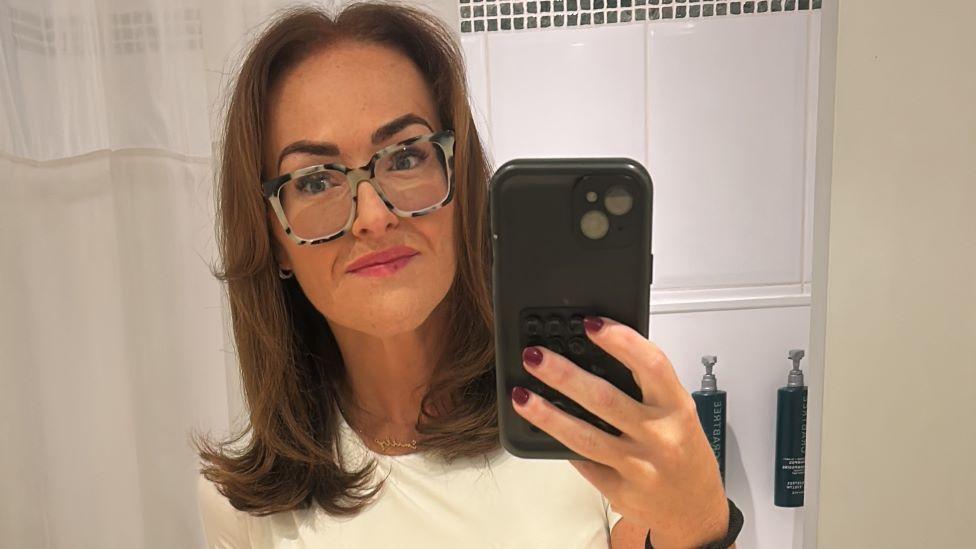
Having lost almost six stone since December with the aid of weight-loss injections, Emilly Murray now faces an unwanted reminder of her previous physique – excess skin.
I’m not able to wear what I’d like,” mentions the 35-year-old from Liverpool. “I can’t move my legs because the skin extends over my knee so significantly.
Although she doesn’t feel sorry for losing weight for her health, Emilly mentions that the loose skin on her thighs “really gets me down,” making her feel self-conscious. The way she appears naked makes her feel like a “catfish.”
It appears fine when gathered in, but then I feel that when I remove my clothes, I resemble a 90-year-old woman. It is terrible.
- What is the mechanism behind weight-loss medications such as Mounjaro and Wegovy?
- Watch: Do weight-loss injections justify their adverse effects?
This month, it has been two years since the weight-loss injection Wegovy was introduced by the NHS for specific patients attending weight-management clinics in England, Wales, and Scotland. It has been accessible through private channels since spring 2023.
A different weight-loss medication, Mounjaro, was made available through private channels in February 2024 and through the NHS in June. These medications, which function by reducing hunger, may not be appropriate for all individuals and can lead to significant adverse effects.

Numerous individuals attribute their rapid weight loss to home injections, yet others are experiencing a blow to their self-esteem due to the appearance of their arms, stomach, breasts, and thighs.
Some people also observe sagging skin on their cheeks and neck, which has been humorously referred to as “Ozempic face” on social media.
As a person gains weight, their skin adjusts and expands, yet after weight loss, the skin may continue to appear stretched, according to Nora Nugent, president of the British Association of Aesthetic Plastic Surgeons (Baaps).
“The faster the weight loss, the more loose skin,” she adds.
In certain situations, sagging skin may result in irritation and potentially lead to an infection, yet for numerous individuals, the consequences are milder and primarily an annoying inconvenience.
In online groups focused on weight loss medications, individuals exchange advice on ways they aim to minimize sagging skin by increasing muscle mass, consuming collagen supplements, and applying creams.
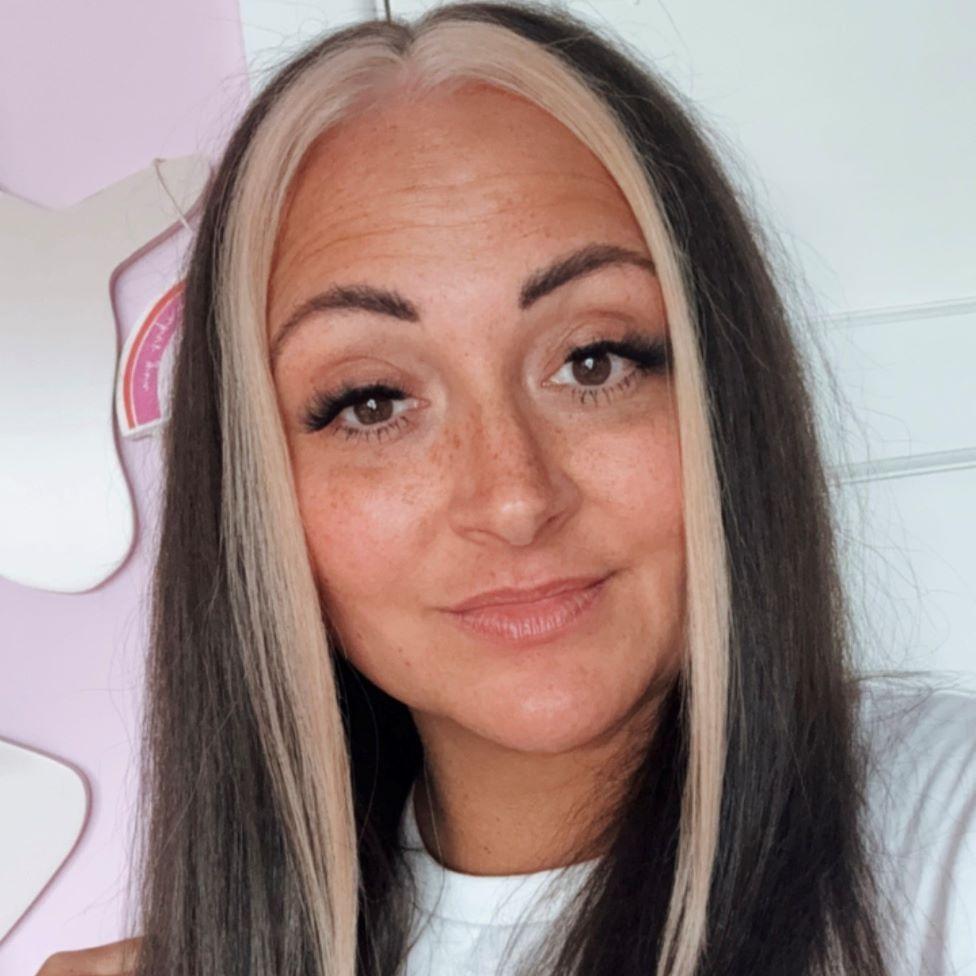
However, Ms. Nugent mentions that following “substantial” weight reduction, surgery remains the sole effective choice. Furthermore, for individuals who have successfully managed their weight, the expense of an operation can often be an additional obstacle.
Various methods exist for eliminating excess skin, collectively referred to as body shaping, yet these are seldom provided by the NHS and only under certain conditions.
They must demonstrate that their loose skin is greatly affecting daily activities such as washing and getting dressed, according to Mark Soldin, a plastic surgeon who operates in private practice and the NHS.
Addressing obesity is a key focus for the healthcare system, as shedding weight can lower the chances of acquiring severe conditions linked to obesity. Such conditions include cancer and heart disease, whose management is believed to cost the NHS approximately £11 billion annually.
However, Mr. Soldin notes that body contouring is primarily regarded as a cosmetic procedure and holds a low priority for NHS administrators who need to allocate restricted public funds.
“There are more critical issues for the NHS to address—individuals who have experienced trauma such as broken legs, heart attacks, and similar conditions,” he informs us.
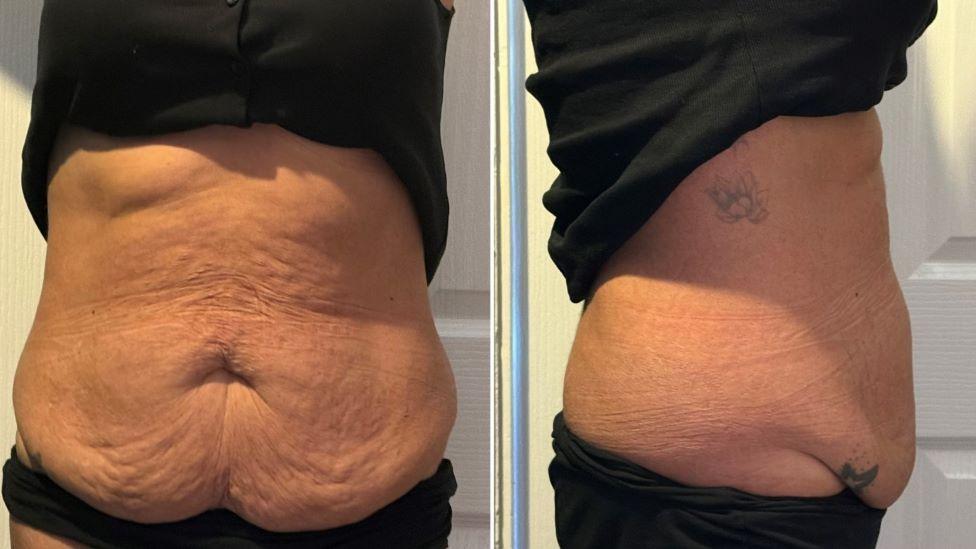
He mentions that certain patients in the region where he is based—London and surrounding Surrey—could encounter expenses up to £40,000 if they are unable to obtain surgery through the NHS and opt for private treatment instead.
While this varies based on the quantity of excess skin they have and the specific treatments they choose. The most frequent ones are for the face, abdomen, thighs, and breasts.
Emilly hopes to have sufficient funds for her surgery by next spring. “I’m working on saving money, but I might also need to consider loans or credit cards.”
Grace Parkin, residing in Sheffield, has accumulated sufficient funds for the surgeries she desires – a tummy tuck, liposuction, and breast lift – yet she is traveling overseas for the procedures due to lower costs.
The 34-year-old says, ‘I’ve put in the work, lost nine stone (57kg), and spent years hating how I appeared.’ ‘I want to look the way I want to.’
Although traveling overseas for medical treatment also requires careful thought.

“I am aware that [some] individuals manage without any issues, but we are gathering information on those who experience problems after returning from surgery abroad,” says Ms. Nugent.
Her group, Baaps, advocates for private plastic surgeons in the UK.
“One of the most frequent procedures that result in complications,” she adds.
The NHS advises individuals thinking about undergoing surgery overseas to consult their GP first.
Charmaine Hines sees surgery as a “final option” due to the financial burden and the potential for lasting scars.
Since skin removal procedures may last as long as six hours, they increase the likelihood of medical issues such as low body temperature, pressure injuries, and infections.
Like Emily, Charmaine shed approximately six stone (38kg) and shares comparable concerns regarding her current body appearance.
Even if she decides to change her opinion, she has been saving some money for a stomach contouring procedure.
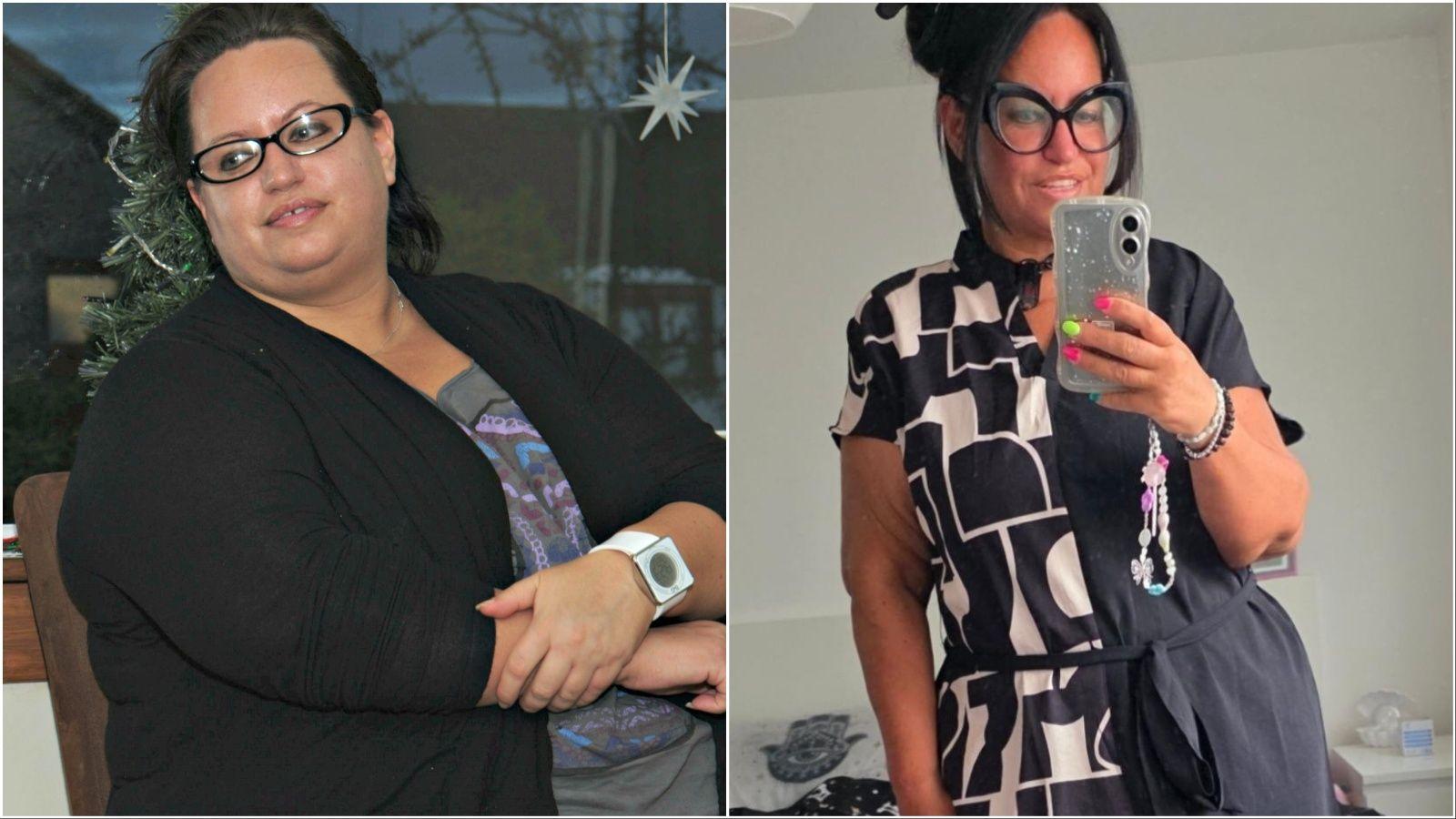
“You carry the idea in your mind that it’s a fairy tale — you’ll reach the end and have a perfect body, then look in the mirror and feel amazing,” says the 35-year-old from Newtown in mid-Wales.
But unfortunately, that is not the situation, as there is the [loose] skin that comes along with it.
Although not everyone is as dissatisfied with their loose skin.
I simply accept it,” says Laura Hughes, 47, from Aberdeen. “It doesn’t bother me.
She didn’t worry about experiencing sagging skin when she began using weight-loss medication a year ago, and has shed 12 stone (76kg) since then.
At that time, she observed skin becoming loose over time, particularly on her arms.
Laura claims the medicine has “completely transformed” her life, as prior to that, she struggled to walk and “rarely left” her home.
She is now sharing self-portraits on social platforms and has begun DJ classes, an activity she previously lacked the confidence to pursue.
I’m compensating for the time that has passed.




 jasdooit
Leave a comment