
Staff members from the Daily Mail choose and organize the items displayed on our website. If you buy something through links on this page, we may receive a commission.learn more
This year has seen a sharp rise in mosquito-transmitted illnesses.
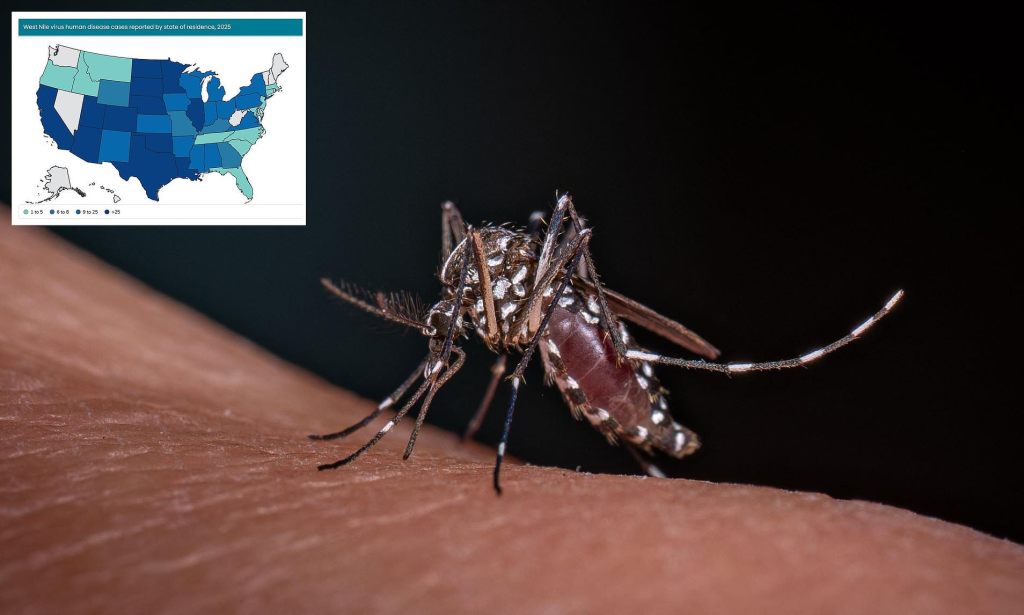
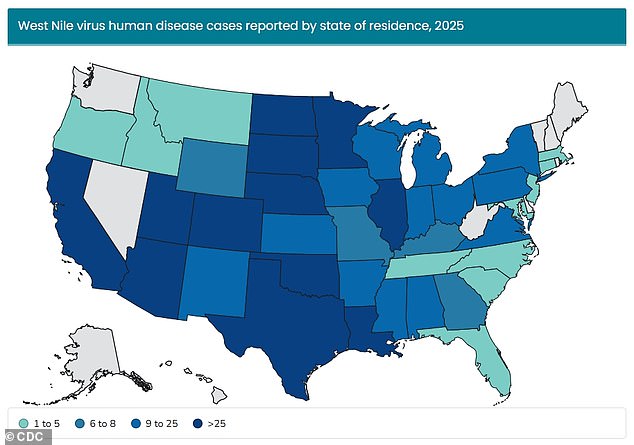
There has been a 40 percent increase in cases of West Nile Virus, a condition that can lead to paralysis, this year compared to usual levels, with approximately 770 infections reported. Most of these cases involve a serious illness in which the virus has affected the brain.
In Florida, dengue fever, which can lead to significant internal bleeding, continued to be locally transmitted for the second consecutive year.
And globally, specialists sounded the warning about achikungunya virus outbreak in Chinawhich resulted in lockdowns during the pandemic. TheCDCissued a travel advisory for the nation in an effort to prevent the virus from entering the United States.
There were additional alerts regarding the possibility of malaria re-emerging in the United States, whichleads to the death of up to 30 percent of those who do not receive treatment,after an increase in cases in South America.
Experts informed the Daily Mail that they were becoming more frequentconcerned about mosquito-transmitted illnesses spreading into the United States.
Dr. Sharon Nachman, head of pediatric infectious diseases at Stony Brook Children’s Hospital, said to this website: ‘Diseases transmitted by mosquitoes have expanded their range from the southern regions, and we are witnessing the mosquito population gradually moving north along the East Coast of the country.’
This is a matter of concern, as they can spread infections, and if they pass on these infections to individuals in these areas, people should be informed about the illnesses and the methods of treatment available.
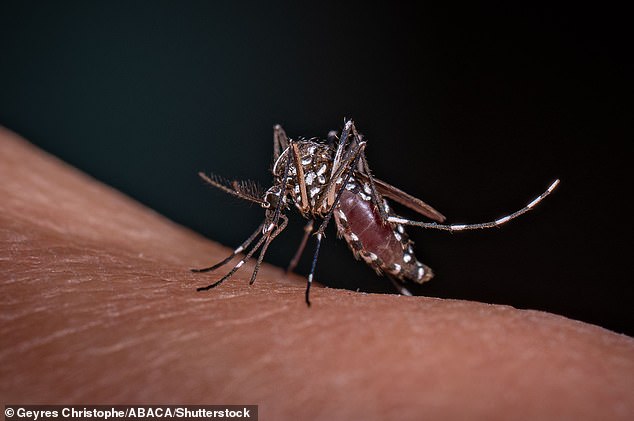
And Dr. Louisa Messenger, an expert in environmental and global health based in Nevada, cautioned that her state had contemplated increasing mosquito control measures this year due to a surge in the number of biting insects.
It is common for almost everyone to be bitten by mosquitoes, as experts estimate that over a hundred million such incidents occur in the United States annually.
Several of these bites cause a red, elevated spot that lasts for a few days, which might be irritating or turn inflamed.
However, in several instances, the mosquito has transmitted an infectious disease to a person, which can rapidly cause symptoms.
Dr. Nachman stated, “If a child has recently been bitten by a mosquito and their behavior has altered or they have developed a rash, these are the indicators that a doctor should consider.”
To prevent mosquito bites and the associated risks, the Daily Mail has compiled expert-recommended advice to ensure your safety.
REPELLENT
Numerous mosquito repellent brands are available in the United States, which can be applied to the skin to prevent mosquito bites.
However, Dr. Nachman recommends that her patients use products containing DEET, an active component effective in preventing bites from both ticks and mosquitoes.
She advised parents to apply it to children’s clothing rather than their skin, explaining that this prevents it from unintentionally rubbing off during play or if the children get wet.
For grown-ups, she mentioned that the spray needs to be applied on any uncovered parts of the body that might be at risk of being bitten, including the neck, face, arms, legs, and ankles. It is advised to reapply the repellent every few hours.
Dr. Messenger stated that applying sprays containing DEET, picaridin, or IR3535 could successfully prevent mosquito bites.
The repellents work by hiding the natural scent of the human body that draws mosquitoes, or keeping them away when they touch the skin.
Mosquitoes possess taste sensors on their feet, which are deterred by compounds such as DEET.
Experts suggested using the sprays during early morning and late evening hours, when mosquitoes are most prevalent outside.
Dr. Messenger stated: “I frequently get questioned about the necessity of using the chemicals, as individuals find them sticky, they tend to remain on clothes, and they often prefer not to apply a strong chemical to their skin.”
But research indicates that these chemicals are safe for human use and effective. Although there is some evidence suggesting that consuming cinnamon, garlic, or lavender and rosemary might be beneficial, I cannot endorse them since they are not approved by the EPA.
Other methods to keep mosquitoes away include burning coils that contain substances such as pyrethrins. These are emitted into the air to deter mosquitoes.
In general, specialists mentioned that the most effective method to prevent bites without employing repellent is to wear long-sleeve garments that cover the arms and legs, which are frequently targeted by mosquitoes.
ZAPPERS AND TRAPPERS
Numerous individuals enjoy spending some time outside during the evening to have a meal or read a book, a period when mosquitoes are also most active.
Zappers can be effective. They employ ultraviolet light to draw in mosquitoes and then eliminate them using an electric current.
Traps can also be an alternative, utilizing synthetic pheromones that mimic human scents to lure mosquitoes, capturing them before they have a chance to settle on a person and bite.
They should be positioned beneath shrubs or close to water areas, according to specialists, whereas electric traps can be set up near places where individuals congregate.
Dr. Messenger stated, “They can be effective, but it largely depends on the mosquito population in your area.”
These snares may capture a handful of mosquitoes, but they won’t eliminate all, meaning you might still find some insects on your deck.
TOPICAL PRODUCTS
For certain individuals, applying mosquito-repellent spray may seem burdensome or unpleasant.
In such situations, producers have developed different methods to apply insect repellent to the skin, such as through a cream or by using insect repellent wipes.
They suggest using these products on the same skin areas that are typically treated with spray-on repellent to prevent mosquito bites.
Dr. Nachman mentioned that it was uncertain how long these products would remain effective, noting that they might require frequent reapplication.
Everything seems promising,” she remarked, “but although it may function for a brief period, its effectiveness over a longer duration is questionable.
Dr. Messenger stated, “Non-prescription creams and wipes may work well, and using insect repellent on your skin is among the most effective ways to prevent mosquito bites.”
HOME CARE
Numerous actions can be performed at home to minimize contact with mosquitoes and lower the chances of being bitten.
The first item on Dr. Nachman’s list was to empty any containers around the house that hold still water, which serves as a breeding site for mosquitoes.
Stagnant water is an ideal environment for mosquitoes to multiply,” she stated, “if you have any, dispose of it, and it will help decrease the mosquito numbers.
Research indicates that mosquitoes are capable of reproducing in minimal water volumes, like that of a bottle cap or a teaspoon.
Additional recommendations involve installing mesh screens on doors and windows that are frequently left open during twilight or early morning hours to prevent mosquitoes from entering the house.
Experts also suggest activating the air conditioning during the evening, as the dry and cooler air makes mosquitoes already inside the house significantly less active.
- What essential CDC recommendations can help you avoid being added to the West Nile Virus statistics this season?
- Rising mosquito activity: What steps can you take to safeguard against the deadly Japanese encephalitis virus this summer?
- Are Australians preparing for a fresh surge of mosquito-related risks with the coming of summer? Here’s what you should be aware of regarding the hidden dangers.
- How is New York preparing for the influx of deadly mosquitoes causing widespread diseases this year?
- Is the fight against dangerous mosquitoes peaking with the application of pesticides in various US states?




 jasdooit
Leave a comment