

A 70-year-old individual with dementia, Mr. A, has diabetes, high blood pressure, and high cholesterol, and takes more than 15 different medications each day. He is constantly drowsy due to the effects of these drugs. His condition worsened to the point where, when he missed a day’s dose, his mental clarity improved. Mr. A’s family stated, “He must resume his medication, but the hospital is unsure which particular drug is responsible for the side effects. We are working on identifying the most necessary medicines.”
Mr. B (77), residing in Gyeongbuk Province, consumes 12 different medicines each morning. Due to his various health issues, such as high blood pressure, diabetes, and prostate problems, the quantity of medications he takes has progressively risen. Mr. B mentioned, “I go to several hospitals, and every time, additional medicines are prescribed. Now I’m worried, questioning, ‘Is it safe to take so many pills together?’ I wish to decrease the number of medications because I always feel bloated and uncomfortable, but I don’t know how.”
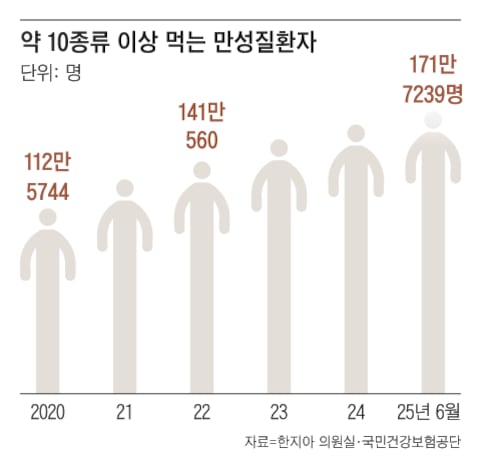
The number of individuals suffering from long-term illnesses who use 10 or more medications each day has increased by more than 50% over the past five years. Although the aging population and growing number of people with chronic conditions are key reasons, South Korea’s easy access to medical care is also mentioned as a contributing factor. Nevertheless, specialists highlight that using multiple drugs at once can cause adverse effects, requiring appropriate solutions.
As of June this year, 1,717,239 individuals who have been diagnosed with at least one chronic illness, such as high blood pressure or diabetes, are taking 10 or more different medications—referred to as “polypharmacy patients,” according to data obtained by Rep. Han Ji-a of the People Power Party from the National Health Insurance Service on the 21st. This represents a 53% rise compared to 1,125,744 in 2020. Of these polypharmacy patients this year, 81% (1,384,209) are 65 years or older. This indicates that over 10% (13%) of the 10.12 million elderly population (as of last year) are using 10 or more types of medication.
South Korea has a notably large number of patients taking multiple medications, surpassing many other nations. In 2021, 64.2% of individuals in South Korea who were 75 years or older were prescribed five or more drugs, placing the country fourth among OECD members. This is much higher than the OECD’s average of 48.6%.
The problem stems from adverse effects. When several medications are taken simultaneously, they may diminish the effectiveness of some drugs or cause their effects to become overly intense. This can also place additional strain on the liver and kidneys, which are responsible for absorbing and eliminating drug components. Older patients, in particular, face a reduction in how their bodies process medications, thereby increasing the chances of side effects such as mental deterioration, delirium (a sudden loss of focus), and issues with urination as the number of medications increases. Jang Geon-young, a geriatrics expert at Asan Medical Center in Seoul, stated, “The more medicines a person takes, the greater the probability of encountering unforeseen side effects, and this risk is especially significant among the elderly.”
In certain situations, the quantity of medications a person takes can rise because of unsuitable prescriptions. A research study conducted by the National Health Insurance Ilsan Hospital Research Institute revealed that senior patients aged 65 and above who were on five or more medications had a 32 percentage point higher chance of receiving “inappropriate prescriptions” than those taking less than five. Inappropriate prescriptions occur when patients with particular health conditions are given drugs they should not be taking.
The Health Insurance Review & Assessment Service currently manages the Medication Safety Service (DUR), a platform that enables hospitals and pharmacies to exchange patient prescription information. Its primary purpose is to issue warnings when duplicate prescriptions are detected. However, healthcare professionals need patient permission to access complete prescription histories, and some data might be incomplete. Because of these limitations, the system is not fully adopted within the medical field. A representative from the medical community stated, “Doctors have only a few minutes per appointment, which makes it challenging to review all medications a patient is using and offer proper guidance.” Many also believe that without a primary care physician system, it’s difficult to expect specialists to thoroughly evaluate medications prescribed by other departments.
To tackle these challenges, the National Health Insurance Service has been running a program for the past eight years, during which specialists visit patients’ homes or offer guidance at pharmacies and hospitals for individuals taking multiple medications. They assess the medications, notify patients of any concerns, and issue new prescriptions when necessary. However, because of the limited number of participating hospitals and pharmacies, only 7,600 people utilized the service last year. Hospitals and pharmacies receive between 80,000 and 150,000 Korean won per consultation from the insurance service, but this payment is considered insufficient compared to the time and effort involved, making it challenging to boost participation.
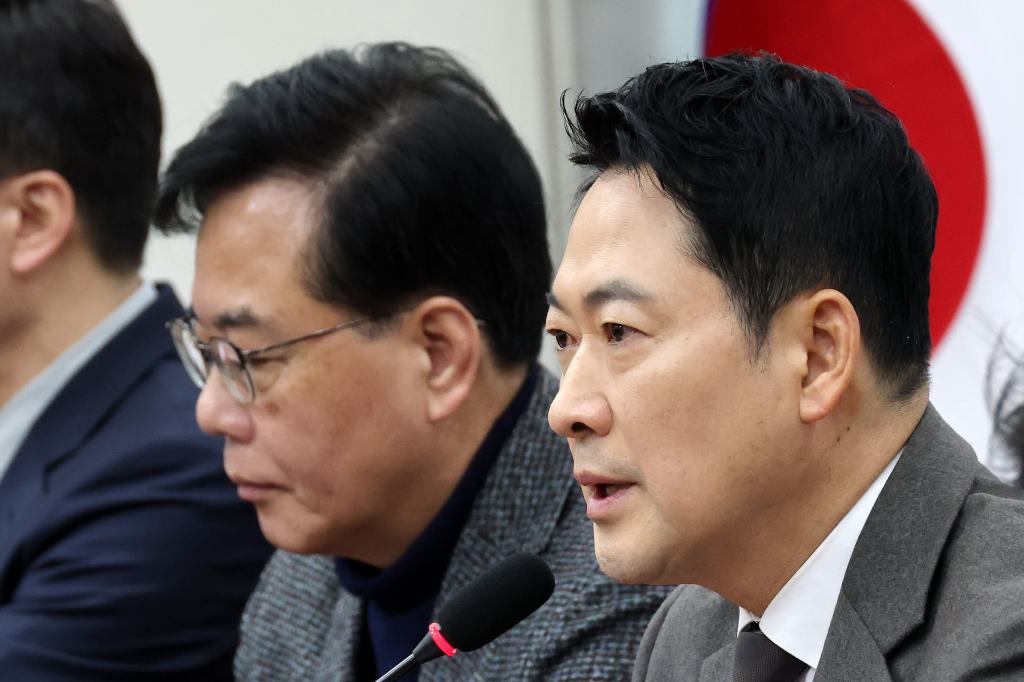
Rep. Han Ji-a stated, “The government needs to greatly increase opportunities for citizens to check and evaluate if their medications are suitable. Boosting government funding for the polypharmacy counseling initiative will motivate more hospitals and pharmacies to get involved.”



 jasdooit
Leave a comment