
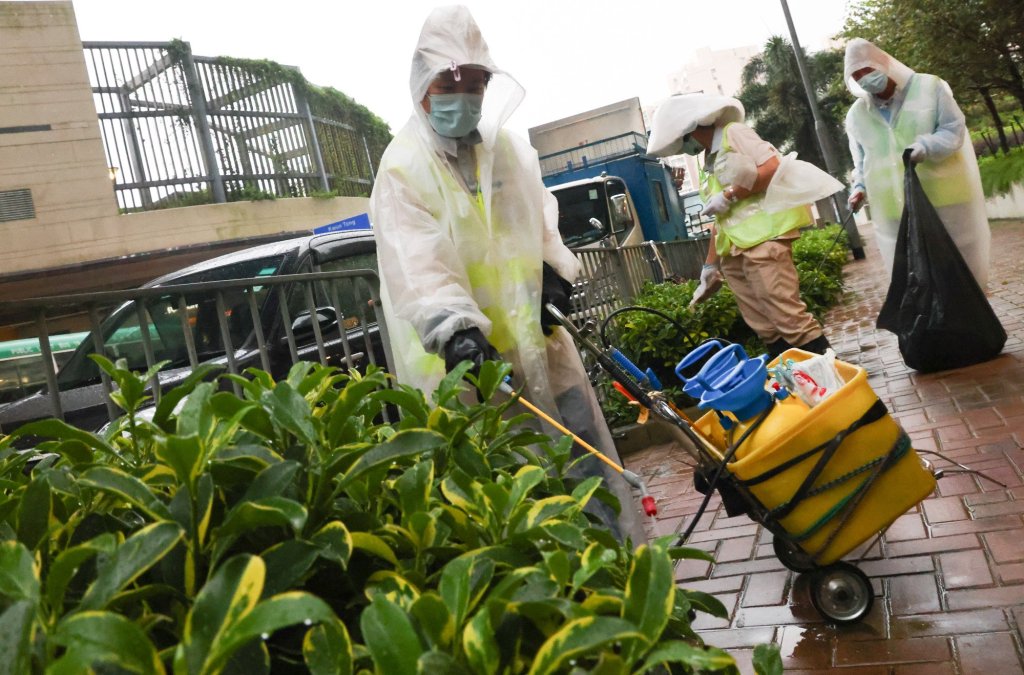
Health officials emphasize the need for caution as the count of infections and other mosquito-transmitted illnesses rises each year.
Climate change and globalization have greatly boosted the number of imported dengue fever cases in Hong Kong, according to health specialists, with annual infections increasing from a few dozen to over 100 in the last 20 years.
This sharp rise has coincided with an increasing threat of mosquito-transmitted illnesses in the city. This year alone, Hong Kong has reported 21 imported cases of chikungunya fever, a record high since the disease was made reportable in 2009, after an outbreak in nearby Guangdong province.
Of the seven mosquito-transmitted illnesses required to be reported to health officials, dengue fever has experienced the greatest rise between 2005 and 2025, as per data from the Centre for Health Protection examined by the Post.
Are you curious about the most significant issues and developments happening globally? Find the solutions withSCMP Knowledge, our latest platform featuring curated content including explainers, FAQs, analyses, and infographics, presented by our acclaimed team.
Dengue usually leads to symptoms like fever, headache, and discomfort behind the eyes. Although most individuals recover within a week, the illness may progress to circulatory collapse and, in certain instances, result in death.
The count of viral infections grew from approximately 30 to 80 each year between 2005 and 2012, followed by a rise to around 100 in 2013 and almost 200 in 2019.
Annual numbers fell to between two and 62 cases from 2020 to 2023, probably because of significant travel restrictions during the Covid-19 pandemic, but increased to 161 in 2024 as cross-border movement restarted.
Up to now this year, 48 instances of dengue fever have been documented in the city.
Many cases in recent years were brought in from outside, except in 2018, when outbreaks occurred in Lion Rock Park and Cheung Chau, leading to 29 locally transmitted cases among 163 total.
Marc Chong Ka-chun, an associate professor at the School of Public Health of the Chinese University of Hong Kong, mentioned that the rising temperatures have led to a more suitable environment for the disease’s transmission.
Alongside climate change, which leads to hotter and more humid summers, the conditions create a more favorable environment for the population growth and ongoing transmission cycles ofAedes albopictus, said Chong, mentioning the mosquito species present in Hong Kong that can transmit dengue and chikungunya viruses, along with other illnesses.
Evidence of global warming has been noted both in specific regions and worldwide, with United Nations member countries set to submit revised climate strategies on September 24 during an international climate conference focused on minimizing the effects of climate change.
According to the Hong Kong Observatory, the average annual temperature increased by 0.14 degrees Celsius (0.25 Fahrenheit) each decade between 1885 and 2024, with the rate increasing to 0.37 degrees per decade from 1995 to 2024.
The World Meteorological Organization also highlighted that the 10 hottest years ever recorded took place from 2015 to 2024, with the most recent year being the warmest.
Chong cautioned that a hotter climate might raise the likelihood of viral mutations.
“Due to the larger scale and broader spread of dengue outbreaks, combined with climate change, an increase in transmission events could result in a greater likelihood of mutations during the virus’s replication in the future,” he stated.
Professor Ho Kin-fai, affiliated with the same institution as Chong, noted that higher precipitation caused by climate change also played a role in the expansion of mosquito-transmitted illnesses, since the insects reproduce in still water, which becomes more prevalent following intense rainfall.
Hong Kong has seen increased precipitation this year, with five black rainstorms—representing the highest alert level in the city’s three-tier system—already issued, surpassing the previous annual record.
Ho stated that globalization partially accounted for the increase in cases, as international travel had become more common.
More individuals from nearby regions and Mainland China are visiting Hong Kong for tourism,” Ho mentioned. “Hongkongers also enjoy traveling overseas.
Globalization implies that a disease is no longer confined to a single location. Once a disease appears in one area, it can quickly spread across the globe.
One of the factors driving the increased spread of illnesses is globalization.
According to information from the Immigration Department, the count of travelers going through Hong Kong’s checkpoints rose from approximately 277 million in 2013 to more than 314 million in 2018, and then decreased slightly to roughly 300 million in 2019.
The movement of people was significantly affected during the Covid-19 pandemic, with only 1.95 million travelers reported in 2021 and more than 5.29 million in 2022. The number of passengers increased to 298.5 million in the previous year, approaching the levels seen before the pandemic.
Although the majority of dengue fever cases in Hong Kong are brought in from other regions, Chong cautioned that the rising number of cases still presents a threat to the local community.
With an increased number of imported cases transmitting the virus, there will be a greater chance that theAedesVectors will transmit the virus from one person to another,” he stated. “This could present a risk to Hong Kong since very few are protected by either natural infection or vaccination.
Experts recommended that residents use insect repellents with DEET and eliminate standing water, for example by replacing the water in vases weekly, to lower the chances of dengue and other mosquito-transmitted illnesses.
More Articles from SCMP
DeepSeek alerts about ‘jailbreak’ dangers for its open-source models
SCMP’s Top Picks: Contender for Victory May Fulfill His Name at Sha Tin
Greater display and ceremony than politics as Britain plays its ‘Trump card’
This piece was first published in the South China Morning Post (www.scmp.com), a top news outlet covering China and Asia.
Copyright (c) 2025. South China Morning Post Publishers Ltd. All rights reserved.




 jasdooit
Leave a comment