
By Albert Allotey
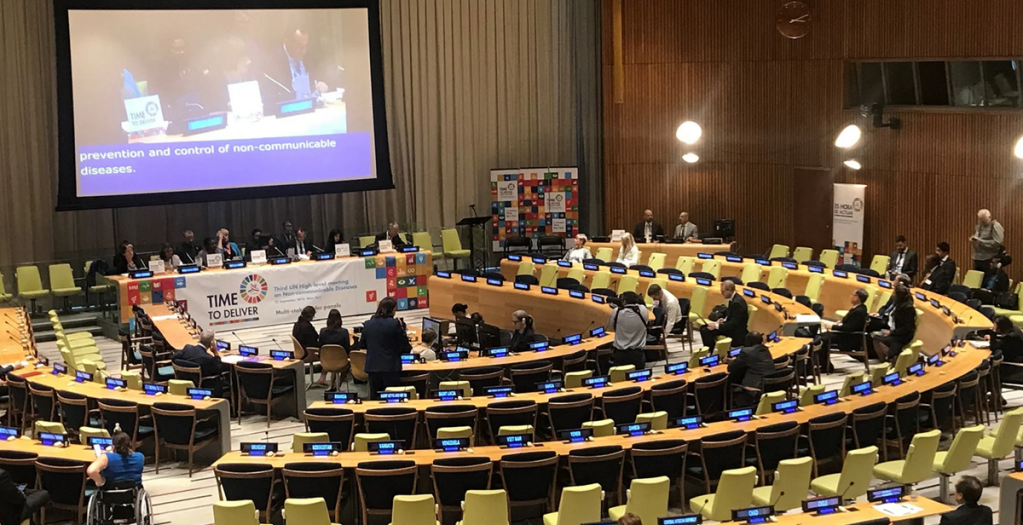
Accra, September 21, GNA – Those leading the battle against noncommunicable diseases (NCDs) and mental health issues are being urged to transform their pledges into tangible actions during the upcoming 4th United Nations High-Level Meeting.
The United Nations High-Level Meeting regarding non-communicable diseases and mental health is scheduled to take place on September 25, 2025, in New York.
The plan for faster sustainable development, Ghana and the NCD Alliance, Ghana, civil society groups issued a joint statement that was sent to the Ghana News Agency.
They stated, “Let the meeting be a time when commitments transformed into action, when plans turned into reality, and when promises led to progress.”
They stated, “Let this gathering be recalled as the point where governments set a boundary. A time when leaders united and affirmed that public health will take precedence, not corporate interests.”
The statement highlighted that non-communicable diseases and mental health issues have become among the most significant challenges to human progress, economic stability, and the fundamental respect of communities.
It noted that diseases are responsible for over 74 percent of global deaths, leading to premature loss of life, pushing families into poverty, and placing a heavy burden on healthcare systems.
It stated, “Behind these numbers are actual people: children raised without parents, communities losing their most productive members, and countries facing the burden of diseases that are mostly avoidable.”
The statement emphasized during the High-Level Meeting that the message needs to be clear, underlining that, “The time in which commercial interests control health policies must come to an end.”
The globe can no longer afford to place the earnings of industries that benefit from harmful products above the health and welfare of its citizens. Tobacco, alcohol, highly processed foods, and drinks with added sugar are more than just items for purchase.
They contribute to illness, pain, and fatalities. Authorities need to take immediate action with bravery to safeguard their people, rather than prioritizing business profits.
The statement emphasized that leadership goes beyond mere words, stating, “Leadership demands action, resources, and responsibility. Effective strategies are available. The WHO Global Action Plan on NCDs 2013-2030 offers the framework.”
What is lacking is the political determination to carry it out completely. Leaders need to come forward now and speed up the execution of these critical measures. Each moment of delay results in millions of avoidable deaths and increasing burdens on healthcare systems and economies.
The statement emphasized that funding is crucial for carrying out policies, and noted that numerous countries have expressed concerns about insufficient resources to tackle non-communicable diseases and mental health issues, while also missing out on revenue opportunities due to the failure to introduce effective health taxes.
It highlighted that enhancing domestic revenue collection, particularly via taxes on tobacco, alcohol, and sugary drinks, is not only a shrewd economic strategy but also a moral necessity.
It mentioned that health taxes save lives by decreasing the use of harmful products, while also creating substantial income that can enhance healthcare systems, broaden mental health support, and provide access to cost-effective medicines and technologies.
It highlighted that this is not a strain on economies, but rather an investment in growth.
The statement highlighted that access to healthcare continues to be a major issue, with numerous individuals affected by NCDs being unable to obtain necessary medications, diagnostic tools, and therapies because of financial barriers or lack of availability.
“Governments need to pledge to eliminate these obstacles. Universal Health Coverage is not complete without efficient and fair services for NCDs and mental health,” it emphasized.
It mentioned that this would involve expanding primary health care, maintaining a consistent availability of crucial medications, and educating healthcare professionals to deliver empathetic, ongoing, and thorough care.
The statement emphasized that every decision made should focus on individuals affected by NCDs and mental health issues, acknowledging their right to a life filled with dignity, belonging, and possibilities.
It said, “The public is observing. Civil society organizations, youth, healthcare workers, and communities globally expect nothing short of strong leadership.”
Future generations will assess if leaders demonstrated the bravery to prioritize people over profits, health over industry pressure, and the future over temporary political gains. The moment to take action is here.
“Governments should enter the UN High-Level Meeting with a clear sense of direction: pledge to take the lead on non-communicable diseases and mental health, speed up the implementation of effective, affordable solutions, increase national funding via health-related taxes, and shield policies from corporate influence,” the statement noted.
It stated, “Anything less will amount to a failure in duty towards those who voted for you, those who endure quietly, and the future generations.”
GNA
Edited by Benjamin Mensah
Provided by SyndiGate Media Inc. (Syndigate.info).



 jasdooit
Leave a comment