
With increasing demand for nickel, plants may aid in extracting essential raw materials from the earth. Might this approach substitute traditional mining, which is damaging to the environment?
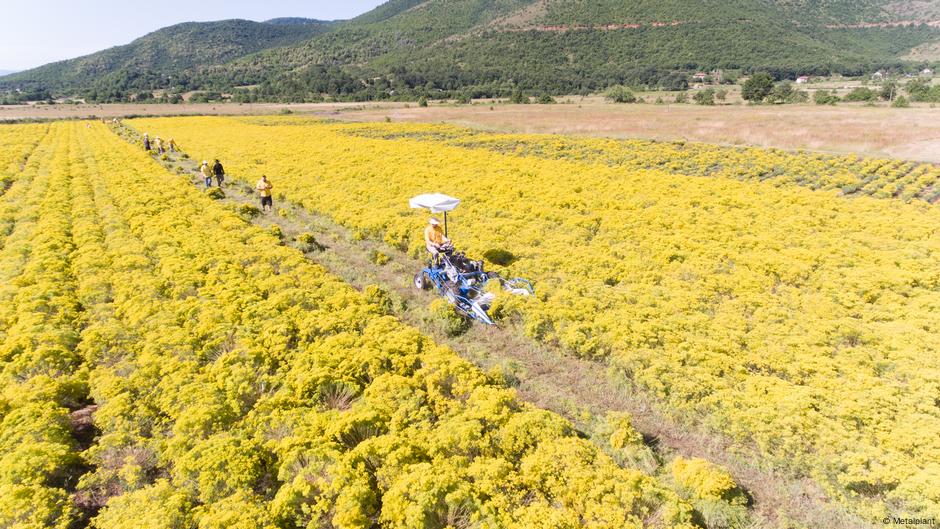
In a field located in northern Albania, farmers are harvesting nickel between the rows of yellow mustard plants.
What has been planted here is one of approximately 700 hyperaccumulating species — plants that collect significant quantities of metals from the soil, including nickel, zinc, copper, as well as gold and rare earth elements.
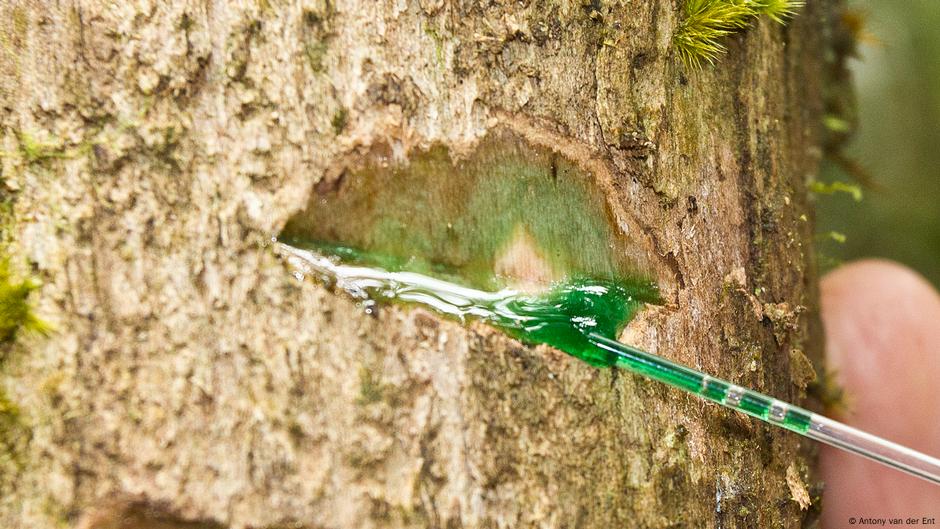
They developed the ability to accumulate these metals in their stems, leaves, or sap. It’s their subtle toxic strategy, serving as a protection mechanism against enemies and diseases. For the plants, the metals pose no harm.
From remedying polluted soil to extracting minerals
Researchers initially employed these plants in the 1980s to purify soils affected by mining activities or smelting operations. A particular species managed to extract trace quantities of radioactive cesium from the soil at the Chernobyl nuclear accident location.
But it wasn’t until the 1990s that researchers wondered: what if we utilized all those valuable metals gathered by the plants? They referred to the concept as:phytomining.
After 30 years, the practice of growing flowers to “extract” metals is nearing commercial viability. However, can this method compete with large-scale mining operations?
Mining plants as a business approach
In Albania, the soil contains excessive amounts of nickel, making it unsuitable for cultivating food crops with successful yields. However, there is insufficient nickel to support traditional mining operations. This situation makes it a perfect location for phytomining, as stated by Eric Matzner, co-founder of the startup Metalplant, which manages the 10-hectare site near the town of Tropoje.
“The lowest goal we aim for is approximately one-third of a ton of nickel per hectare,” he stated.
The Odontarrhena Plants absorb the metal and keep it stored within them. After being collected and dried, approximately 2% of their dry mass consists of nickel. Metalplant processes and burns the plants, resulting in an ash-like concentrate, referred to as “bio-ore.” This ash is then rinsed, and with the help of sulfuric acid, transformed into a liquid form. It is subsequently filtered and crystallized into nickel sulfate, a material that is highly sought after for use in large batteries, such as those found in electric vehicles.
Hazardous waste and tailings in traditional mining operations
“The environmental impact of phytomining is minimal,” stated Antony van der Ent. A scientist from Wageningen University in the Netherlands, he is among the most active phytomining researchers and consultant to Botanickel, a company operating in this area.
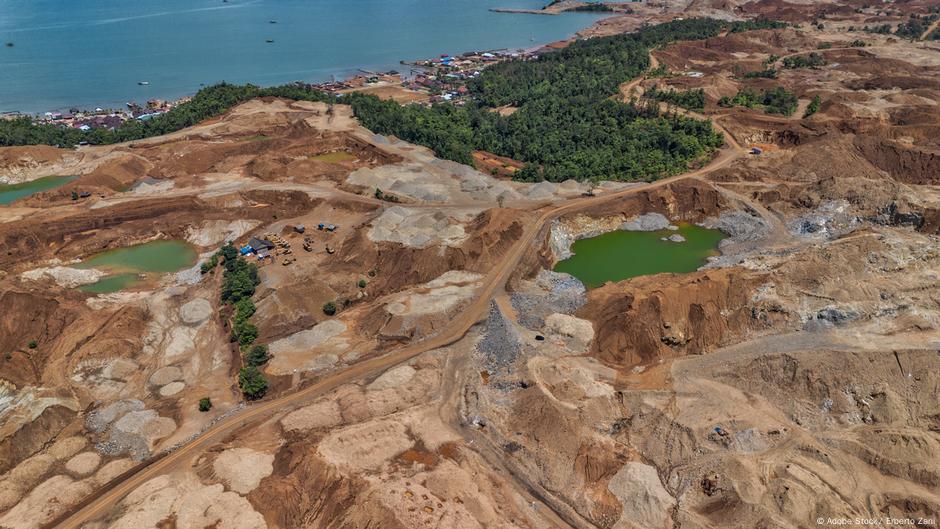
Traditional metal mining can have a significant negative impact on the environment. It frequently requires clearing vast regions of land. It can generate harmful waste materials that might seep into the surroundings, endangering both humans and animals. Due to the high energy required for processing, it typically leads to substantial greenhouse gas emissions. Nickel, in particular, is highly polluting, producing between 10 to 59 tons of emissions per ton of metal extracted.
Alternatively, phytomining is environmentally sustainable. “A significant quantity of carbon is absorbed by the metal crop. This carbon is returned to the atmosphere when the plants are burned, but this process allows for the production of very pure nickel with nearly zero carbon emissions,” explained van der Ent.
Phytomining also focuses on land that is empty and considered unfit for farming due to the presence of metals in the soil.
“This territory is being purified of metals found in the earth. Later, it might be suitable for use in forestry or for leisure activities,” stated Rupali Datta, a biochemist from Michigan Tech University who has conducted significant research on phytomining.
Rising global hunger for electric vehicle batteries increases the need for nickel
Although plants can extract various types of metals, scientists and companies have primarily used phytomining for nickel collection: the metal is recognized as being plentiful in the topsoil across many regions, including countries such as Indonesia, the Philippines, Brazil, South Africa, or the United States.
Meanwhile, the demand for nickel is anticipated to increase quickly, as per the International Energy Agency, with projections showing it could double by 2050 due to the worldwide need for electric vehicle batteries. However, the majority of the supply originates from Chinese-owned mines in Indonesia, where soil concentrations are significant. Phytomining might offer an alternative in nations with lower nickel levels, ensuring their own supply.
Is phytomining worth it?
A strategic research company, BloombergNEF, estimated that phytomining would be too costly for nickel buyers. Metalplant did not reveal the expenses involved in extracting the metal, but stated their goal is to compete with the price of other nickel available in the market.
“The objective is to showcase price parity. We refer to it as a green advantage or green dividend, where you receive a superior product at the same cost,” stated Matzner from Metalplant. The startup also integrates agriculture with carbon capture, allowing them to sell carbon credits and make the endeavor profitable.
In their third season so far, Metalplant reported that they have harvested over three tons of nickel from their 10-hectare site in Albania. This is a goal that scientists in other locations also aim to reach. However, it is much less than what traditional mines can extract in roughly half an hour.
Can plant-based mining substitute traditional mines?
To produce the same amount of nickel as a traditional mine in a year, a field would have to cover 200,000 hectares. This is 2.5 times the area of New York City. To completely replace all current global conventional nickel production, 15 million hectares of land would be required — an area equivalent to Tunisia.
The concept of economies of scale is crucial,” stated Kwasi Ampofo, a metals market analyst at BloombergNEF. “As it grows larger, the cost decreases. However, for phytomining, the main issue hasn’t been expense. It has been about available land.
“Phytomining can certainly not substitute traditional mining. It can serve as an extra method,” said biochemist Datta. Andmonoculture fieldsAt a scale of thousands of hectares, it may not be as environmentally friendly as one might think. “Wherever you engage in intensive farming, you are using fertilizers, pesticides, and water — all of these also apply to phytomining,” Datta explained.
As per researcher van der Ent, smaller communities facing challenges in cultivating food crops stand to benefit the most from this kind of mining. “That’s where I see the opportunity,” he mentioned, noting that locals could earn a modest income by selling nickel while also improving their soil quality.
Edited by: Sarah Steffen
Author: Jonas Mayer




 jasdooit
Leave a comment