
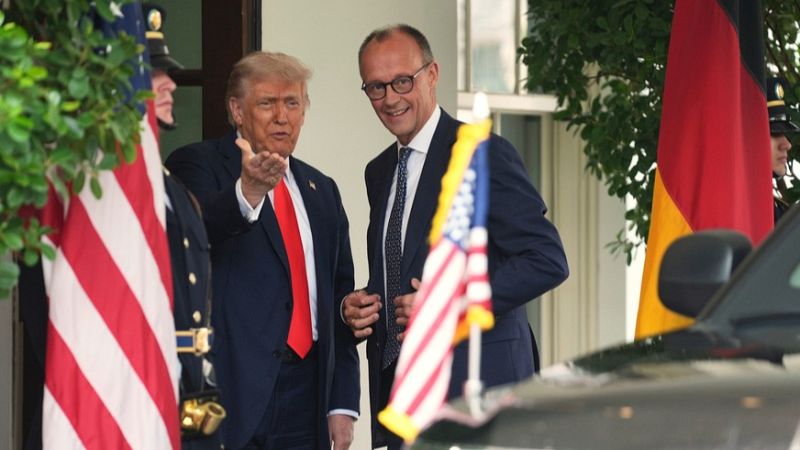
In May, Federal Chancellor Friedrich Merz (CDU) stated that the Bundeswehr aims to be the “strongest conventional military force in Europe.” This poses the government with a dual challenge: addressing the shortage of personnel—partially through a new military service—and swiftly supplying the troops with modern equipment.
‘Buy European’
As reported by Politico, the German government is developing an extensive arms and procurement strategy valued at up to 83 billion euros. Most of the contracts will be awarded to European companies; only approximately eight percent will be sourced from the United States. Overall, the German government intends to carry out 154 significant defense acquisitions between September 2025 and December 2026, according to the online news outlet.
Europe’s reliance on American defense equipment has grown considerably in recent years. As per the Stockholm-based peace research institute Sipri, military imports from the United States to Europe—along with Ukraine—more than tripled between 2020 and 2024 compared to the preceding five years.
For the first time in twenty years, Europe received the biggest portion of US arms exports: the percentage increased from 13 per cent (2015-2019) to 35 per cent (2020-2024). In total, European NATO countries doubled their arms purchases during this time, with two-thirds sourced from the United States.
Germany experienced a significant rise: the volume of arms imports increased by 334 percent, with approximately 70 percent sourced from the United States.
The United States further solidified its dominant position on the world stage. Its exports rose by 21 percent over the two five-year periods, and its portion of the global arms market expanded from 35 to 43 percent.
Now Berlin aims to pursue a new direction, in alignment with the slogan “Buy European”.
Defense developed in the USA: what about the ‘kill switch’
As per US expert and writer Dr Josef Braml, this action should not be regarded as an error of mixing cause and effect.
The reason is that Trump made it clear that America can no longer be trusted,” says Braml in an interview with Euronews. Now that this is evident, “it no longer makes sense to show respect for protection that we are no longer receiving.
As per Braml, this “tribute” involved purchasing American arms, which led Germany and other European nations to rely on U.S. systems.
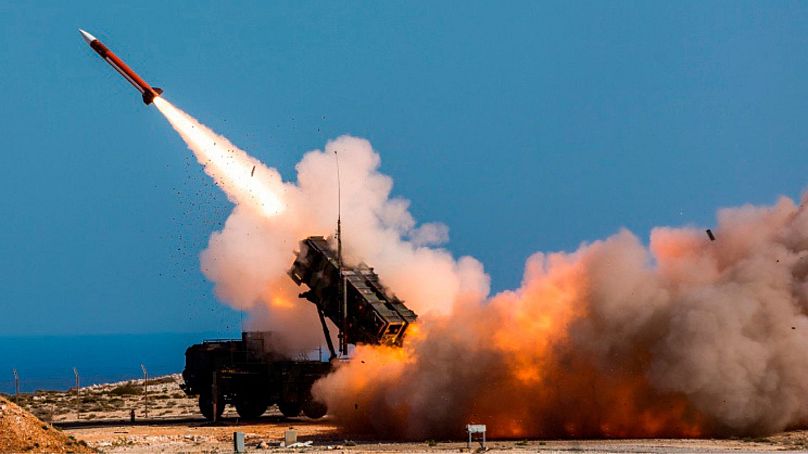
These consist of the “Patriot” defense system, of which Germany currently possesses six. The system is regarded as one of the most advanced and formidable air defense systems globally. As reported by The Atlantic, the U.S. government has temporarily suspended the export of these systems, as the Pentagon views them as being in short supply and intends to prioritize their use for its own needs.
Nevertheless, a European solution remains absent for certain weapon systems, such as the F-35 fighter jet.
Christophe Gomart, who previously led French military intelligence and is now an MEP representing the European People’s Party, recently introduced the concept of a so-called “kill switch,” suggesting that the U.S. could install a blocking mechanism in aircraft that would be triggered if the flight path isn’t authorized by the Pentagon.
However, the presence of the “kill switch” could not be verified, as there is “no method to remotely disable the F-35,” a representative from the Ministry of Defence stated to Germany’s public broadcaster ARD’s main news program Tagesschau.
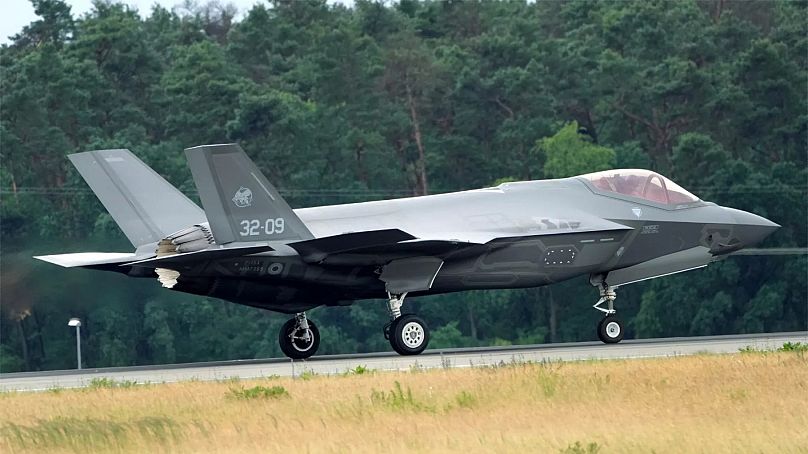
The German government is therefore continuing its directive regarding the jets. “However, the F-35 is a fifth-generation fighter jet that has not yet been introduced in Europe. Due to its stealth technology, it is extremely difficult to detect. If the military makes such requests of us, we will have no choice but to purchase from the United States,” a representative from the Federal Office of Bundeswehr Equipment, Information Technology and In-Service Support (BAAINBw) said to Euronews.
Autonomy also implies that you have the ability to safeguard yourself.
Pieter Wezeman, a researcher at the Stockholm International Peace Research Institute (Sipri) and co-author of the report on recent data regarding European arms imports from the United States, notes that Europe is already implementing responses: “The NATO countries in Europe have made efforts to decrease their reliance on imports and boost their domestic defense industries. However, the transatlantic connection in the defense sector runs deep.”
The groundwork for security and economic ties between Germany and the United States was established by the Marshall Plan and NATO following World War II. Since Donald Trump assumed office, the German government has made efforts to preserve the bilateral relationship. However, Germany’s approach is not aligning with the expectations of the U.S. president.
Trump began his second term in office with the commitment of “America First.” This set of political actions seeks to guide foreign and domestic policy choices that place the interests of the United States above those of other countries.
As recently as February, Trump urged NATO allies to raise their military expenditures to five percent and purchase American arms. In his budget, known as the “One Big Beautiful Bill”(OBBB), Trump has allocated approximately 150 billion US dollars in required financing for the US Department of Defence under his “Peace through Strength” initiative.
As per Braml, the United States can depend on its domestic defense sector, particularly regarding replacement components or software for specific systems. “Sovereignty also involves the ability to safeguard yourself,” said US expert Braml to Euronews. Should this not be true, Braml argues, we are exposing ourselves to potential coercion.
On his initial official trip to the White House,Merzacknowledged that “whether we like it or not, we will continue to rely on the United States of America for a considerable period.”
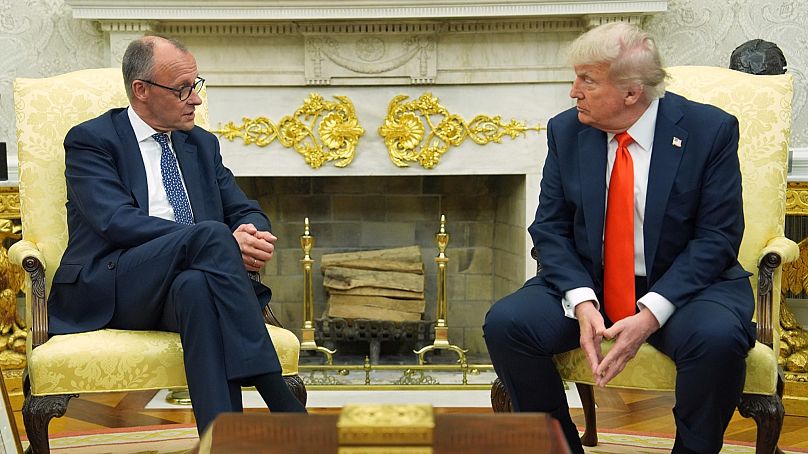
Security has vanished, the Pax Americana is dead
We are residing in a new age, within a multipolar global system, and if we fail to position Europe as an autonomous force, we will have lost in a world where the powerful act as they wish and the vulnerable endure,” states the American expert and writer of “The Transatlantic Illusion.
In the end, a look at the patent data reveals that Washington remains ahead in defence technology within Europe.
According to a studyAccording to the German Economic Institute (IW), U.S. firms filed nearly 18,000 patents between 2015 and 2021, whereas all 27 EU countries combined submitted less than 12,000 patents. With approximately 4,300 patent filings, Germany ranks second in the EU behind France, but remains significantly reliant on U.S. companies overall.
Continuing in the same way is therefore not an option for Braml: “Security is gone, Pax Americana is dead.” For many years, Germany has relied on the USA for its defense.
The nation needs to assume responsibility for its own safety as quickly as feasible.


 jasdooit
Leave a comment