
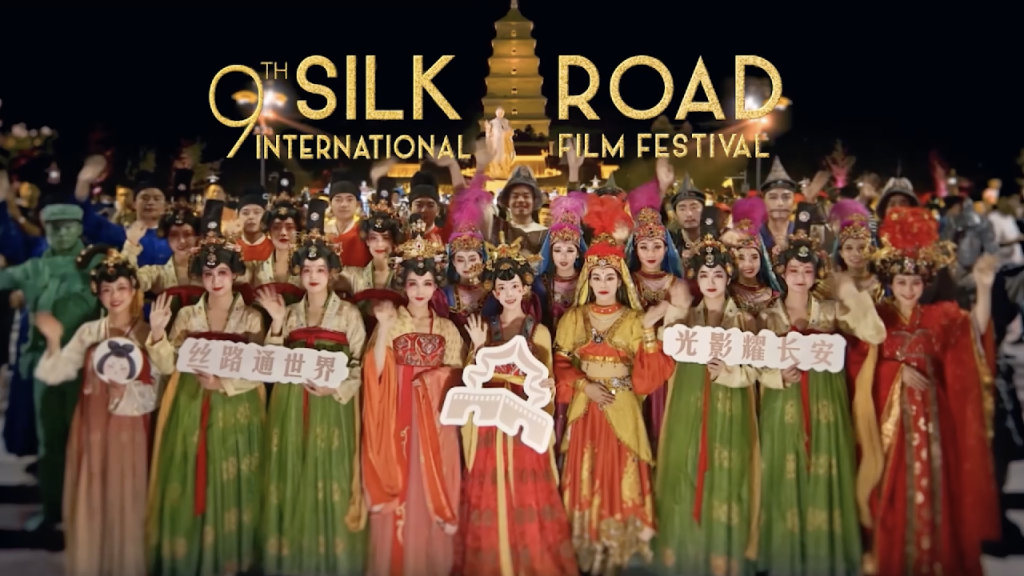
This year, the Belt and Road Initiative marks 12 years of collaboration among more than 150 nations. In addition to trade and infrastructure, its core focus is on strengthening connections between people.
As a global language, film has become a channel for cultural interaction. To realize this idea, the Silk Road International Film Festival (SRIFF) was established 12 years back, telling tales that bring together different cultures along ancient trade paths. This year, the festival will be held from September 22 to 26 in Fuzhou, Fujian province, China, with the theme “Silk Road Connects the World, Film Festival Lights Up Fuzhou”.
In contrast to other international film festivals, SRIFF emphasizes specific nations located along the Silk Road and the maritime Silk Road—countries situated in the South China Sea, Southeast Asia, and the Malacca Strait, where Chinese traders initiated commerce many years ago. This emphasis aligns with the festival’s goal of continuing the ancient tradition of connectivity by offering a platform to present each country’s distinct culture and appeal, while promoting trust, respect, and mutual comprehension.
This is the point where film transcends mere amusement. It has evolved into a means of connection. By presenting narratives that evoke strong emotions, movies enable viewers to immerse themselves in various cultures, communities, and perspectives.
As the renowned director Christopher Nolan once mentioned, film is not just about narrating a character’s journey, but also about allowing viewers to experience the world from that character’s perspective, and eventually gain a more profound understanding of them.
China’s market is extensive and has emerged as one of the key markets for global cinema. As the world’s second-largest box office, it earned approximately $5.56 billion in revenue, ranking just behind the US and Canada, as reported by Forbes. With over 90,000 movie screens, it holds the biggest network globally, making China a significant opportunity for filmmakers.
While Hollywood movies remain the main imports, there is an increasing opportunity for films from countries along the Silk Road in the Chinese market. Chinese viewers are receptive to international storytelling, as demonstrated by the achievements of films such as Bad Genius (Thailand, 2020), A Place Called Silence (Malaysia, 2022), and No Prior Appointment (Iran, 2025).
In this setting, SRIFF holds a crucial position. This year, almost 90 local and global films are being shown in nine cities across Fujian.
Chosen from 2,560 entries submitted by 120 countries, the selection celebrates the 120th anniversary of Chinese cinema, featuring films like Whispers In The Dabbas (Indonesia, 2025) and Close Ur Kopitiam (Malaysia, 2025).
Breaking into China’s market is a significant challenge, as international films need to fulfill specific requirements and follow certain processes. Co-productions, on the other hand, present a viable option. Considered local films, they encounter fewer distribution obstacles, enabling creators to produce material that connects with viewers from both regions.
SRIFF is essential in fostering these partnerships, offering a space for conversation between movie creators and government officials. This year, representatives from nations in the region that have land and sea connections with China shared their perspectives on local film production and distribution policies.
For instance, Malaysia provides a cash rebate of up to 35% for films that feature local culture. Kamil Othman, head of the National Film Development Corporation, promotes historical co-productions between China and Malaysia.
Uzbekistan, which has a cinematic legacy spanning more than 100 years, is creating approximately 55 historical films, 20 of which are planned for international collaboration. The nation seeks to present its rich cultural heritage in partnership with China, highlighting modern facilities, trained personnel, and affordable production conditions.
Indonesia offers a distinct set of opportunities. Although local films have been the top performers at its cinemas since 2022, the country, which has just 2,300 cinemas and over 300 different cultures across almost 2,000 islands, provides plenty of space for foreign filmmakers to invest and discover new possibilities.
Nepal is also welcoming new opportunities. KP Pathak, head of the Nepal International Film Festival, mentioned that Chinese movies like Up In The Wind (2013) have been effectively filmed in Nepali resorts. The nation is eager for collaborative productions that showcase the Himalayas and historic temples, helping Nepali cinema reach a worldwide audience.
As the saying states, “many hands make light work.” Through varied narratives, beautiful settings, experienced teams, and gifted scriptwriters, co-productions not only attract their intended viewers but also facilitate the distribution process. In today’s challenging environment, such partnerships have become more crucial than ever for filmmakers aiming for both artistic and commercial achievements.
The Silk Road International Film Festival delivers a strong message: Cinema is more than just entertainment; it serves as a bridge that connects different regions. It creates new opportunities for collaborative productions, cultural interactions, and collective narratives. While languages may differ, the language of film resonates with all. It honors the various civilizations along the Silk Road, uniting people across the globe.
Provided by SyndiGate Media Inc. (Syndigate.info).




 jasdooit
Leave a comment