
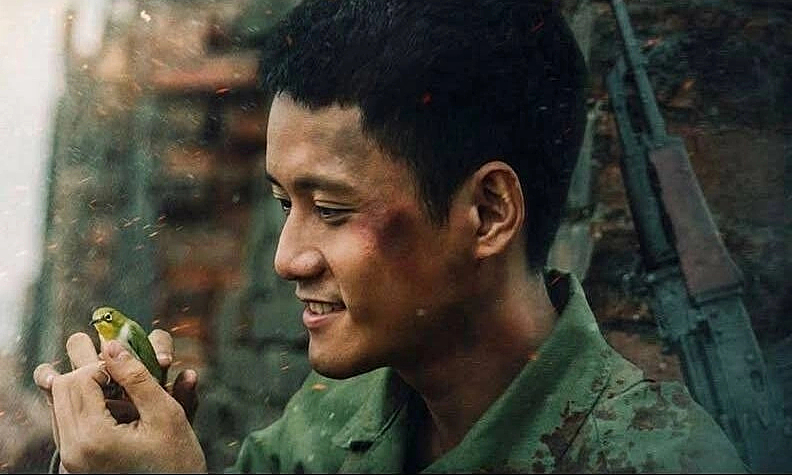
The Vietnamese war film “Mua Do” (Red Rain) has shattered all box office records in the nation, drawing in 8.1 million spectators and earning VND710 billion ($28 million) by Saturday, becoming the most-watched Vietnamese movie ever.
In its last week prior to concluding its theatrical run next Monday, the film remained popular in cinemas, with large theaters offering 8–10 fully booked screenings daily.
Audiences have shown strong emotional reactions. On the movie’s official fanpage, viewer Tran Chau Doan commented: “Thanks to the director, writer, and team for producing such a touching film. At times, I felt my throat tighten while watching each character’s sacrifice. Looking forward to seeing more on other platforms.”
Another, Ha Minh, stated: “This movie transcends the realm of cinema to become a part of the collective memory of numerous generations. I think Red Rain will remain eternally in people’s hearts.”
The film has evolved into a cultural sensation. For the first time, a historical war drama transformed into a nationwide occurrence, with schools and groups purchasing thousands of tickets for veterans, students, and children.
Commended for its grand battle scenes and heartfelt storytelling based on actual events, the movie has also sparked discussion regarding its combat sequences and character development. Director Dang Thai Huyen mentioned that she read and listened to all feedback but could only choose what aligned with the story.
The movie portrays the Second Battle of Quang Tri during the Vietnam War in 1972.
Screenwriter Chu Lai centers on the experiences of a group of soldiers from various regions. The protagonist, Cuong, a martial arts-trained conservatory student, sacrifices the chance to study overseas to join the military. Under the guidance of Ta, he and his fellow soldiers, Binh, Tu, Hai, and Sen, fight together, surmounting their diverse origins and temperaments.
Mass-produced,the movie was filmed on a 50-hectare setLocated along the Thach Han River in Quang Tri. The production utilized modern equipment, including as many as seven cameras for significant battle sequences.



 jasdooit
Leave a comment