
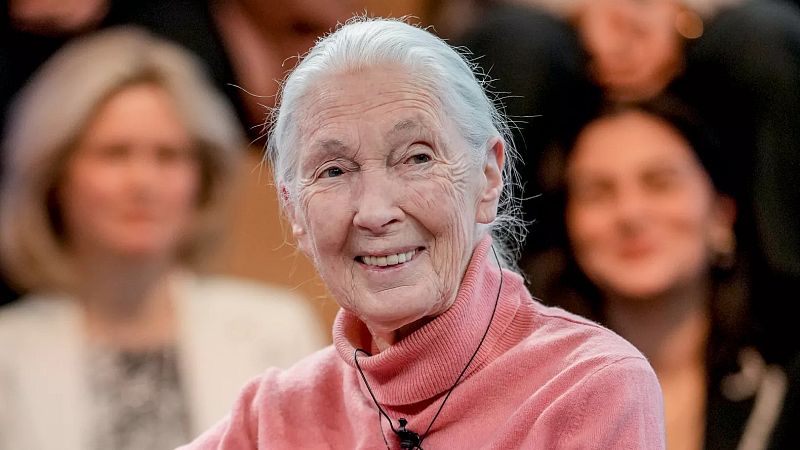
Jane Goodall, the conservationist famous for her pioneering studies on chimpanzees and her worldwide efforts to promote environmental protection, has passed away at the age of 91.
During her time in Africa many years ago, Goodall observed chimpanzees using tools and engaging in behaviors that were once thought to be unique to humans, as well as recognizing their individual characteristics.
Her insights and later features in magazines and documentaries during the 1960s changed the global view of not only humans’ nearest living biological relatives but also the emotional and social intricacies of all animals, while bringing her into the public eye.
“Out in the wilderness by myself, when you’re alone, you can merge with nature and your humanity doesn’t interfere,” she stated in 2021.
It feels as if you’re having a near-death experience when, all of a sudden, you start hearing various sounds and smelling different scents, becoming part of an incredible web of life.
In her later years, Goodall spent many decades focusing on education and promoting humanitarian issues as well as preserving the environment.
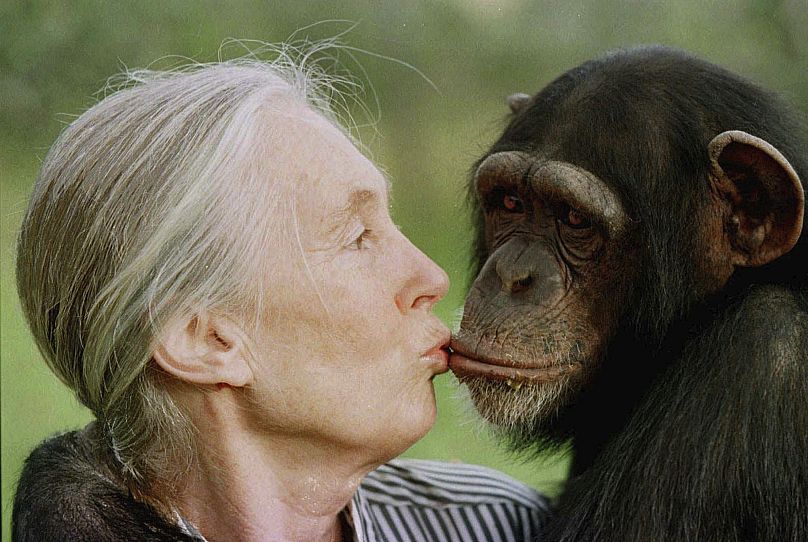
With her typical gentle British tone, she was recognized for combining the harsh truths of the climate emergency with an earnest outlook of optimism for what lies ahead.
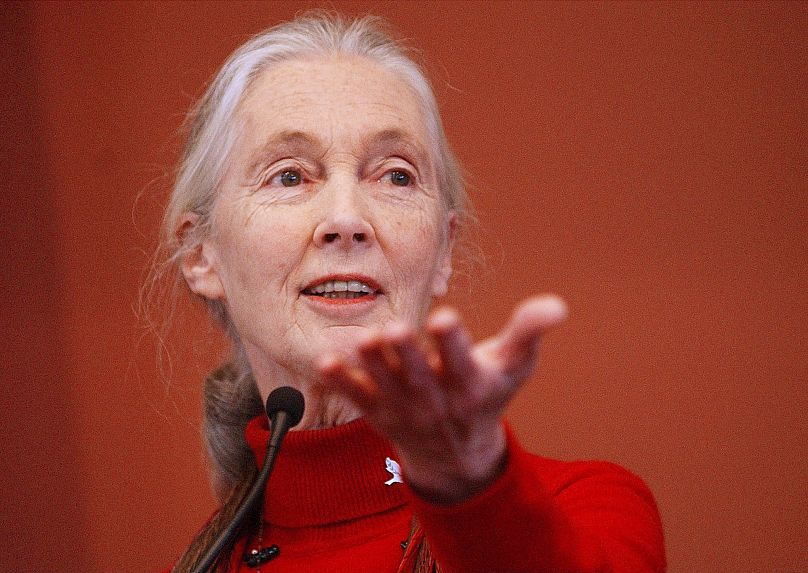
Based in the UK coastal town of Bournemouth, she spent almost 300 days a year traveling well into her 90s to address full auditoriums across the globe.
Amid more solemn messages, her speeches frequently included her howling like a chimpanzee or expressing that Tarzan had selected the wrong Jane.
While initially studying chimpanzees in Tanzania during the early 1960s, Goodall was recognized for her unique methods. Rather than watching them from a distance, she fully engaged with all parts of their existence. She provided them with food and assigned names rather than using numbers, which led to criticism from certain scientists.
Her discoveries reached millions when she first appeared on the cover of National Geographic in 1963 and later in a widely viewed documentary.
A set of images featuring Goodall in the wild contributed to her recognition and also made some of the chimpanzees well-known.
An unforgettable picture depicted her crouching opposite the baby chimp called Flint. Both had their arms extended, trying to touch each other.
″What the chimpanzees have shown me over the years is their similarity to us. They have made the boundary between humans and animals less clear,″ she stated in 1997.
Goodall has received prestigious civilian awards from various nations such as Britain, France, Japan, and Tanzania.
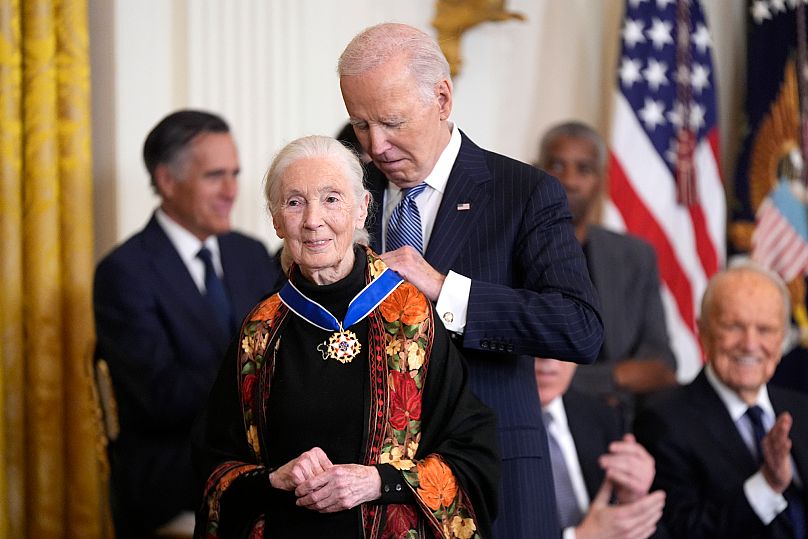
She received the Presidential Medal of Freedom in 2025 from then-U.S. President Joe Biden and was honored with the renowned Templeton Prize in 2021.
“Her pioneering findings have transformed humanity’s perception of its place in a connected world, and her efforts have highlighted a more significant purpose for our species in nurturing life on this planet,” stated the citation for the Templeton Prize, which recognizes individuals whose lifetime achievements reflect a blend of science and spirituality.
Goodall was also recognized as a United Nations Messenger of Peace and authored many books, such as the popular autobiography “Reason for Hope.”
Born in London in 1934, Goodall mentioned that her interest in animals started around the time she began crawling.
In her book, “In the Shadow of Man,” she recounted an early memory of hiding in a chicken coop to watch a hen lay an egg. She stayed inside for so long that her mother reported her missing to the police.
She purchased her first book, Edgar Rice Burroughs’ “Tarzan of the Apes,” at the age of 10 and quickly decided on her future: living among wild animals in Africa.
That plan remained with her during a secretarial course at age 18 and through two different jobs. By 1957, she accepted an invitation to visit a farm in Kenya belonging to a friend’s parents.
It was there that she encountered the renowned anthropologist and paleontologist Louis Leakey at a natural history museum in Nairobi, and he offered her a position as an assistant secretary.
Three years later, even though Goodall lacked a college degree, Leakey inquired if she would be interested in researching chimpanzees in what is currently Tanzania.
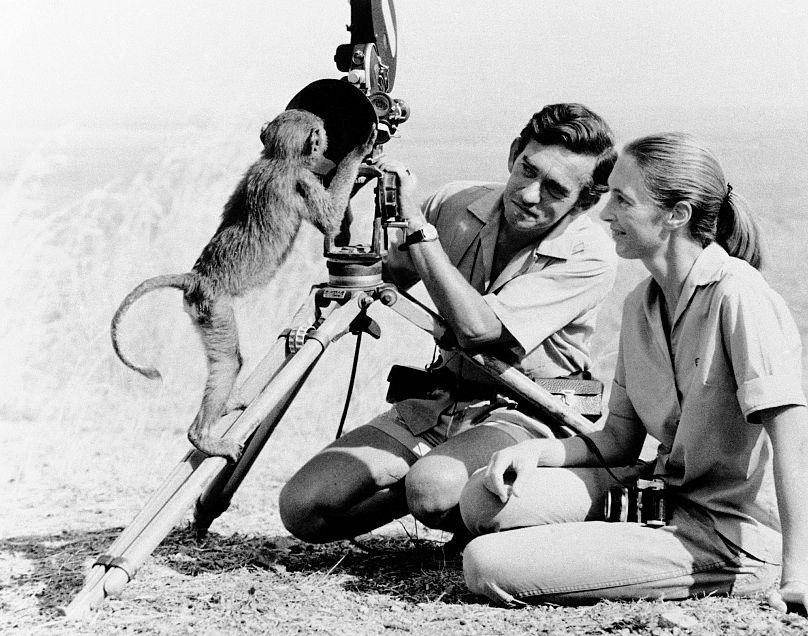
The initial phase was marked by challenges. British officials required her to have a companion, so she initially brought her mother along. The chimpanzees would run away if she came within 450 meters of them. She also spent several weeks ill due to what she thinks was malaria, with no medication available to treat it.
However, she ultimately managed to earn the animals’ trust. During the autumn of 1960, she witnessed the chimpanzee known as David Greybeard creating a tool from branches and using it to extract termites from a colony. It was previously thought that only humans crafted and utilized tools.
She also discovered that chimpanzees possess distinct personalities and experience human emotions such as happiness, joy, sorrow, and fear.
She recorded relationships between mothers and babies, competition among siblings, and the supremacy of males. In other words, she discovered that there was not a clear boundary between humans and the animal world.
In her later years, she found that chimpanzees participate in a form of conflict, and in 1987, she and her team witnessed a chimp “adopt” a three-year-old orphan who was not closely related.
Goodall was awarded numerous grants by the National Geographic Society throughout her field research period, beginning in 1961.
In 1966, she obtained a Ph.D. in ethology, making her one of the rare individuals who was accepted into the University of Cambridge as a Ph.D. student without holding a college degree.
Her efforts expanded to include broader global advocacy following her viewing of a shocking movie depicting experiments on lab animals at a conference in 1986.
″I realized I needed to take action,″ she stated in 1997. ″It was time for revenge.″
As the COVID-19 pandemic struck in 2020 and put an end to her live gatherings, she started hosting podcasts from her family’s home in England.
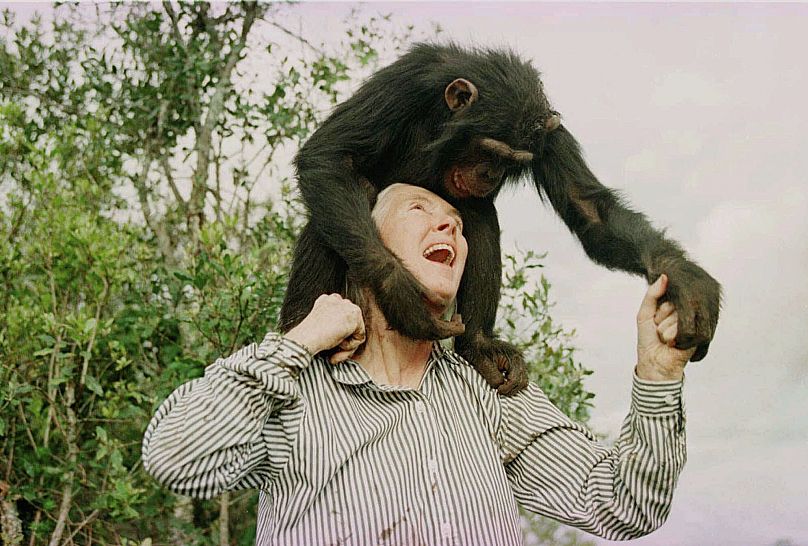
Over many “Jane Goodall Hopecast” episodes, she shared conversations with guests such as US Senator Cory Booker, author Margaret Atwood, and marine biologist Ayana Elizabeth Johnson.
“If someone aims to connect with people; if they wish to alter perspectives, they must touch the heart,” she mentioned during her first episode.
You can touch the heart by sharing narratives, rather than debating with people’s minds.
She also established a powerful social media presence, sharing with millions of followers the importance of ending factory farming or providing advice on how to avoid being overwhelmed by the climate crisis.
Her guidance: “Concentrate on the current moment and decide today in a way that will create lasting effects.”


 jasdooit
Leave a comment