
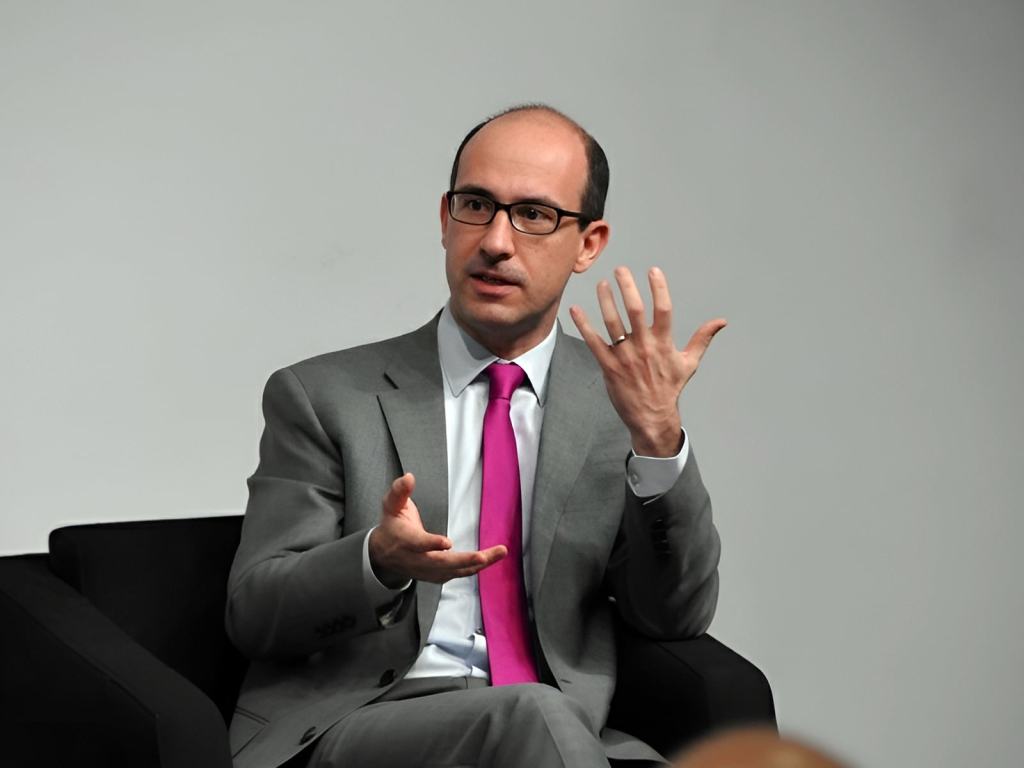
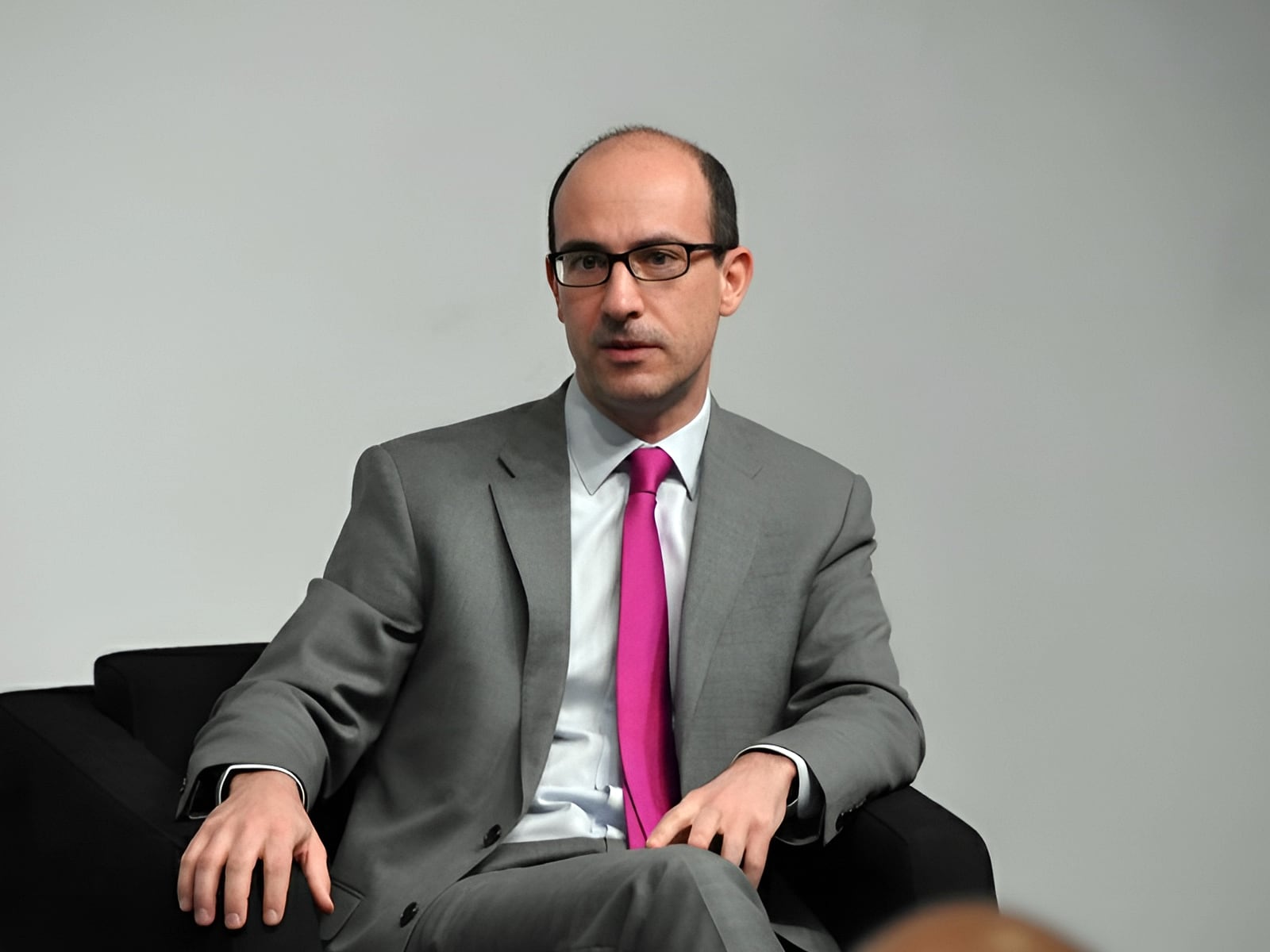
Ramón Pacheco Pardo (45), a professor of international politics at King’s College London, expressed in a video interview with this newspaper on the 1st of last month, “Greater power brings greater responsibility, and occasionally leads to friction with other nations. South Korea, which possesses global competitiveness, must recognize this.” Professor Pardo noted, “South Korea is an undeniable ‘whale’ in economy, technology, defense, and culture,” and suggested that the country should take the lead in global agendas such as the green transition and AI standards, guide less developed countries, and assume specific ‘roles’ and ‘positions’ during a historic shift toward a new international order. On South Korea’s position amid the U.S.-China rivalry, he stated, “Strategic autonomy and alignment with the U.S. (coordinating policies) are not conflicting,” highlighting that South Korea should exert constructive influence on the global order through its own capabilities.
**—In what ways can South Korea be viewed as a ‘whale’ instead of a ‘shrimp’?**
In various regions, South Korea stands as the 15th-largest economy and 10th-largest exporter globally. Its per capita GDP, measured by purchasing power parity, is similar to that of most G7 nations, and it holds the highest average wages among major Asian economies. In terms of technology, it showcases strong global competitiveness in semiconductors, electric vehicles, batteries, eco-friendly shipping, biotechnology, and robotics. Regarding defense, it is among the top 10 military powers worldwide and provides significant weapons to Europe, the Middle East, and Southeast Asia. It has shown democratic resilience by overcoming martial law. South Korea is now the leading cultural force in Asia—one of the few countries with globally recognized culture in music, film, dramas, literature, cuisine, and fashion.
**—In that regard, can South Korea be referred to as a ‘global nation’ that serves as a model for others?**
South Korea has already become global in its own manner. Since the Cold War, the term ‘global’ has typically referred to adhering to the democratic, free-market, liberal values, and multiculturalism of the U.S. and Western Europe—but this definition is now being questioned even within those regions. South Korea integrates a robust liberal democracy, a state-capitalist market economy, a blend of liberal values and tradition, and a certain degree of openness towards immigration. The social roles of women are expanding, LGBTQ+ rights are gaining momentum, acceptance of various lifestyles is growing, and workplace culture has become less strict and hierarchical. Immigration has also increased significantly over the past two decades. From a European viewpoint, South Korea is becoming more global.
**—There are also critiques suggesting that South Korea should take more responsibility in line with its increasing abilities.**
The era in which South Korea could be considered a small, powerless country has come to an end. It needs to express its views and engage in normative conversations regarding the green transition, AI advancements, and regulation. It also has an obligation to share its effective development model and offer technology and assistance to developing nations. Above all, it is now expected to take a ‘stance’ on international matters such as the Ukraine conflict, human rights issues in China and Myanmar, and the Israel-Hamas conflict—something that inevitably results in tensions with other nations. Nevertheless, this is the ‘cost of being noticed’ that South Korea must bear and a sacrifice that a powerful, influential nation must accept.
**—Can South Korea, which continues to grapple with the challenge of unification, assume a position of global leadership?**
It should consider Germany’s experiences. Following unification, Germany gained greater significance in Europe and globally, allowing it to lower security expenses and channel resources into growth and social welfare. Unification would make the country bigger and more powerful, offering a chance to shift defense spending towards other areas. However, years of division have led to differing perspectives and national identities. Significant investments are required to support the ‘mental transition’ of North Korean residents. Income gaps between the two Koreas will also lead to migration and feelings of relative deprivation. The government and private sector must collaborate to prevent wasting the economic potential of North Korean residents. Otherwise, the dissatisfaction witnessed in present-day eastern Germany may resurface.
**—For how long can the Kim Jong-un regime remain in power?**
It’s reckless to guess when it will fall. The Kim family has been in power in North Korea for more than 75 years. Nevertheless, sudden collapses, such as the Soviet Union in the 1990s and North Africa in the 2000s, can occur at any moment. The government’s restriction of K-pop and television shows indicates that North Koreans have an appreciation for South Korea and are no longer entirely influenced by the regime’s propaganda.
**—What key position should South Korea adopt, and in what way should it get ready?**
I think that seeking stability on the Korean Peninsula and increasing control over the North Korean government via dialogue is the correct path. Should sanctions be reduced, the inclusion of North Korean workers within formal systems might be explored. Meanwhile, military deterrence needs to be consistently reinforced to prevent any ‘thought’ of military aggression. Practical strategies should be developed for potential scenarios of North Korea’s collapse, such as handling its population, addressing resistance from the elite, and securing nuclear weapons. These matters should be discussed with the U.S., Japan, and ideally China and Russia—but South Korea must take the lead in the unification process.
**—What approach should South Korea take in managing its relationship with the U.S. during Trump’s presidency?**
Supporting U.S. policies and increasing independence are not conflicting goals. South Korea is no longer a small nation, and the ROK-U.S. alliance enhances its strengths. South Korea has resources that the U.S. needs, including semiconductor and battery technologies, substantial investments worth billions of dollars, diplomatic backing for U.S.-driven projects, and facilities and shipyards crucial in a Taiwan-related scenario. Considering this, South Korea should establish a strong network of security, economic, and political connections with comparable nations such as Australia, Canada, Europe, and Japan to boost its independence. Additionally, increasing its presence in Southeast Asia and the Middle East will make South Korea a more significant ally in the eyes of the U.S.

**—How about the relationship with China?**
South Korea appears to have already discovered the solution. It should continue to foster friendly diplomacy, trade, investment, and tourism. However, structurally, South Korea is more aligned with the U.S. in terms of values and systems. Taking into account public sentiment, decreased business investments in China, disputes over territorial waters and airspace, and China’s backing of the North Korean government, closer collaboration between South Korea and China seems improbable.
**—What steps can South Korea take to strengthen ties with the EU, ASEAN, and the developing world outside of current partnerships?**
Deeds are more significant than words. Diplomatic and security officials should participate in strategic discussions, share intelligence, and provide military support, while the government enhances assistance and businesses boost investments. Expanding trade via membership in the CPTPP (Comprehensive and Progressive Agreement for Trans-Pacific Partnership) is also essential. A customized strategy aligned with regional needs is crucial. Culture is a field where South Korea can make contributions in a uniform manner that transcends national differences. Enhancing support for Korean studies, language, literature, and music beyond the Korean Wave (Hallyu) can further strengthen human interactions and long-term connections.
—Some perspectives suggest that South Korea and the European Union should work together to decrease their reliance on China.
Cooperation in scientific and technological research, along with joint production efforts, can lead to beneficial synergies. South Korea’s involvement in Horizon Europe, the EU’s research and innovation initiative, and the collaborative manufacturing of Poland’s K2 tanks serve as positive examples. The increasing interest among European youth and engineers in working in South Korea can also be utilized to enhance supply chain collaboration.
**—Political extremism and societal fragmentation are also significant in South Korea.**
I believe South Korea is in a better position than many other countries because it faces fewer fundamental problems such as systemic issues, racial tensions, or territorial disputes. While there may be intense debates, the solution lies in communication and mutual respect within the boundaries of the law. In a robust democracy like South Korea, enforcing uniformity from the top is not feasible, so leadership that embraces diversity and recognizes differences is essential.
**—What do you envision for South Korea in the coming 80 years?**
South Korea often undervalues its own capabilities, yet this has prevented it from becoming overly self-satisfied. Stories such as ‘being surpassed by China’ or ‘Hallyu reaching its peak’ have been frequently mentioned, but the facts have shown otherwise. Moving ahead, South Korea needs to expand inclusivity to include women, people of mixed race, the LGBTQ+ community, and immigrants, and develop policies and products that reflect a mature and confident South Korea rather than merely trying to catch up with developed countries. Inclusivity is essential for South Korea’s ongoing success.



 jasdooit
Leave a comment