
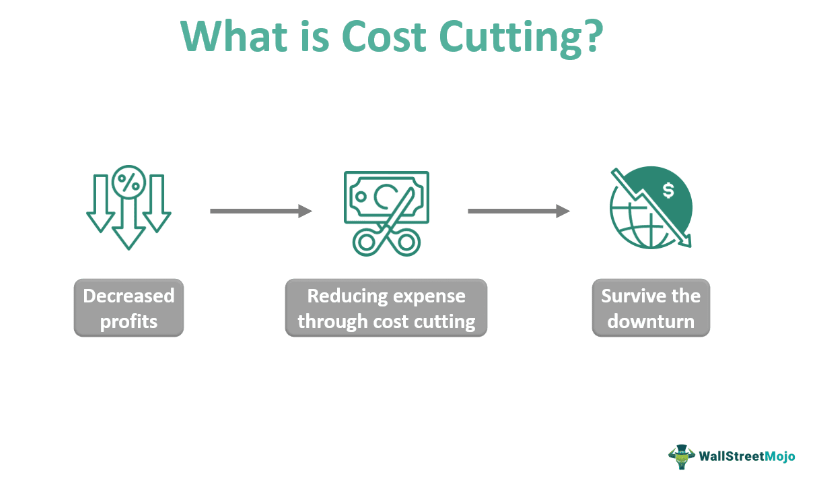
Economic experts have stated that the government’s current reforms aimed at reducing business expenses to boost economic growth will be crucial for a seamless shift toward and execution of the National Development Strategy 2 (NDS2) once fully put into action.
Zimbabwe is examining its regulatory framework to alleviate the challenges faced by companies, minimize administrative obstacles, and decrease compliance expenses, aiming to enhance the total cost of operating a business and boost competitiveness.
Consistent with the goals of Vision 2030 to turn Zimbabwe into an upper-middle-income nation, the NDS2 serves as an economic strategy to finish the second five-year medium-term development plan, building upon the achievements of NDS1, which spans from January 2021 to December 2025.
The NDS1 replaced the Transitional Stabilisation Programme (TSP), a temporary economic plan that was in place between 2018 and 2020. The Second Republic launched the NDS1 as a strategy for sustainable and inclusive development.
Expanding from NDS1, the upcoming NDS2 will mark the last stage of the nation’s development plan, pushing it toward its 2030 goals.
During an online webinar organized by the Public Policy and Research Institute of Zimbabwe (PPRIZ), titled “Zimbabwe Government Reductions of Licences, Permits and Fees: Opportunities and Risks for Business and Ordinary Citizens,” economic experts praised the Government for its efforts to improve business operations.
Dedicated to examining the charges, licenses, fees, and permits in 12 major industries, the government’s efforts aim to streamline procedures for companies, thereby creating a more favorable setting for economic development.
Renowned economist and government consultant, Professor Ashok Chakravarti, who is also part of the Reserve Bank of Zimbabwe’s Monetary Policy Committee (MPC), stated that the Government plans to examine all sectors.
I am a member of the committee headed by the Office of the President and Cabinet (OPC), which is currently examining these charges, licenses, fees, and permits to initiate the entire process. Therefore, the general perspective is that this initiative will keep encompassing all areas of the economy.
“We have already finished the livestock sector. We are currently focusing on the agricultural sector, including agricultural production and inputs, in collaboration with stakeholders,” he stated.
The tourism sector has been finalized and received Cabinet approval, and it is now with President Mnangagwa for his endorsement. Once this is completed, the reviews in the tourism sector will be made public.
He stated the same, noting that the transportation industry has been finalized and approved by the Cabinet, and subsequently, they will proceed to the retail sector followed by manufacturing, continuing until all areas of the economy are completed.
Professor Chakravarti mentioned that the matrices used to gather all information regarding charges, licenses, fees, and permits were being developed through close collaboration with all pertinent stakeholders.
He stated, “This initiative is indigenous, and although we receive assistance from global organizations, we have adopted the approach from the World Bank. It is managed internally and has the backing of political leadership, which is why it is moving forward.”
Therefore, the reasoning is quite straightforward: to reach an upper-middle-income level, we need significant growth rates of seven percent or higher.
As you are aware, due to our current isolation from global finance, domestic resources are only sufficient to allow us to reach growth rates of approximately four, five, or six percent.
Professor Chakravarti stated that the sole path for the nation to attain higher growth rates lay in enhancing productivity across various fields such as agriculture, manufacturing, and tourism, among other areas, by establishing a supportive atmosphere for businesses.
The executive dean of the Faculty of Commerce at the National University of Science and Technology (Nust), Dr Peter Nkala, stated that the upcoming changes would be advantageous for both businesses and the general public.
There will be advantages for small and medium-sized enterprises (SMEs), small-scale farmers, and also for regular people.
Subsequently, for regular citizens, I would state that the simplicity of conducting business inherently facilitates entry into the SME sector for those interested.
“If you operate in a specific industry, the procedure has become easier now, with reduced requirements and lower costs to handle,” he stated.
There will be a lower expense for residents.
I’m certain that we will encounter numerous additional charges, which will help make things more accessible for regular people who will also gain from reduced administrative hurdles.
He stated that the new reforms will enable businesses to compete effectively, secure a market share, and achieve profitability, while advancing the formalization of MSMEs, which are a key driver of Zimbabwe’s economy, employing millions and making a substantial contribution to the gross domestic product (GDP).
Including his perspective, Mr. Ernest Mujongondi from OPC stated that all these initiatives by the Government would contribute to the advantage of businesses and citizens, enhancing our economy.
He stated: “We think that if the cuts are going to have a financial effect on the regulatory sector, it suggests that our regulatory system is not appropriately sized. Therefore, in NDS2, we have proposed to conduct a review of our regulatory institutional framework.”
Mr. Mujongondi stated that this will help determine if more than 40 regulators are necessary or if a smaller number would suffice and can be sustained by the economy.
For instance, he mentioned that the nation could gain from adopting successful methods implemented in other countries such as Rwanda and Seychelles, where licensing and regulation are primarily managed by centralized bodies.
Economist, Trade and Investment Expert, Professor Tapiwa Mashakada, who previously served as Minister of Economic Planning from 2009 to 2013, emphasized that lowering the cost of operating businesses is essential for attracting both local and international investors, as well as boosting economic development.
“Nevertheless, merely reducing these licenses, permits, and fees is not sufficient on its own without reviewing or updating the relevant regulations. We require new statutory instruments, a fresh regulatory framework, and new laws that will implement these positive Cabinet initiatives,” he stated.
He praised the Government for performing well and updating its regulatory and tax system to lower the expenses of running a business, while it should also be carried out in a way that does not affect health and safety regulations, including environmental considerations.
Professor Mashakada urged examining the effects of the measures on tax income.
Concluding the conversation as the moderator, Ms. Pretty Nyathi, an Economics lecturer at Lupane State University (LSU), urged the involvement of all relevant parties in reform discussions to ensure that every perspective is considered for policies that support economic growth.
Copyright 2025 The Herald. All rights reserved. Distributed by AllAfrica Global Media ().
Tagged: Zimbabwe, Economy, Business and Finance, Southern Africa
Provided by SyndiGate Media Inc. (Syndigate.info).



 jasdooit
Leave a comment