
Key information:
- Intense physical activity, which transforms boys into muscular figures but secretly harms their fertility. The combination of smoking and drinking that dulls the body but also undermines reproductive health. Drugs used for pleasure that provide temporary excitement but long-term damage to the testicles.
Long ago, in the traditional homes of Kigyezi, when a couple had difficulty having children, people began to speak in hushed tones and ultimately blamed the woman. She was seen as the cause of infertility, the unseen offender.
The man, by cultural tradition, was considered fertile by default. His masculinity was unquestionable. Only when the tides of destiny turned against him, his wife leaving him, often following a practice called “okushenda” and remarrying, and soon embracing another man’s child, would uncertainty arise.
Only then would society start to realize that the king might truly be naked, as depicted in Hans Christian Andersen’s famous tale, The Emperor’s New Clothes. In certain regions of Uganda, particularly Kigyezi, Ankole, and further afield, a subtle cultural practice was developed to protect a man’s dignity.
The brother of the husband, through whispered scandals, and even the husband’s father, would be called upon to “assist” in the noble task of continuing the family’s legacy. This careful arrangement, referred to as “okwarira,” guaranteed the man’s name would live on in history, even if his bloodline did not. After all, as Shakespeare questioned, what is in a name?
In our societies, it seems, everything is possible. Indeed, history is full of notable figures whose thrones were occupied by successors they did not produce. Even monarchs in faraway places, adorned in gold, occasionally struggled to have offspring.
King Henry VIII may have experienced infertility. However, similar to what occurs in our hills, discreet arrangements were made, dynasties were maintained, and the appearance of unshakable masculinity was preserved. Science, that persistent researcher, has revealed what our grandmothers suspected but were too afraid to voice: men can also be infertile.
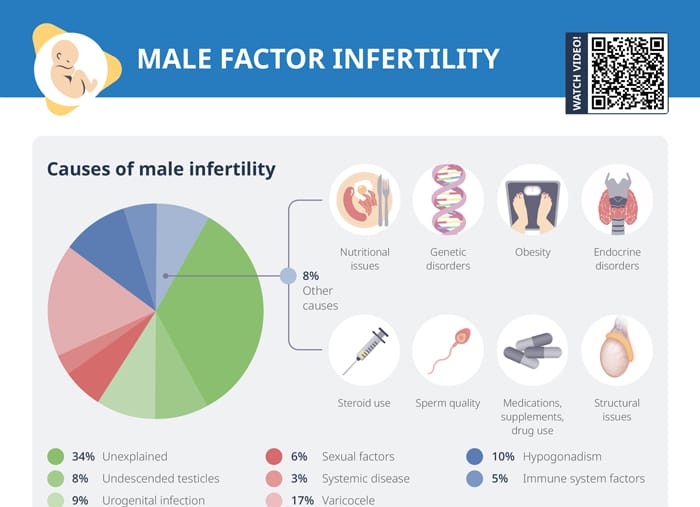
More concerning is the fact that global male fertility has been decreasing over the past twenty years. The reason remains uncertain, but there are numerous potential factors under consideration.
Intense physical activity, which transforms boys into muscular figures but secretly harms their fertility. The combination of smoking and drinking that dulls the body but also undermines reproductive health. Recreational drugs that provide temporary pleasure but lead to long-term issues with sperm production. And finally, environmental factors such as plastics, chemicals, and pollutants that enter our bodies and disrupt the sensitive structure of sperm.
Occasionally, even with the advancements of contemporary labs, the reason stays a secret. A puzzle hidden within biology. For the individual raised on stories of unyielding masculinity, this is an unsettling reality. The hunter, who once confident in his arsenal, finds his arrows have lost their sharpness.
But unlike in the times of okwarira, science has provided us with new instruments.
In poetic language, science has transformed into a kind-hearted sibling, a subtle assistant that enables men, otherwise destined for childlessness, to have their own children. Thus, the wild force of male infertility is gradually being contained. What once was a silent curse is now a manageable issue. Couples who previously had to rely on cultural solutions can now find comfort in clinics and research facilities. Brothers, fellow members of the old boys’ network, we need to address this topic with truthfulness. Male infertility is not a punishment. It is not sorcery, as some of our patients believe, possibly even blaming someone for the sorcery. It is not a failure of manhood either. It is a medical condition, which can be caused by lifestyle choices, genetics, or environmental factors.
Similar to hypertension, diabetes can impact anyone, irrespective of their wealth, social standing, or charm… Should I include the term “cohort”? In our younger years, we were taught to take on the world. Now, we must also learn to overcome silence. To those who endure in silence, know that the doors of science remain open. To those who continue to mock, know that their laughter may one day return to them. As a community of men, let us lead with empathy. Let us back the science that is offering hope to countless families. And let us remember, with love and humility, that the true measure of a man is not just in his ability to father, but in his capacity to care, to nurture, and to be there for his family, whether he has one child, ten, or none. In the vast narrative of life, children are indeed a gift. But so is truth. And it is only by confronting the fierce challenge of male infertility with honesty and bravery that we will conquer it not just for ourselves, but for future generations.
Provided by SyndiGate Media Inc. (Syndigate.info).




 jasdooit
Leave a comment