
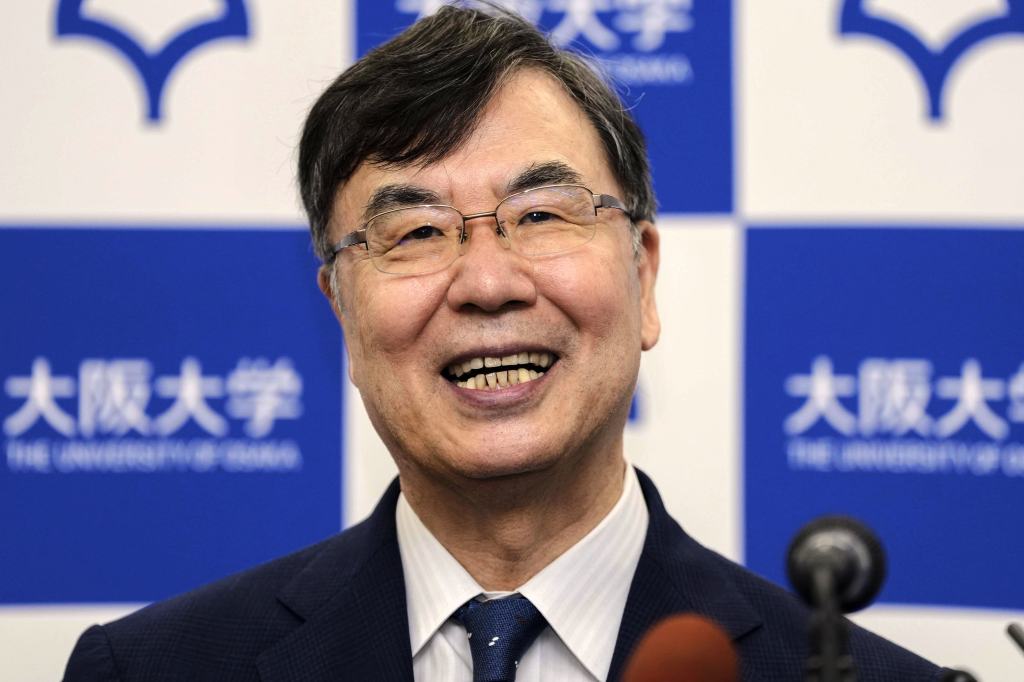
Sakaguchi Shimon, 74, a renowned professor at Osaka University in Japan, was praised by regional media following his Nobel Prize in Physiology or Medicine win for his work on peripheral immune tolerance. Professor Sakaguchi remarked, “An age where even cancer can be cured is surely coming,” detailing his upcoming research goals.
The Nobel Committee at the Karolinska Institute in Sweden announced on the 6th that Sakaguchi, together with Mary Branco, 64, a senior manager at the Institute for Systems Biology in Seattle, U.S., and Fred Ramsdell, 65, a senior advisor at Sonoma Biotherapeutics in the U.S., have been awarded this year’s Nobel Prize in Physiology or Medicine. These three scientists were honored for their advancements in immunology through findings concerning peripheral immune tolerance, which stops the immune system from attacking the body. The committee stated, “Their research provided the basis for new studies, including the creation of innovative therapies for diseases such as cancer.”
Japanese media noted that this was the second year in a row that a Japanese citizen has received a Nobel Prize, following last year’s Peace Prize given to Nihon Hidankyo, the Japan Confederation of A- and H-Bomb Sufferers Organizations. Major newspapers like Yomiuri Shimbun, Asahi Shimbun, and Nikkei Shimbun (Nihon Keizai Shimbun) quickly published articles on their front pages, with Yomiuri and Asahi also releasing special editions. This marks the 30th Nobel Prize won by a Japanese individual since Yukawa Hideki, who lived from 1907 to 1981, was awarded the Physics Prize in 1949. In terms of categories, the count consists of 12 Physics Prizes, 8 Chemistry Prizes, 6 Physiology or Medicine Prizes, 2 Literature Prizes, and 2 Peace Prizes (including organizations).
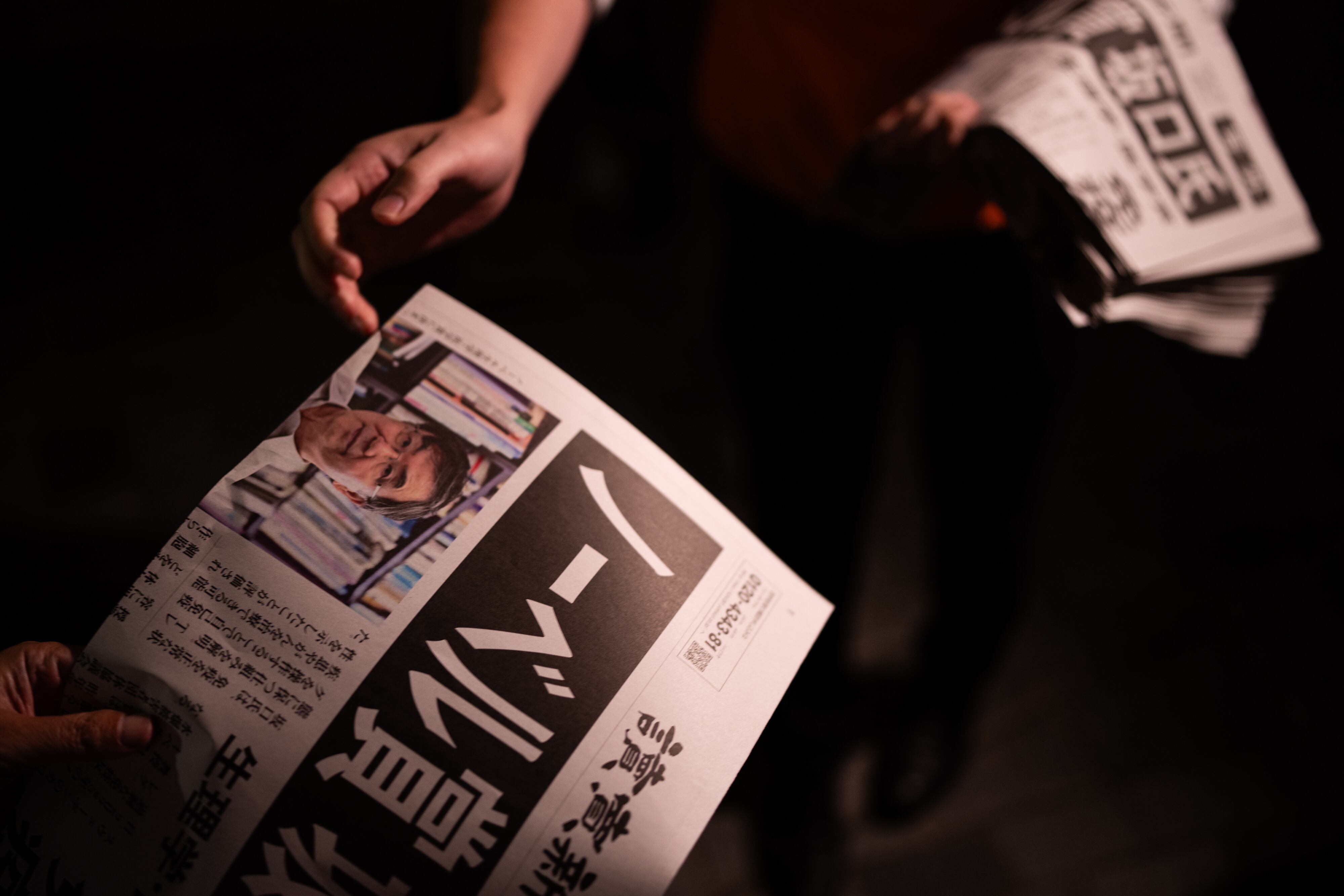
The Yomiuri Shimbun stated, “This is the 29th instance where a person from Japan has been awarded a Nobel Prize, after Syukuro Manabe won the Physics Prize in 2021,” and added, “This is the sixth time a Physiology or Medicine Prize has been given to a Japanese individual since Tasuku Honjo received it in 2018.” Nikkei commended Sakaguchi, saying, “His identification of cells that regulate excessive immune responses has earned him the highest recognition,” and mentioned, “Despite encountering challenges beyond the traditional academic sphere, he has continually pursued his goal of ‘seeking knowledge.’”
Kyodo News cited Shinya Yamanaka, a professor at Kyoto University who received the 2021 Nobel Prize in Physiology or Medicine, as stating, “Professor Sakaguchi challenged conventional ideas in immunology, making significant contributions to medicine, such as in autoimmune diseases, cancer, and organ transplantation,” showing his respect for Sakaguchi’s accomplishments. The Asahi Shimbun noted that Sakaguchi’s family and former high school classmates assembled in Nagahama City, Saga Prefecture—his hometown in western Honshu—to commemorate the occasion.
A live press conference featuring Sakaguchi was broadcast through various media platforms. He stated, “This is a significant honor,” and mentioned, “An era in which cancer can be cured is surely coming.” He further noted, “I hope this area of research continues to progress and is applied in medical practices,” and conveyed his appreciation: “I have carried out research with many individuals. I sincerely thank my students and colleagues.”
Speaking about his future plans, he stated, “I wish to keep working as long as I am able,” and highlighted, “Although I have concentrated on fundamental research, I also hope to make a difference in the treatment and prevention of human illnesses.” Motivating young scientists, he suggested, “Value what captivates you,” and further noted, “If you keep going, you will eventually discover an intriguing area.”



 jasdooit
Leave a comment