
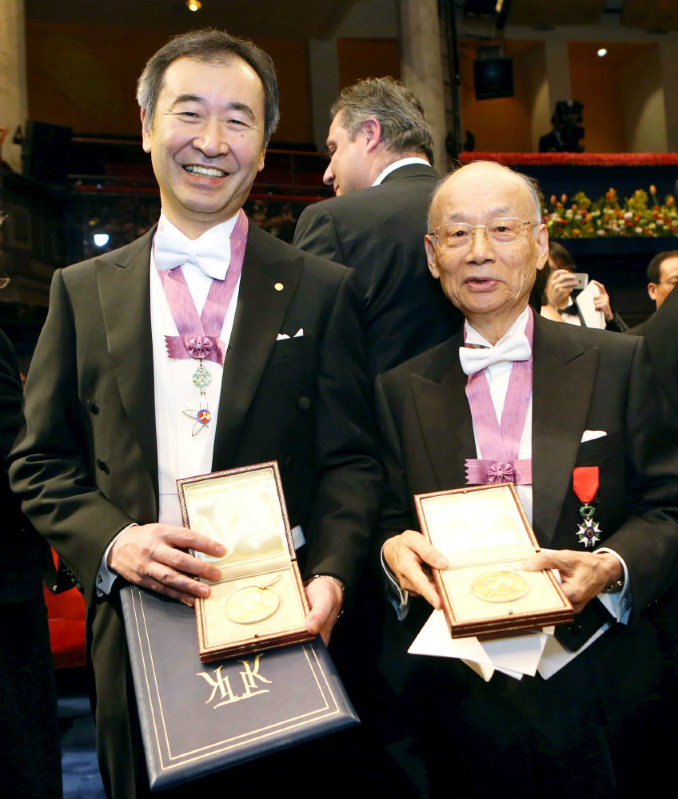
Mary E. Brunkow and Fred Ramsdell from the United States, along with Shimon Sakaguchi from Japan, were awarded the Nobel Prize in Medicine on Monday by the Nobel Committee, recognizing their work on understanding how the immune system is regulated.
Their findings have been crucial in explaining how the immune system works and why not everyone experiences severe autoimmune conditions.
The three individuals were recognized “for their findings related to peripheral immune tolerance,” stated the jury.
“Their findings have established the groundwork for a new area of study and encouraged the creation of innovative therapies, such as those for cancer and autoimmune conditions,” it noted.
Their results could also contribute to more effective organ transplants.
Sakaguchi, 74, uncovered the initial significant finding in 1995.
At that time, numerous scientists believed that immune tolerance occurred because harmful immune cells were removed in the thymus, a mechanism known as “central tolerance.”
Sakaguchi demonstrated that the immune system is more intricate and identified a new type of immune cell that safeguards the body against autoimmune conditions.
Brunkow, who was born in 1961, and Ramsdell, aged 64, contributed to another major finding in 2001, as they managed to clarify why specific mice were highly susceptible to autoimmune conditions.
“They learned that mice possess a mutation in a gene they called Foxp3,” the jury stated.
They also demonstrated that mutations in the human version of this gene lead to a severe autoimmune condition known as IPEX.
Two years later, Sakaguchi managed to connect these findings.
The group will be presented with their award — a certificate, a gold medal, and a $1.2 million check — by King Carl XVI Gustaf during a formal event in Stockholm on December 10, which marks the anniversary of the passing of scientist Alfred Nobel in 1896.
The awards were established by Nobel in his final will and testament.
Trump undermining the United States’ leading position
Prominent US universities often lead in winning Nobel science awards, mainly because of the country’s long-term support for fundamental research and intellectual independence.
However, this might evolve in the future due to significant US budget reductions for scientific programs declared by President Donald Trump.
Starting from January, the US National Institutes of Health have ended 2,100 research grants worth approximately $9.5 billion along with $2.6 billion in contracts, as reported by an independent database named Grant Watch.
Thomas Perlmann, the secretary general of the organization that presents the Nobel Prize in Medicine, stated to AFP that it is “not a coincidence that the United States has by far the highest number of Nobel winners.”
“But there is now a growing feeling of doubt regarding the US’ commitment to remain at the forefront of research,” he stated.
Perlmann referred to the United States as “the very engine” of global scientific research.
He further stated that there would be significant global repercussions for research if it begins to decline.
It doesn’t require many years of significant reductions to result in permanent damage.
Trump has not hidden the fact that he is eager to win a Nobel Prize — specifically the Peace Prize.
Nobel laureates, however, have stated that his “America First” policies and confrontational approach make it unlikely for him to succeed against those working on overlooked issues beyond the spotlight.
“It’s entirely unimaginable,” Oeivind Stenersen, a historian who has done research and co-authored a book about the award, said to AFP.
He stated, ‘Trump is, in many respects, the antithesis of the values that the Nobel Prize embodies.’
“The Nobel Peace Prize focuses on upholding multilateral cooperation, such as within the United Nations… and Trump deviates from this principle. He takes his own route, acting unilaterally,” Stenersen added.
Sudan’s Emergency Response Rooms (ERR), groups of volunteers providing food and support to those suffering from conflict and hunger, are considered potential winners this year, along with media monitoring organizations such as the Committee to Protect Journalists and Reporters Without Borders.
Yulia Navalnaya, the wife of opposition figure Alexei Navalny, is one of the bookmakers’ top picks.
The Nobel awards season is underway this week, with the announcement of the physics prize on Tuesday, chemistry on Wednesday, literature on Thursday, peace on Friday, and economics on Monday, October 13.
Provided by SyndiGate Media Inc. (Syndigate.info).
 jasdooit
Leave a comment