
Debating Ideas embodies the principles and editorial approach of theAfrican Arguments book series, publishing dynamic, often progressive, academic work, innovative and activist writing from within Africa and further afield. It provides discussions and interactions, backgrounds and disputes, and critiques and replies emerging from the African Arguments publications. It is edited and overseen by the International African Institute, based at SOAS University of London, the publishers of the book series with the same title.
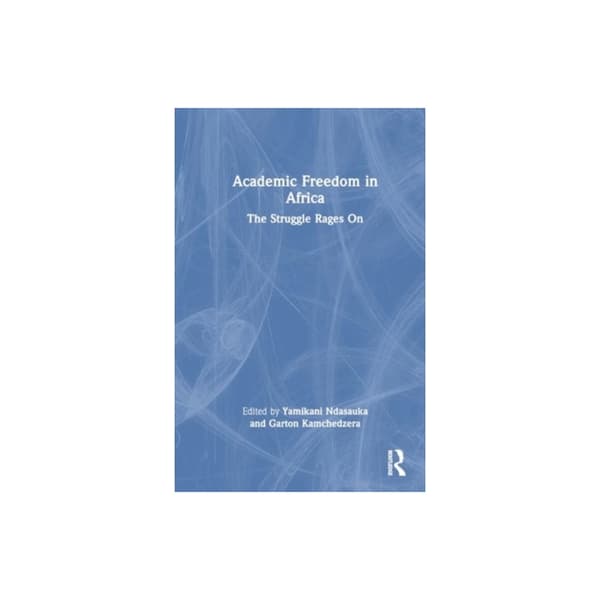
Academic freedom, the foundation of intellectual exploration and excellent higher education, is encountering major obstacles in African universities. A recentonline seminargathered specialists from throughout the continent to consider these challenges, especially within the framework of neoliberalism and modern managerialism, which frequently result in different types of academic “unfreedoms”.
The panel emerged from CODESRIA’s recent conference, where participants considered the Kampala Declaration of 1990 and the suggested Dar es Salaam Annex to revise it.
The workshop emphasized that academic freedom plays a vital role in advancing scientific development, seeking truth, conducting research, and maintaining the standard of higher education. However, its implementation is still unclear. In Africa, this issue is intensified due to the strong ties between most universities and governing political powers, which frequently leads to the suppression or questioning of intellectual freedom.
Zimbabwe: an example of political involvement and monitoring
Simbarashe Gukurume highlighted the significant impact of state surveillance and political influence in Zimbabwe on the creation of knowledge and academic freedom. Following independence, the then Prime Minister Robert Mugabe once remarked that “higher education is too important a business to be left entirely to deans, professors, lecturers and university administrators,” indicating a desire to exert control over universities. In 1982, therepeal of the Royal Charterand the implementation of theUniversity of Zimbabwe Actseverely eroded academic freedom and institutional independence. This legislation positioned the President of Zimbabwe as the Chancellor of all public universities, allowing them to appoint key officials (such as the Vice-Chancellor), who frequently served as political appointments.
The 1990 amendmentfurther solidified the authority of the Chancellor and Vice-Chancellor, resulting in increased use of state security forces, in civilian attirespies, and central intelligence on campus, sometimes masquerading as students or staff. This environment led to the “bifurcation of academics” into “patriotic intellectuals” (who support the ruling party uncritically and enjoy freedoms) and “sellout intellectuals” (who are critical of the ruling party and face harassment, arrest, imprisonment, are denied promotion, and face victimisation). The “sellout” is depicted as someone whose life is “disposable and considered less important,” reflecting a “necropolitical practice” of the state. The state achieves this by compelling the university to produce a narrow, patriotic discourse and by funding research and knowledge production that foregrounds the ruling party (ZANU-PF) propaganda. Thus, instead of propagating critical and scientific knowledge, the university is reduced to a propaganda-churning institution where critical scholarship is regarded as a threat to national security and critical academics are labelled and criminalised as enemies of the state.
Uganda: “silent attacks” on academic freedom
Robert Kakuru outlined several “silent attacks” at Makerere University, most of which have implications throughout the continent. The list of these attacks is extensive and encompasses: self-censorship by staff members who are afraid to voice their opinions on different platforms; police actions against the free association of staff and student groups, hindering the ability of staff and students to hold gatherings or executive meetings; false accusations and blocking of leaders to “silence members”; warning letters sent to outspoken staff and malicious reassignments of these individuals to disrupt them; intentional obstruction of the university staff tribunal, denying staff justice when they are suspended or fired; denial of promotions and post-retirement contracts for those who speak out, effectively silencing professors; hiring faculty on temporary rather than permanent contracts to exert control and suppress them, resulting in fear of contract non-renewal; exclusion from official university email lists, and monitoring of emails to regulate the flow of information; refusal to provide meeting spaces, and suspension of forums seen as “anti-management”; cutting off funding for staff associations to weaken their influence; and restricting discussions on major political and civic issues such as detention without trial and the harassment of opposition political parties. A notable example was a lecturer from the School of Law who wasinvestigatedFor establishing an exam that was seen as critical of the Speaker of Parliament. These actions undermine the fundamental principles of academia and national democratic institutions that depend on critical analysis. This fosters an environment conducive to shaping the national political discourse. Faced with harassment, including unwarranted warning and suspension letters, many staff unions and their members opt for compliance as a means of self-protection due to fear of retaliation from the university administration.
Barriers to structure in Kenya and elsewhere
Felishana Cherop conducted a scoping review of the literature concerning academic freedom and governance, highlighting that political interference and centralized governance structures in African universities hinder faculty participation in decision-making processes. Numerous institutions are lacking modern laws and policies that protect academic freedom. The study also indicates a growing move toward profit-oriented models of higher education, where faculty roles are increasingly viewed as “service delivery” rather than “intellectual input and knowledge creation.” This shift is evident in the swift growth of private universities and branch campuses, which focus on market needs, resulting in an emphasis on programs like business and ICT. This not only limits academic diversity but also marginalizes opportunities for critical thinking, innovation, and democratic involvement.
Internal collaboration and the neoliberal university
Sioux McKenna claimed that numerous restrictions hindering universities from functioning as a “common good” originate from inside the institution, implying that academics are “in some way involved”. Universities have increasingly embraceda neoliberal understanding, limiting their focus to delivering “private goods” and “economic goods,” such as industry-specific training and credentials for social advancement, instead of contributing to the “common good” of society and the environment. This short-term financial approach, while seeming to boost stability by drawing in higher fees and government support, leads to “severe long-term effects,” transforming the university into a “highly specialized training center” rather than a genuine public benefit.
Management approaches based on new public management and neoliberal principles aim to enhance organizational efficiency by controlling all processes, utilizing data to track actions, and ensuring standards are met. HoweverMcKenna arguesIt causes academics to feel less professional, less respected, less appreciated, and more dissatisfied. Their professional identity is weakened as their role shifts towards “adhering to rules” and acting as a “service provider.” Instances include the increase in Deputy Vice-Chancellors and Executive Directors, who take authority away from academic staff; the transition from deans representing faculty to executive deans representing management; and the presence of management personnel on short-term contracts who may implement “slash and burn” strategies. The emphasis on metrics leads to the idea that “if it isn’t measured, it soon isn’t considered important,” diminishing the true value of intricate academic work.
Academics now make up a smaller share of university employees (under 50% in South Africa, sometimes below 30%), resulting in Senates and Faculty Boards turning into “areas of mere approval” where actual decisions are taken “behind closed doors”. McKenna suggests that the emphasis on titles and procedures can also serve to “compete for influence” and “make individuals remain within their boundaries,” thereby diminishing academic freedoms through minor, routine actions.
The Way Forward
Although there were major obstacles, the seminar also emphasized methods of defiance and promoting academic freedom via group efforts and changes within institutions.
Academic staff unions have illustrated their capacity as instruments of resistance by employing legal strategies, public campaigns, and the establishment of alternative information channels. These groups have demonstrated that persistent pressure via press releases, ongoing interaction with university boards and governmental agencies, and the creation of independent information systems can circumvent institutional control over communication. The strength of routine staff meetings and calculated collaborations with non-governmental organizations has been especially valuable in sustaining support for academic freedom. Nevertheless, the success of these initiatives is still limited by political intervention, self-censorship among members, weakened legal structures, lack of member interest, and long-term financial shortages that hinder continuous advocacy.
There is an immediate requirement for more comprehensive studies on alternative governance systems that can enhance the involvement and influence of faculty members. This involves promoting enhanced partnerships between educational institutions and community-based organizations, supporting truly inclusive governance frameworks, and establishing strong legal safeguards that can resist political interference. The formation of these partnerships demands a long-term dedication to cooperative efforts and unified advocacy approaches.
Perhaps most essentially, there is an urgent need to reclaim and redefine the university’s central mission in contrast to neoliberal market principles. This entails promoting ongoing institutional discussions regarding the university’s function as a social entity fundamentally dedicated to the production and sharing of knowledge, rather than the pursuit of profit. This form of resistance involves integrating practices of empathy and kindness as conscious political gestures that challenge the individualistic and competitive nature of neoliberalism. Scholars must actively oppose views of the university as just a brand that offers credentials, instead promoting institutions based on collective dedication and unity. The establishment of areas for cooperation and mutual aid becomes crucial, as does the formation of wider pan-African networks that can tackle these systemic challenges through united collective efforts rather than isolated institutional approaches.
Conclusion
In the end, safeguarding academic freedom goes beyond the well-being of faculty members; it is essential for maintaining the credibility and validity of higher education institutions, guaranteeing reliable research and the standard of knowledge generated. Student input is vital in this regard, as their involvement in decision-making bodies concerning the academic agenda can promote a broader and more varied comprehension of academic freedom, ensuring that those committed to upholding these freedoms come from various stakeholder groups. As Samuel Fongwa pointed out, African initiatives aimed at systematically tracking and reporting on academic freedoms, along with platforms for discussing such issues, as offered by CODESRIA and other collaborators and stakeholders, are essential in tackling these “unfreedoms.” The dialogue needs to persist.
Sioux McKenna serves as a Professor in the Centre for Postgraduate Studies, Department of Higher Education Studies, at Rhodes University in South Africa. Felishana Cherop is a Tutorial Fellow in the School of Business and Economics, specifically within the Department of Management Science, at Moi University in Kenya. Samuel Fongwa holds the position of Program Officer in the Training, Grants and Fellowships program at CODESRIA. Before joining the Council, he spent approximately seven years at the Human Sciences Research Council, where he initially joined as a Postdoctoral Fellow and eventually advanced to the role of Senior Research Specialist. Simbarashe Gukurume is a senior lecturer at Sol Plaatje University in Kimberly, South Africa. Robert Kakuru is a Human Rights Lecturer at Makerere University in Uganda.
Copyright 2025 African Arguments. All rights reserved. Distributed by AllAfrica Global Media ().
Tagged: Africa, Education, Governance
Provided by SyndiGate Media Inc. (Syndigate.info).



 jasdooit
Leave a comment