

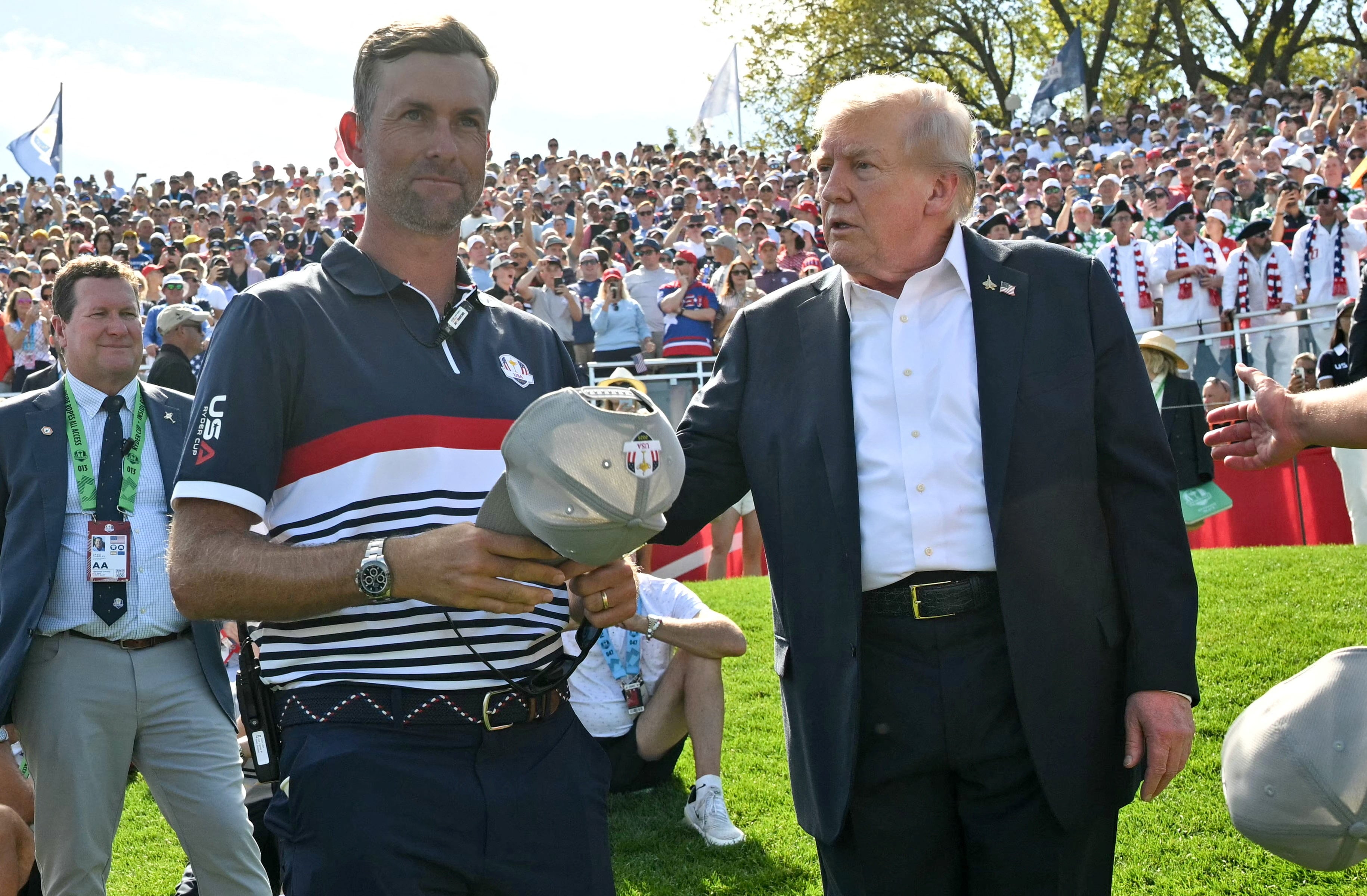
The Ryder Cup, a golf event pitting Europe against the United States, took place in the U.S. last month and concluded with Europe winning 15-13 in front of local supporters. What was more surprising than the outcome were the incidents both inside and outside the venue. Fans hurled verbal attacks at European golfer Rory McIlroy and showed disrespect towards his family. President Donald Trump made an appearance with a low-flying Air Force One, highlighting his political influence. On the podium, U.S. players requested prize money, which the organizers did not strongly oppose. The New York Times noted, “From a global perspective, the U.S. lost the sportsmanship,” while Golf Digest joked, “It wasn’t the Ryder Cup but a Trump event.”
International sporting events serve as a means for countries, particularly the host nation, to convey messages to the global community and showcase their societal values and leadership. On this platform, the U.S. has long displayed the grace of a dominant nation. However, today, this image is beginning to weaken.
Following World War II, the United States played a key role in shaping a new global system. It promoted market economies and liberal democratic principles worldwide via organizations such as the United Nations, IMF, World Bank, GATT, and WTO. Political scientist John Ikenberry refers to this as the “liberal international order.” He notes that the U.S. encouraged the international community to willingly adopt a multilateral framework built on diversity, openness, and institutional development, rooted in liberal democratic ideals.
U.S. leadership was not solely due to military and economic dominance, but also stemmed from a vision grounded in values and principles. In his 1941 “Four Freedoms” speech, President Franklin Roosevelt said, “The future world we are fighting to create must be built on freedom of expression, freedom of worship, freedom from want, and freedom from fear.” This formed the ethical basis of the postwar structure, which aimed for peace and mutual prosperity through collaborative actions. Sports arenas served as a platform to convey this message worldwide.
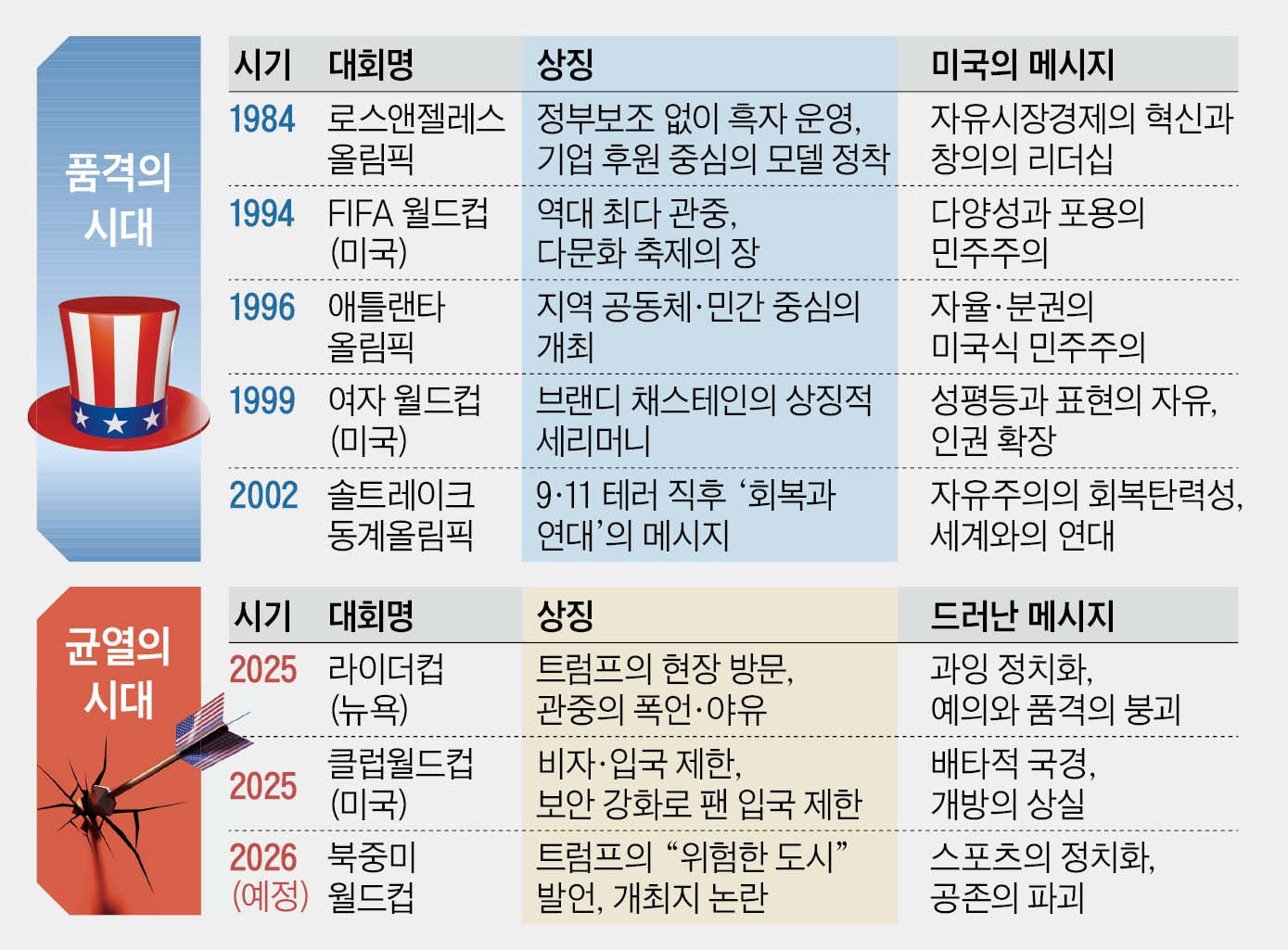
The 1984 Los Angeles Olympics marked this new era. Even with the Soviet Union’s absence, the U.S. managed to organize the games effectively using innovative strategies and financial support from the private sector. It was the first Olympics to generate a profit without relying on government funding, showcasing the effectiveness of a market-driven approach. Jetpack demonstrations soaring in the air, electronic broadcasting, and business-backed operations all reflected American ideals of liberty and innovation.
The 1994 U.S. World Cup represented a sign of cultural openness. In a nation where soccer was considered a minor sport, it attracted unprecedented crowds, revealing the genuine essence of a diverse, multiethnic country. As a nation built by immigrants, the U.S. conveyed to the world that differences in race, language, and culture could be bridged through inclusion and mutual respect. The 1996 Atlanta Olympics illustrated decentralized democracy by means of cooperation between international companies and local communities. It presented another aspect of American democracy, where the private sector and regions, rather than the federal government, played the leading roles.

During the 1999 Women’s World Cup, Brandi Chastain’s celebration—taking off her jersey and shouting after a crucial penalty kick in the final—represented more than just a win; it embodied women’s independence and the right to express themselves. American leadership moved beyond traditional male-focused stories of power to support inclusivity and fairness. At the 2002 Salt Lake Winter Olympics, which occurred shortly after the 9/11 attacks, the global audience watched as the U.S. flag was carried in. The U.S. demonstrated the strength of democracy by upholding honor despite the tragedy.
Therefore, the United States utilized global sporting events to promote its ideals of liberal democracy, open market economy, diversity, and appreciation for human rights. By means of sports, the U.S. showcased principles and structure for peaceful coexistence to the international community, representing the core of its leadership after the war.
Currently, the U.S. is following a different approach. During the FIFA Club World Cup this summer, U.S. immigration officials rigorously applied entry and residency requirements. Numerous supporters were turned away because of visa problems, and increased security protocols overshadowed messages of hospitality and acceptance. What is left is not the openness and inclusiveness that the U.S. previously demonstrated, but an image of control and exclusivity.
Before the 2026 North America World Cup, President Donald Trump’s statements are causing concern. He labeled certain host cities as “unsafe” and suggested the chance of moving locations, bringing sports into domestic political disputes. His remark that trade conflicts with co-hosts Mexico and Canada would make the event “more exciting” faced backlash for turning sports into a political tool.
With the “America First” slogan under Trump, the U.S. has increased its exclusivity. Protectionist trade policies involving unilateral tariffs and regulations, along with rejecting multilateralism by leaving international agreements, demonstrate the U.S. moving away from the liberal order. According to the concept of “weaponized interdependence” proposed by political scientists Newman and Farrell, the U.S. is turning economic interdependence—meant for coexistence and mutual prosperity—into a strategic tool. Ikenberry notes, “The U.S. has transitioned from a leader promoting norms and institutions to one that rejects them.”
International sporting events serve as a demonstration for the world to show that humanity can engage in intense competition while still maintaining harmony within established rules. They also act as a platform through which the global community assesses the leadership and honor of the host country. Although FIFA and the IOC promote the idea of keeping sports separate from politics, in reality, sports have consistently reflected societal and political dynamics. Through these events, we find reassurance that we can compete justly under regulations, accept loss, and live together with mutual respect.
The United States once stood at the forefront, spreading this vision globally through international sporting events. However, during the Trump administration, as a host nation, the U.S. no longer reflects the leader that establishes and maintains global standards. The 2026 North America World Cup will serve as a trial to determine if the U.S. can restore its reputation as a champion of the liberal international order, embodying principles of peaceful coexistence and mutual prosperity.



 jasdooit
Leave a comment