
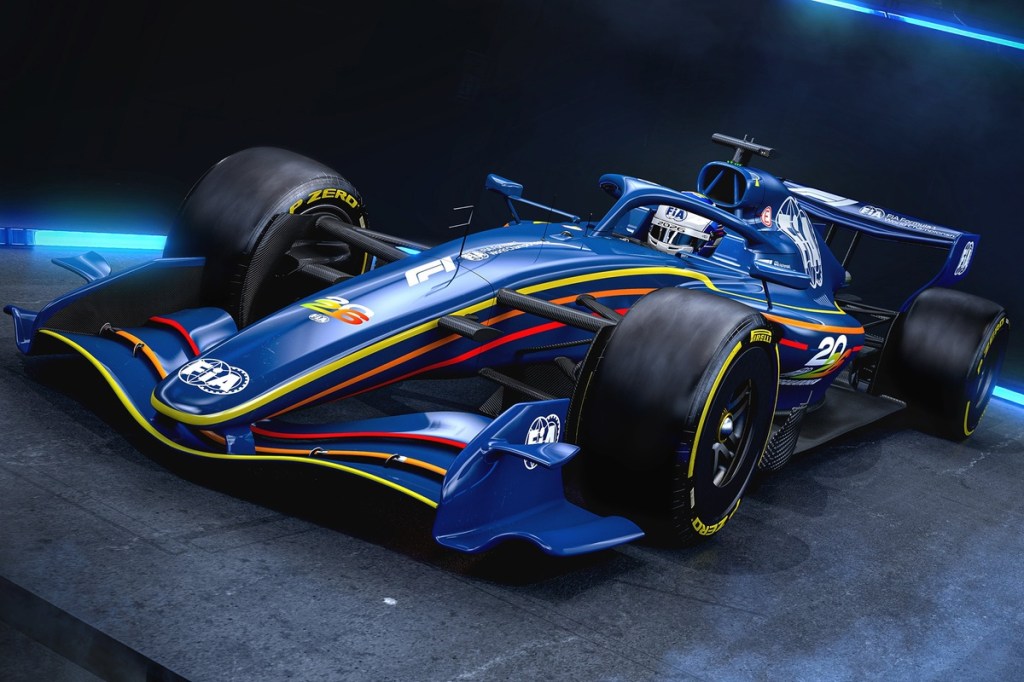
WilliamsBoss James Vowles believes that overtaking in the 2026 Formula 1 season will appear significantly different, with a greater focus on technical ability rather than driver assistance systems.
The championship is currently implementing what is likely its most significant rule modification ever, featuring updates to both the chassis and power unit.
There will be greater focus on electric power, with a nearly equal division between the internal combustion engine, along with lighter and more compact vehicles aimed at enhancing track competition and passing maneuvers.
Although drivers had initial doubts following simulator tests, withCharles Leclerc mentioned that the cars were “less enjoyable”, Vowles believes they are now enjoying the task of mastering the upcoming changes.
The issue was raised with him during the team principal press conference before last weekend’s Singapore Grand Prix, and Vowles stated, “Overtaking will be different but it will occur, just in a manner that differs from what you’re accustomed to now.”
The drivers initially went once and found it not great, then the second time they thought it was interesting, and by the third or fourth time, they realized these are race drivers, who are genuinely enthusiastic about it. They perceive a different approach to optimizing it as a solution and can recognize how an advantage can be gained.
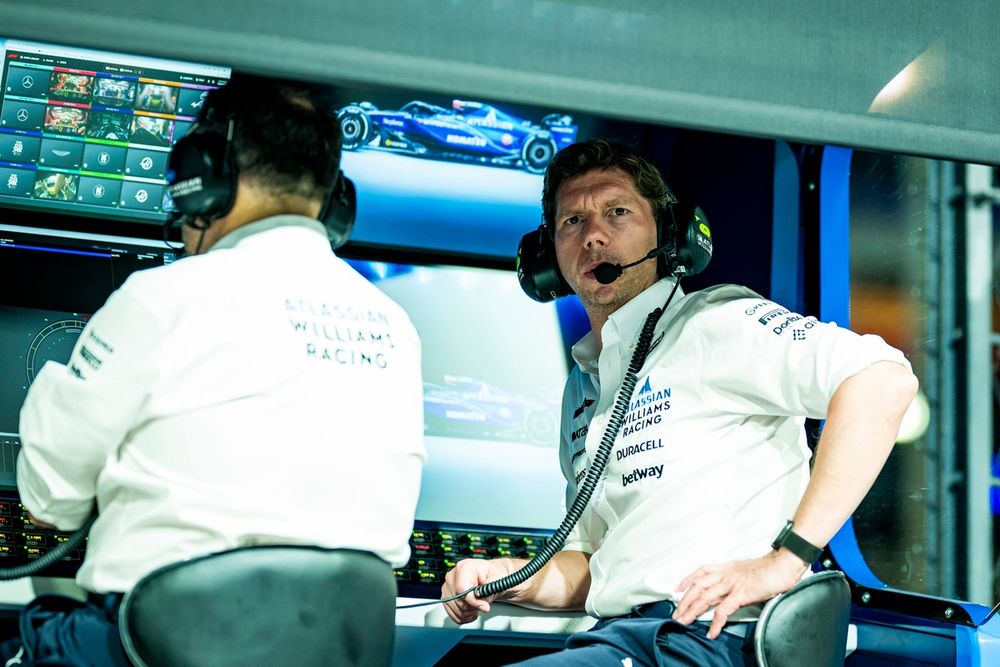
So, from that viewpoint, I believe it will be intriguing and I do think it will enhance overtaking, but not in the places you expect. That’s probably the best way to express it.
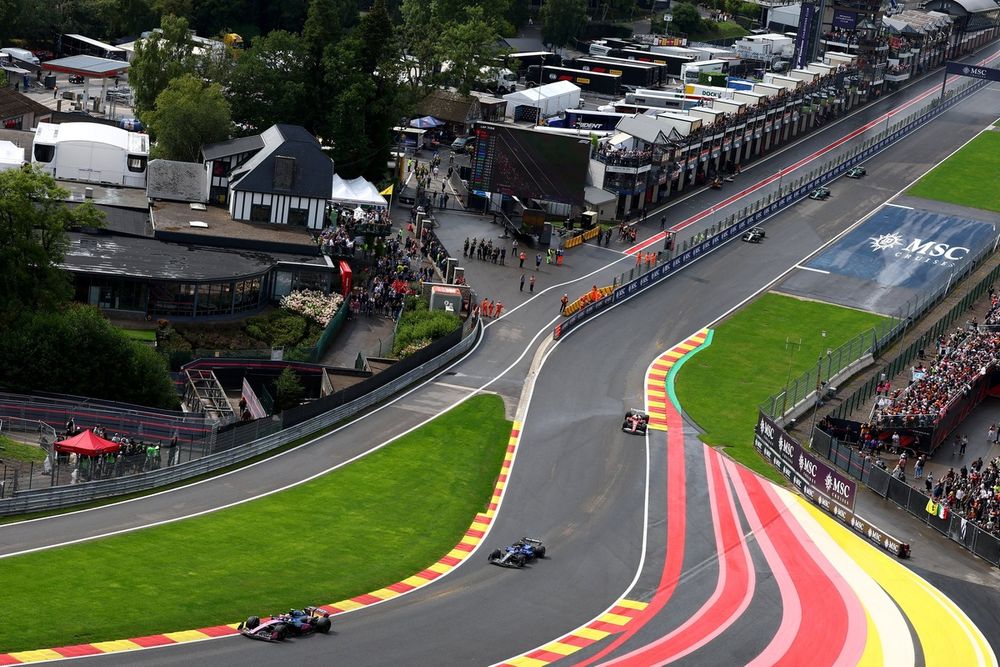
He mentioned that the main opportunities for overtaking on a circuit could vary as a result, citing Spa as an example, and noted that there will be less focus on making a move at the beginning of the Kemmel Straight.
This outcome arises from substituting DRS with a manual override system that, in essence, functions as a push-to-pass button, providing the following vehicle with additional power once speeds exceed 280km/h.
Due to the increased dependence on electrical power, Vowles thinks this will benefit drivers who have a better understanding of their vehicle, rather than just depending on DRS for overtaking.
The current rules mean they will be more occupied in the cockpit,” he stated. “I don’t see this as a negative; I believe those who succeed will be the ones fully in command of the car and its responses, and who think creatively.
The differences lie, perhaps best expressed as, that you can nearly fully charge the battery in one braking section but deplete it in a single straightaway. This results in a very different dynamic compared to what we’ve experienced this year.
But how next year will exactly unfold remains largely unclear as teams continue to work on their 2026 vehicles. The first opportunity to see them in action will be during the pre-season tests, which are planned to take place at the beginning of next year.
A five-day private test is scheduled to take place in Barcelona from January 26 to 30, followed by two distinct three-day sessions in Bahrain before the Melbourne opening in March.
Aston Martin’s Andy Cowell, who participated in the same session as Vowles, believes the first session will be significantly different from 2025’s because of the updated rules.
“Was the test in Barcelona, are we all going to be covering 800 kilometers each day as we did in Bahrain ten months ago?” he asked. “No,” he said.
We’ll be combining all elements and ensuring everything functions properly, so the vehicle can complete the track and return under its own power.


 jasdooit
Leave a comment