
Nepal, October 14 — On September 9, Cyabra, an AI-driven platform based in Israel, released a report stating that fake accounts significantly influenced the Gen Z protests. Relying on this report without thoroughly verifying its reliability or methods, some media outlets quickly speculated that the movement was orchestrated by hidden forces, even implying the involvement of foreign elements within the protests. Similarly, in recent days, the acronym ‘TOB’ has gained traction on social media after images were shared depicting young men wearing T-shirts with the letters during the protests, leading to speculation about its significance. One issue led to another, and the situation rapidly intensified as curiosity turned into misinformation, radicalized stories, and xenophobic attacks, with some users issuing death threats against Nepalis of Tibetan descent.
On Sunday, a two-page meeting record, allegedly signed by various prominent figures from the Gen Z movement, was shared on social media, in which they requested several important ministerial positions. Once more, the public reacted swiftly and participated in the discussion. They criticized the young leaders for seeking ministerial roles, comparing them to the power-seeking leaders of established political parties. The document was later revealed to be a fake.
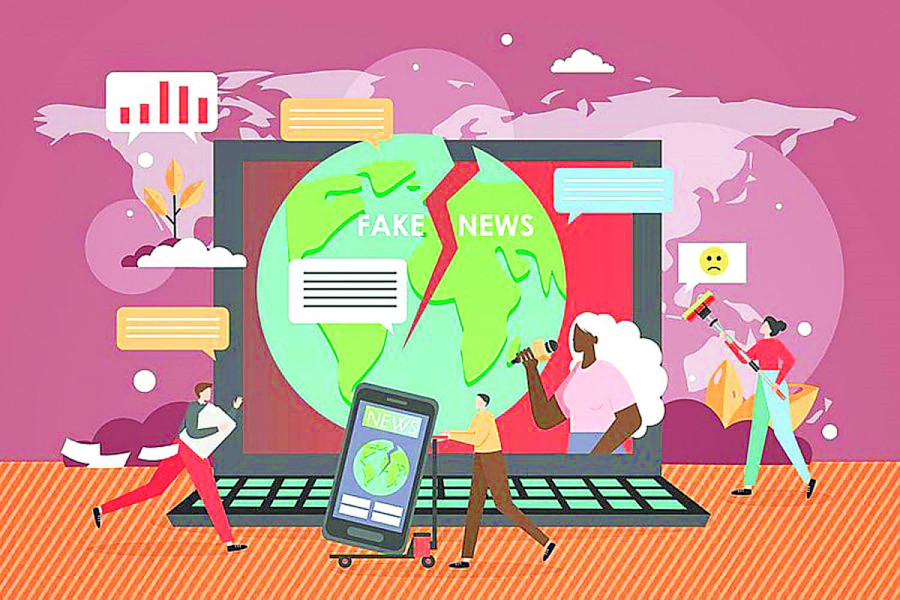
Global cyberspace is filled with false and misleading information. Social media connects people, yet it also quickly spreads unverified and unsupported content. Indeed, false news stories circulate more quickly than accurate ones. According to a 2023 report, 41 percent of Nepal’s population uses social media, but many individuals still have limited media literacy, absorbing information from these platforms without critically evaluating the content.
Nepal’s online environment has become increasingly unstable since the rise of the Gen Z movement, as divisive views and unverified content circulate widely across social media. At this pivotal moment in the nation’s history, false information and misleading narratives go beyond disrupting conversations; they endanger the country’s interests by spreading various conspiracy theories. The government plays a vital role in combating these issues. Firstly, it should develop a national strategy to address the problem promptly, through discussions with appropriate parties.
Another straightforward yet impactful strategy is enhancing individuals’ media literacy. To achieve this, there should be initiatives focused on raising awareness about false information. Social media users also have a part to play. Practicing responsible usage involves reporting questionable content whenever it is encountered. Although there is significant global worry, a 2023 UNESCO study revealed that only 48 percent of users reported such material. More people need to report fake news and misleading information whenever they encounter suspicious content.
Combating false and misleading information is not a simple task. There may be a rapid surge in such content before the March 5 elections, as various political factions attempt to undermine each other or capitalize on the unstable environment. This is why prompt action is essential. If allowed to continue, it’s impossible to predict how severe this cycle of falsehoods and misinformation could become over the coming months and years.


 jasdooit
Leave a comment