
Pakistan, October 14 — On Monday, Hamas freed all 20 remaining surviving hostages held in Gaza, as part of a truce that ended two years of conflict that devastated the area, resulted in the deaths of tens of thousands of Palestinians, and left many captives in Hamas’s custody.
Seven captives were let go on Monday morning, with the other 13 being released a few hours later.
The 20, all males, were set to be reunited with their families and scheduled for health examinations.
The remains of the other 28 deceased captives are also anticipated to be transferred under the agreement, although the specific schedule is still unknown.
Family members and loved ones of the captives who assembled in a square in Tel Aviv erupted into enthusiastic cheers when Israeli television networks reported that the first batch of hostages had been taken into the care of the Red Cross. Tens of thousands of Israelis viewed the transfers during public viewings throughout the nation.
Israel has shared the initial images of hostages returning to their homes, featuring a picture of 28-year-old twins Gali and Ziv Berman hugging as they were reconnected. Previous released hostages mentioned that the twins from Kfar Aza were kept apart.
The images of the first seven captives released on Monday depicted them as pale but not as thin as some of the prisoners released in January.
Palestinians, on the other hand, were waiting for the release of hundreds of detainees held by Israel. In the West Bank, an armored vehicle displaying an Israeli flag launched tear gas and rubber bullets at a group gathered near Ofer Prison. With drones hovering above, the crowd dispersed.
The use of tear gas came after a flyer was distributed warning that those supporting groups labeled as “terrorist” could face arrest. Israel’s military did not comment on the flyer, which The Associated Press obtained on location.
Despite significant uncertainties regarding the future of Hamas and Gaza, the release of hostages and prisoners sparked optimism for concluding the most severe conflict between Israel and Hamas.
The truce is also anticipated to be followed by an increase in humanitarian assistance reaching Gaza, where certain areas are facing starvation.
U.S. President Donald Trump has reached the area, where he intends to talk about the U.S.-suggested agreement and post-conflict strategies with additional leaders.
The conflict started on October 7, 2023, when Hamas carried out an unexpected assault on southern Israel, resulting in the deaths of approximately 1,200 individuals, primarily non-combatants, and 251 people being taken captive.
During Israel’s subsequent military operation, over 67,000 Palestinians have been killed, as reported by Gaza’s Health Ministry. The ministry does not distinguish between civilians and fighters but states that approximately half of the deceased were women and children. The ministry is under the administration of the Hamas government, and the U.N. along with numerous independent experts regard its data as the most accurate measure of casualties during the conflict.
The cost is anticipated to increase as remains are recovered from debris that was previously unreachable due to combat.
The conflict has devastated extensive areas of Gaza, forcing approximately 90% of its population of around 2 million people to flee. It has also caused additional conflicts in the area, ignited global demonstrations, and resulted in accusations of genocide, which Israel rejects.
“A significant portion of Gaza has turned into a desolate area,” said Tom Fletcher, the U.N. humanitarian chief, to the AP on Sunday.
The return of the hostages concludes a difficult period for Israel. Since they were taken during the attack that started the war, news reports have tracked their days in captivity, and Israelis have worn yellow pins and ribbons to show support. Tens of thousands have joined their families in weekly protests demanding their release.
As the conflict continued, protesters criticized Prime Minister Benjamin Netanyahu for delaying actions for political reasons, despite his claims that Hamas was unwilling to compromise. Last week, amid significant global pressure and growing international isolation for Israel, the opposing sides finally reached a ceasefire.
Following the release of the captives, the feeling of urgency regarding the conflict will largely dissipate for many Israelis.
It is still uncertain when the remains of 28 deceased hostages will be handed back. An international team will attempt to find the bodies of those who have not been returned within 72 hours, according to Gal Hirsch, Israel’s representative for hostages and missing individuals.
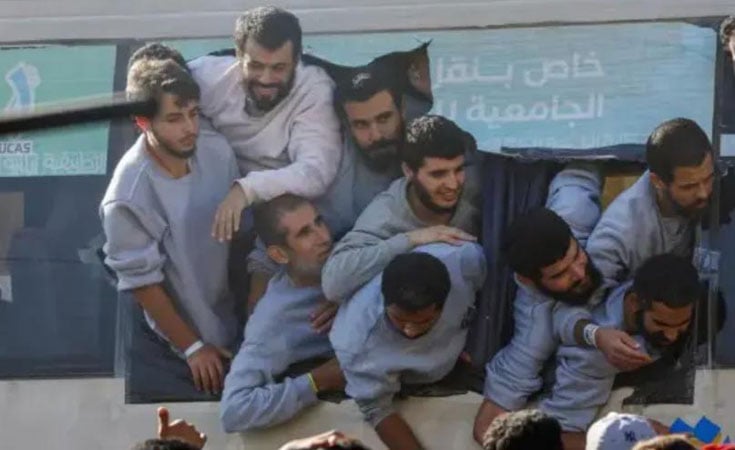
At the same time, buses gathered in Khan Younis in the Gaza Strip on Monday morning, waiting for the release of detainees.
The specific date for the release of Palestinian prisoners has not yet been disclosed. This group consists of 250 individuals who are serving life sentences due to convictions related to attacks on Israelis, along with 1,700 people captured from Gaza during the conflict and detained without formal charges.




 jasdooit
Leave a comment