
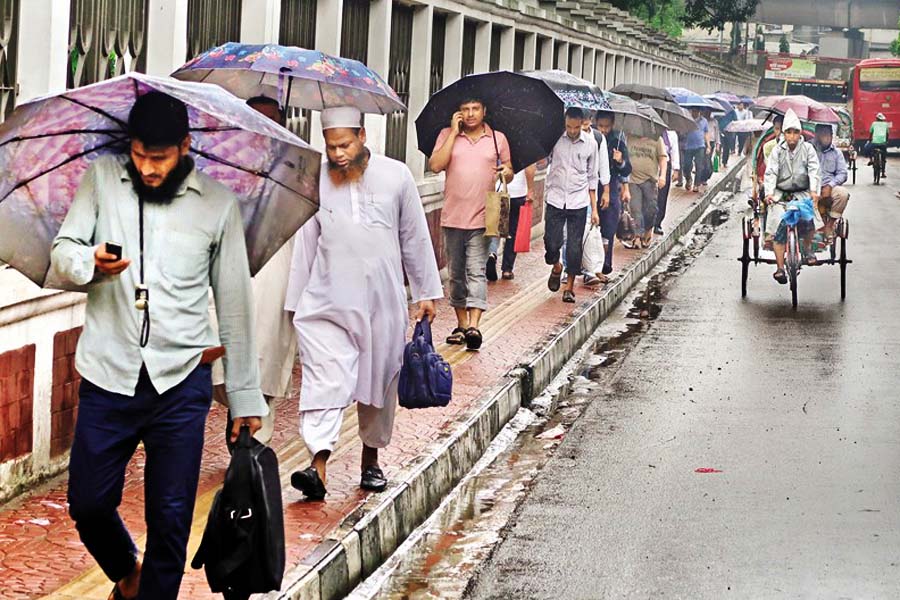
Dhaka, October 15 — Dhaka, the densely populated capital of Bangladesh, has placed fourth on the list of urban areas with the most polluted air, recording an AQI of 167 at 9:30 a.m. today (October 15, 2025).
Today, Dhaka’s air was categorized as ‘unhealthy,’ indicating a health risk, as per the AQI index. This level of air quality has persisted for several days, with the AQI remaining above 160.
If the AQI level for particle pollution falls between 50 and 100, the air quality is classified as ‘moderate,’ and individuals who are sensitive may want to reduce extended outdoor activity. When the AQI ranges from 101 to 150, the air quality is deemed ‘unhealthy for sensitive groups.’ Between 150 and 200, it is considered ‘unhealthy.’ From 201 to 300, the air quality is described as ‘very unhealthy,’ and a reading of 301 or higher is labeled ‘hazardous,’ presenting significant health dangers to the population.
Lahore in Pakistan, Delhi in India, and Kolkata secured the top three positions on the list, with AQI readings of 260, 222, and 174 respectively.
The Air Quality Index, a tool used to communicate the daily air quality, helps individuals understand how clean or contaminated the air in a specific city is and what potential health impacts could be of concern.
Unseasonal rains hit Bangladesh as the monsoon season’s end is postponed
The air quality index in Bangladesh considers five contaminants: particulate matter (PM10 and PM2.5), nitrogen dioxide, carbon monoxide, sulfur dioxide, and ozone.
Dhaka has continuously faced challenges with air pollution. The air quality typically becomes poor in winter and improves during the rainy season.
According to the World Health Organization (WHO), air pollution is responsible for approximately seven million deaths globally each year, primarily because of higher death rates from stroke, cardiovascular diseases, chronic obstructive pulmonary disease, lung cancer, and acute respiratory infections.




 jasdooit
Leave a comment