
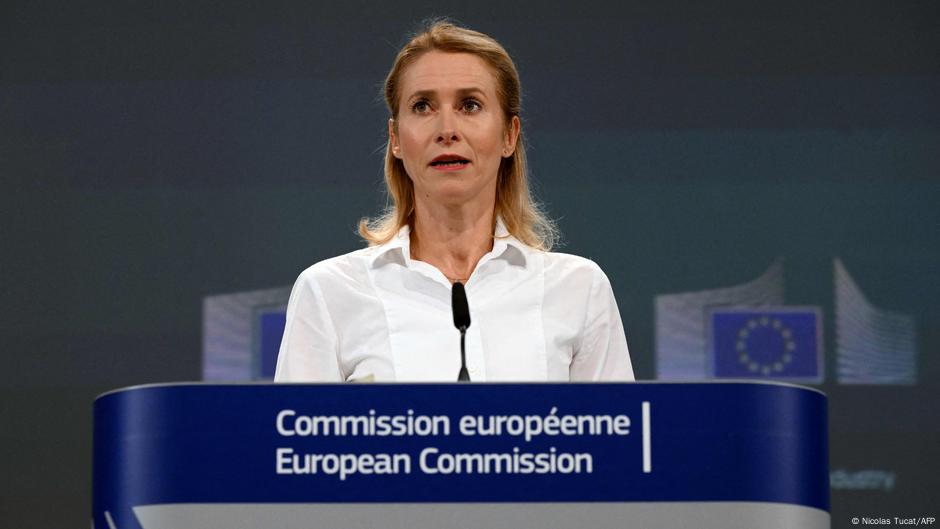
EU’s top diplomat for foreign affairs, Kaja Kallas, states there is no alternative but to strengthen military capabilities against Russia. A key initiative will encompass land, sea, air, space, and cyber domains.
The EU must strengthen its anti-drone measures due to ongoing Russian actions, according to senior diplomat Kaja Kallas. The foreign affairs representative stated this while introducing a “defense preparedness plan” detailing preparations for a potential Russian attack in the near term.
A component of the EU’s strategy involves establishing what European Commission President Ursula von der Leyen refers to as a “drone wall.”
There has been a recent rise in demands for such defensive measures as Russia has intensified its incursions—using both traditional aircraft and, more frequently, unmanned aerial vehicles (UAVs) or drones—into European Union airspace.
Unmanned aerial vehicles are already changing the nature of combat,” stated Kallas in Brussels, further noting: “Implementing drone protection measures is now a necessity for all.
The suggested EU system is expected to be functional by 2027, as stated by Kallas. Early proposals aimed for a configuration along Europe’s eastern frontier. However, recent movements occurring more to the west have altered this approach.
The upcoming European Drone Defense Initiative is set to start its operations in 2026 and will be completely operational by the end of 2027.
Russia is currently unable to initiate an attack against the European Union,” stated Kallas, “however, it might get ready in the coming years.
Peril,” she stated, “will not vanish, even if the conflict in Ukraine comes to an end.
Entire EU and Eastern Front approaches
In addition to the European Drone Defense Initiative, Brussels aims to strengthen security along its frontiers with Russia and Belarus.
The EU has assigned the name “Eastern Flank Watch” to its initiative aimed at strengthening the eastern borders of the union through land, sea, and air, and reinforcing its position along the EU-Russia boundary by the end of 2028.
Lithuanian Defense Minister Dovile Sakaliene stated on Thursday, “It is our shared duty to safeguard the Eastern frontier — everyone.” She pointed out that Moscow was “undoubtedly escalating its hybrid conflict” against Europe, adding, “I wish it would happen sooner, as what we are witnessing is a swift increase in occurrences.”
EU air and space defenses being developed?
In its proposal, the EU also introduced the concept of a European Air Defense and a European Space Defense to safeguard against missiles and secure space-based assets.
European officials, particularly von der Leyen, who stated “recent threats have demonstrated that Europe is vulnerable,” have viewed these projects as possible catalysts for advancement in the defense sector, significantly boosting the region’s military manufacturing capacity.
The European Union has not assigned financial values to these initiatives, nor has it outlined the sources of funding for them.
The proposals aim to enhance the integration of both national armies and defense manufacturing to create an authentic EU-wide market with aligned regulations that would allow the industry to “supply quickly and in large quantities.”
Historically, the EU has usually had a limited involvement in defense matters, with national governments and NATO assuming the primary responsibility. However, this approach has resulted in the fragmentation and decline of the bloc’s defense industry and its investment in it, even though the EU’s overall defense budget has increased to €400 billion ($467 billion) since 2021.
As leaders of the 27 nations in the bloc gather in Brussels next week, they will not only assess their ability to contain Russia but also evaluate the willingness of their biggest economies to be generous regarding defense spending and prioritize the continent’s interests over individual national concerns.
The heads of government from the EU’s 27 member states will determine if they support the key initiatives during their meeting on October 23.
Edited by: Roshni Majumdar
Author: Jon Shelton (with AFP, Reuters)



 jasdooit
Leave a comment