
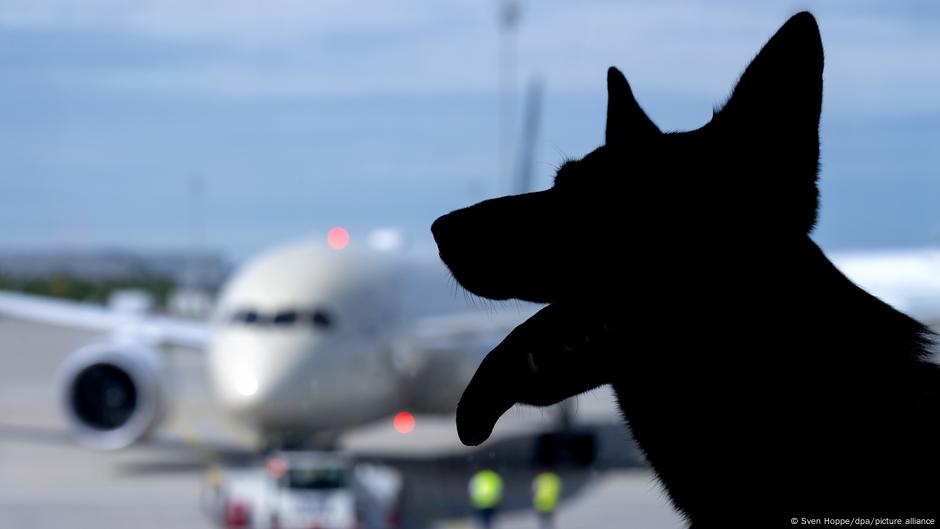
The highest court of the European Union decided that animals should be classified as baggage, not travelers. However, this was not the only aviation-related case before the court.
The European Union’s Court of Justice (CJEU) addressed two aviation-related appeals on Thursday, providing non-binding rulings following questions from courts in Austria and Spain.
In both cases, it supported the airlines against the appellants.—with a passenger claiming compensation for a seven-hour delay caused by lightning, and with a woman requesting further non-material damages for her lost dog on the other side.
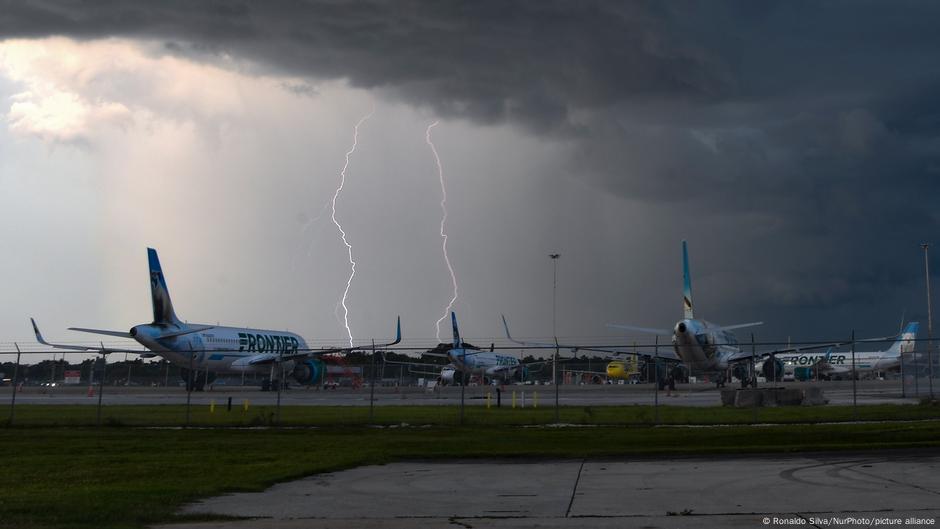
Lightning strikes may be considered ‘extraordinary circumstances’ and can restrict liability
In the first instance, a traveler who faced a significant delay while waiting for a flight from Iasi, Romania, to Vienna, Austria, utilized a German online platform that focuses on pursuing compensation from airlines to file a claim for €400 (approximately $465).
Austrian Airlines, on the other hand, claimed that a lightning strike on the aircraft just before it arrived in Iasi, which resulted in required safety checks, was considered an exceptional situation and therefore reduced its legal responsibility for the delay.
The court determined that a lightning strike can be considered an extraordinary situation, as long as the airline demonstrated that it took all reasonable steps to prevent the extraordinary situation and its outcomes, such as a prolonged delay. The Austrian court was responsible for deciding whether this was true, according to the CJEU.
It mentioned that the required inspections are a step taken to guarantee safety. The CJEU stated that its decision was partially intended to stop airlines “from being motivated to avoid taking the necessary actions and to place the maintenance and on-time performance of their flights above the goal of safety.”
Although the idea may seem concerning, lightning strikes are quite frequent in aviation. According to most estimates, a commercial airplane is expected to be struck by lightning once or twice annually, on average, depending on conditions such as the weather along its flight path or paths.
Contemporary design elements, backup systems for essential functions, and the use of an aluminum fuselage in aircraft, which serves as a Faraday cage, ensure that attacks, which led to several significant plane accidents in previous years, now rarely present a major risk to modern commercial airplanes during flight. Nevertheless, such incidents can result in damage that requires repair while the aircraft is on the ground.
Pets carried in the cargo area are considered baggage, not travelers
The second case on Thursday concerned an occurrence that one would anticipate to be considerably rarer than lightning causing a flight delay.
A woman from Spain was taking legal action against Iberia Airlines following the disappearance of her dog at the airport in Buenos Aires.
“The dog was lost while being taken to the plane and could not be found,” the CJEU stated in brief.
The traveler requested €5,000 (approximately $5,800) as compensation for non-material harm caused by the loss of her dog.
Iberia, on the other hand, acknowledged its responsibility and the woman’s right to compensation, but claimed that this should be within the established limit for lost baggage.
The Spanish court handling the case referred it to the CJEU, inquiring if the term “baggage” under the Montreal Convention relating to air travel includes or excludes animals accompanying travelers.
“Under the Montreal Convention, apart from the transport of cargo, aircrafts carry out international transportation of passengers and luggage,” stated the CJEU while summarizing its ruling.
The idea of ‘persons’ is similar to that of ‘passengers,’ which means a pet cannot be classified as a ‘passenger,’” it stated. “As a result, in terms of air travel, a pet is included under the category of ‘baggage,’ and the compensation for damage caused by losing a pet is governed by the liability rules for baggage.
It mentioned that the passenger had not completed a specific declaration of interest in the delivery, a formal procedure requiring an extra fee, which would have enabled them to raise the liability limit for the valuable cargo.
It stated that EU regulations regarding animal welfare protection did not prevent pets from being classified as “baggage” in aviation legal cases, “provided that complete attention is given to animal welfare standards during their transportation.”
Edited by: Roshni Majumdar
Writer: Mark Hallam (with AFP, dpa)



 jasdooit
Leave a comment