
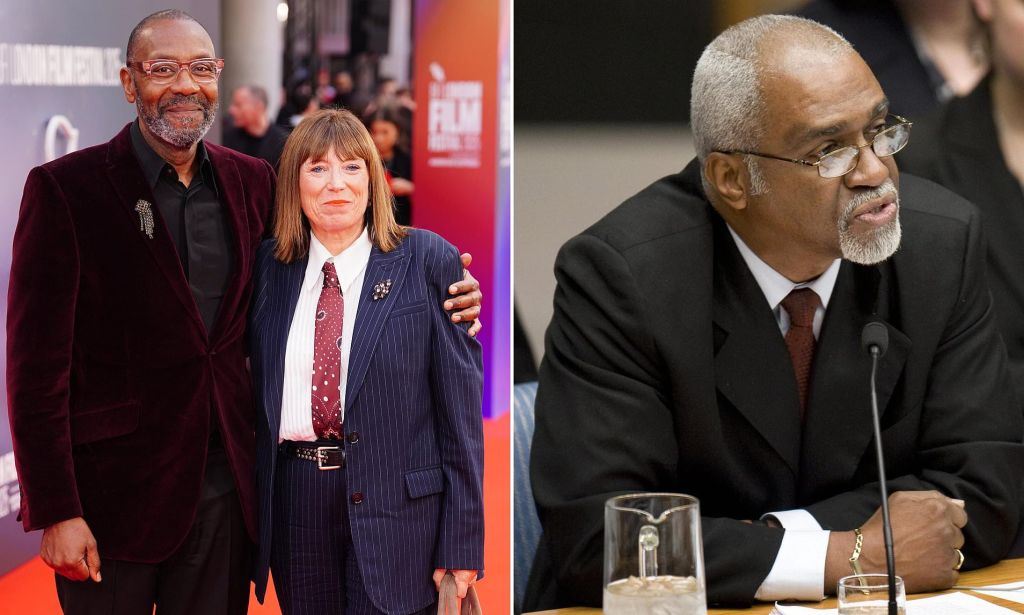
Sir Lenny HenryThe former UN judge who conducted the study stated today that the claim that the UK owes over £18 trillion in slavery reparations was taken out of context from a report.
The comedian has claimed in his latest book that every Black Briton deserves compensation and proposed a ‘Robin Hood tax’ on financial dealings to support it.
Sir Lenny also referenced a statistic from a study released by the University of the West Indies in June 2023, which stated that the UK was owed over £18 trillion in reparations.
The research indicated that if the UK settled the reparations over the next 25 years at an interest rate of 2.5 percent, it would amount to roughly £740 billion annually.
The report also mentioned that the total amount could be distributed among 14 countries, including former Caribbean colonies – and did not provide any data regarding the UK’s black population.
Sir Lenny mentioned this in his book and asserted that Britain ought to provide an unspecified additional sum of money to its Black community due to the ‘impact of slavery’.
However, the report’s writers have informed the Daily Mail today that Sir Lenny’s application of their analysis was wrong, as their overall figure was merely an approximation used to gauge damage.
They mentioned it was meant solely as a foundation for conversations about reparations — not as an ‘invoice’ targeting the UK and other nations referenced in the study.

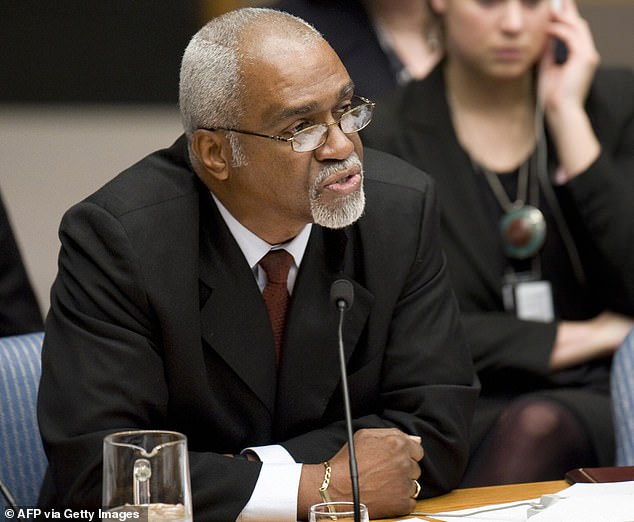
The report by The Brattle Group, titled “Reparations for Transatlantic Chattel Slavery,” was supported by Patrick Robinson, a former judge at the International Court of Justice.
He assembled a team of economists, legal experts, and historians for what remains recognized as the most thorough effort to determine a reparations figure.
In a letter to the Mail, Mr. Robinson stated: “The report is divided into three sections – the introduction; the Brattle analysis; and three appendices outlining potential periods when former slaveholding states could make reparations.”
Unfortunately, Sir Lenny’s book does not address the significant exception to the measurement.
He mentioned that the criteria can be found in the report’s introduction, and cited the part that says: ‘It should be clarified that the amounts listed in the payment schedules are only advisory.’
It is up to the victim state’s sovereign decision to decide on the amount, apart from the compensation it is entitled to, that it will accept as reparations.
As an example, Mr. Robinson mentioned the figure of £7.2 trillion ($9.6 trillion), which the report indicated Britain could be indebted to Jamaica for reparations.
He stated: “The qualification implies that while Brattle has calculated the amount of $9.559 trillion as reparations, Jamaica remains free to accept any amount between $1 and less than $9.559 trillion after discussions or consultations with the UK.”
The book mentions £18 trillion as the total compensation that the UK is required to pay. Therefore, based on the qualification, this amount could be lowered to a figure considerably less than £18 trillion through discussions or negotiations between the affected countries and the UK.
He mentioned that discussions between the UK and Jamaica would also set the interest rate—either 2.3 percent, 2.5 percent, or a value within that range.
Mr. Robinson mentioned that the additional information in the study held a ‘critical importance of the qualification to the measurement for comprehending the report’.
The judge, who is most recognized for overseeing the trial of the former Yugoslav leader Slobodan Milošević in 2004, supported Sir Lenny’s view that the report ‘does not specifically tackle reparations for black Britons’.
But he also stated: ‘It is recognized, nevertheless, that there is an immediate requirement to tackle the issue of reparations for Black Britons.’
In his publication, Sir Lenny defended the case for reparations for the UK’s Black community, arguing that the causes of current racism and systemic discrimination within police departments can be linked to the transatlantic slave trade.
The book, The Big Payback, also stated that reparations need to ‘tear down the roots’ of Western society founded on slavery and racism and establish ‘new foundations’.
Sir Lenny looked at theories for how such an amount could be generated – given it equates to around seven times Britain’s gross domestic product of £2.7trillion.
One is a financial transactions tax or ‘Robin Hood tax’, which would be a tax on the purchase or sale of bonds, stocks and derivatives, or foreign exchange transactions.
Economist Bhavik Doshi, who researched the idea in 2023 and is quoted in the book, said that if a tax of 1 per cent on the transaction value was applied to the buyer and seller on all such global transactions, it could generate up to £117billion per day.
Sir Lenny remarked that he “appreciated the poetic justice” of this situation, considering “the modern global banking system was literally established using the profits from the transatlantic slave trade.”
Another concept also proposed by Mr. Doshi and mentioned in the book was ‘redeployed financial penalties’.
This implies that if a nation is penalized for a crime that is acknowledged on a global scale, the funds collected would be directed towards nations that suffered from slavery.
In the book, released on October 7, Sir Lenny states that “all Black British individuals… require reparations for slavery” and “we personally are entitled to compensation for the impacts of slavery.”
The book fails to explain that the majority of the 2.4 million Black individuals in Britain have direct African ancestry, rather than being descendants of those who were enslaved in the Caribbean.
However, Sir Lenny, along with his co-author Marcus Ryder, a television executive and advocate for media diversity and inclusion, argue that contemporary racism stems from the slave trade.
Sir Lenny claims that “the reason racism exists today, and also… why Black British individuals are significantly over-represented in the prison system” – along with other problems like higher rates of Black unemployment – “is all due to the transatlantic slave trade.”
The book also states that reparations should be utilized to ‘eliminate racism globally’ by facilitating the ‘reallocation’ of power and ‘transforming the way power is distributed within nations and across borders’.
Britain was a key player in the transatlantic slave trade, which reached its height during the 18th century and involved the transportation of millions of Africans across the sea to its colonies in the Americas, the Caribbean, and other regions.
The identical vessels subsequently made their way back to the UK, transporting goods cultivated through slavery, including sugar, tobacco, and cotton, which were widely consumed throughout the nation.
The 1833 Slavery Abolition Act reimbursed British plantation owners for the loss of their ‘property’ – enslaved individuals – yet offered no compensation to the enslaved people themselves.
People who were enslaved have been calling for corrective justice since the 15th century.
However, the UK has encountered growing demands in recent years to implement various corrective actions, such as compensating descendants of enslaved individuals and providing a ‘complete and official’ apology for the effects of colonialism on their cultures and traditions.
Caricom, consisting of 15 Caribbean countries, has introduced a 10-point strategy aimed at initiating discussions on economic growth and reparative justice.
The steps involve a “genuine and formal apology,” psychological recovery efforts for communities of African descent, and assistance with settling domestic debt along with the cancellation of international debt, which they claim are remnants of colonial rule.
Several Labour MPs, including Bell Ribeiro-Addy, have openly condemned the Government for not initiating talks on reparations.
However, Foreign Secretary David Lammy stated in November that he and the Prime Minister were “completely clear” that the UK would “not be providing financial transfers or payments” concerning reparations linked to the slave trade.
Sir Keir Starmer traveled to Samoa in September to participate in a significant gathering of Commonwealth countries, most of which were once part of the British Empire.
And the Commonwealth Heads of Government Meeting (CHOGM) reignited discussions on the current function of the 56-nation organization led by the King.
However, Downing Street consistently stated “we do not provide reparations” and “will not be issuing an apology” in response to the renewed demands from Caribbean countries.
This has been the stance of consecutive UK governments, which have never officially expressed regret for Britain’s involvement in the slave trade.
Sir Keir has previously minimized worries regarding issues from ‘the past’ and argued that the Commonwealth should focus on moving forward as one.
He proposed that initiating a dialogue regarding reparations would lead to ‘never-ending debates’.
The UK government provided £20 million in compensation to slaveholders following the abolition of slavery throughout most of the empire in 1833, representing 40 percent of the Treasury’s yearly revenue at that time.
It needed to secure significant loans in order to generate the necessary funds, with the outstanding debts eventually settled in 2015.
The general population learned about this in 2018, following the Treasury’s social media post, which stated: ‘Millions of you contributed to ending the slave trade via your taxes.’
It caused a reaction, as many were angered to learn their funds had eventually been used to pay 46,000 slaveholders.
The Mail has reached out to the book’s publishers, Faber & Faber, for their response to Mr. Robinson’s statements.
- Should the UK pay an incredible £18 trillion in reparations for slavery to Black Britons? Cast your vote now!
- Will demands for £200 billion in compensation for slavery reshape Britain’s colonial history during the Commonwealth meetings?
- Has the latest publication by Sir Lenny Henry sparked renewed discussion about reparations for slavery among Britain’s Black community?
- Should the UK receive a reduction in reparations due to its significant contribution to ending the heinous slave trade?
- In what ways does David Lammy suggest the UK should deal with its colonial history with African countries in addition to financial compensation?




 jasdooit
Leave a comment