
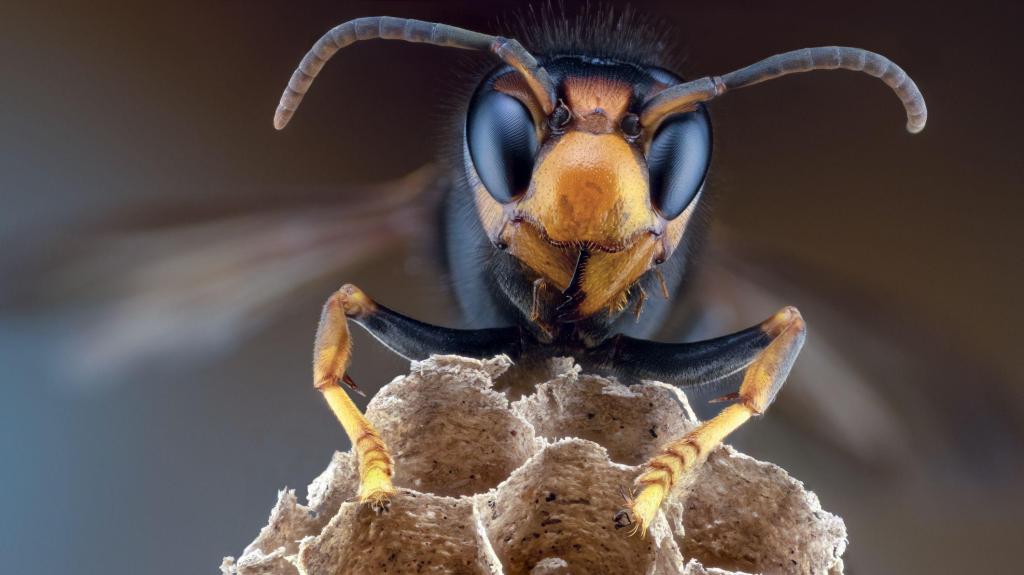
An Asian hornet colony has been discovered in Dundonald, County Down, and is currently being taken out, according to the Northern Ireland Environment Agency (NIEA).
The invasive species was first recorded in the Dundonald region last Friday and further sightings were confirmed on Wednesday.
The NIEA indicated this implied the presence of a nest. Authorities have since found the nest and have organized its management and elimination.
The Minister for the Environment, Andrew Muir, urged the public to “stay alert” as “there might be more still out there.”
Increasing numbers of individual hornets and nests have been documented in southern counties of England, with two nests beingdiscovered and eliminated in County Cork earlier this summer.
‘Taking this very seriously’
Speaking with the Evening Extra show on Radio Ulster, Muir expressed appreciation to members of the public who have shared observations via the Asian hornet watch app.
“This has enabled us to establish a tracking and tracing system in order to accurately determine the nest’s location,” he stated.
It is crucial that we remain alert and encourage people to report any sightings, as the Asian hornet is a significant predator of insects like honeybees and wasps, and could have a substantial effect on our local insect diversity.
Authorities are handling this quickly, and please be assured that we are treating it with the utmost seriousness.
What is a Asian wasp?
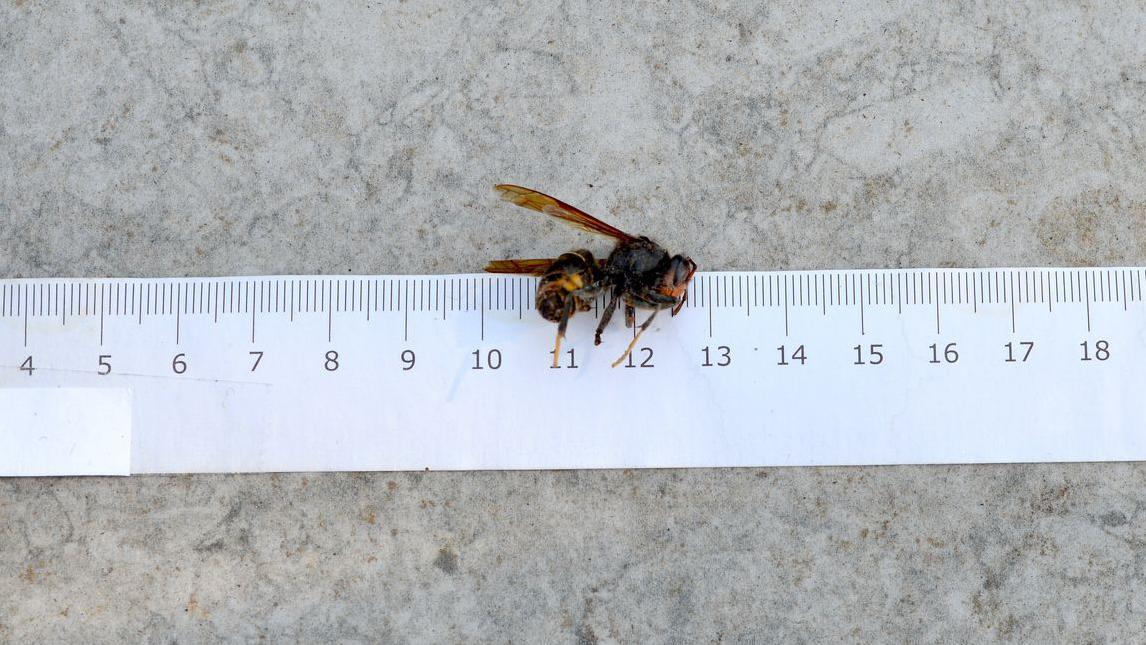
- The Asian Hornet is native to eastern Asia and was initially documented in France in 2004.
- The species is active from April to November, with peak activity occurring in August and September.
- The insect measures approximately 2cm in length, primarily black and brown, featuring an orange face, an orange tail, and yellow legs.
- The yellow-legged hornet may be mistaken for the local European hornet, which is bigger and primarily pale yellow with black markings.
- Their nests are frequently located in hedges or close to the ground.
- The wasps consume over 1,000 different species such as honey bees, bumble bees, butterflies, and beetles.




 jasdooit
Leave a comment