
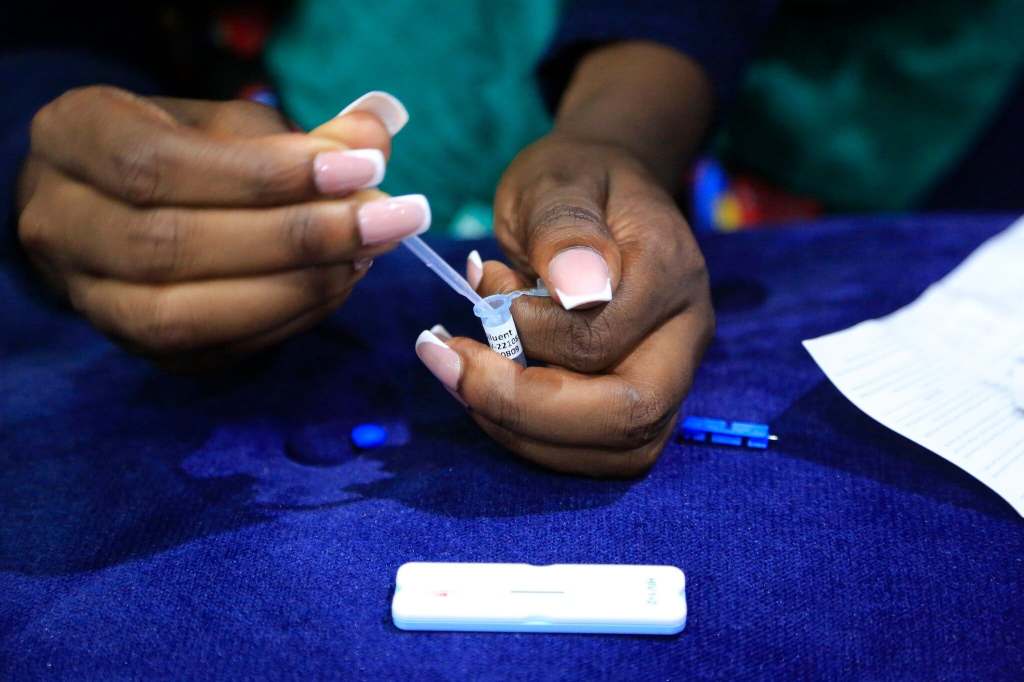
Zimbabwe is one of 10 countries implementing lenacapavir, a twice-yearly injection for preventing HIV. Specialists describe it as a significant advancement, yet residents have concerns regarding its price, security, and availability.
Lenacapavir, the first biannual HIV preventive treatment globally, is scheduled to be introduced in Zimbabwe, one of 10 nations chosen for the initial distribution of the injection-based medication.
We are thrilled to reveal thatZimbabwe was selectedAmong the 10 countries worldwide that have introduced lenacapavir, a significant advancement in the battle against HIV,” the U.S. Embassy in Harare stated in a message on X.
Zimbabwe ranks among the countries with the highest rates of HIV infection globally, as reported, with 1.3 million individuals affected by the virus.figures from UNAIDS, the United Nations program on HIV/AIDS.
A southern African country has recently achieved the UNAIDS 95–95-95 fast-track goals, which indicate that 95% of individuals living with HIV are aware of their condition; 95% of those who know they have HIV are receiving life-sustaining antiretroviral therapy; and 95% of those on treatment reach viral suppression.
Ponesai Nyika, a public health specialist who has worked extensively in HIV/AIDS research and the execution of related programs, stated to DW that Zimbabwe possesses a “strong infrastructure for responding to HIV.”
The arrival of lenacapavir is anticipated to significantly enhance Zimbabwe’s initiatives to eliminate infections.
Backed by solid collaborations such asPEPFAR [the U.S. President’s Emergency Plan for AIDS Relief]and other local organizations … lays a strong groundwork for the implementation of lenacapavir,” Nyika added.
Zimbabwe’s initiative will focus on individuals at higher risk of contracting HIV — such as teenage girls and those who arepregnant and breastfeeding.
What makes lenacapavir a revolutionary treatment?
The World Health Organization (WHO) hails lenacapavir as a transformative step forwardin safeguarding individuals vulnerable to HIV.
“Although an HIV vaccine is still not available, lenacapavir serves as the most promising alternative: a long-acting antiretroviral drug that has demonstrated in trials to prevent nearly all HIV infections in individuals at risk,” stated the WHO’s director general, Tedros Adhanom Ghebreyesus.
UNAIDS has also referred to the drug as a turning point in the fight against HIV.
We are discussing it as a possiblemiracle drugAngeli Achrekar, deputy director of UNAIDS, told DW.
At this moment, the fact that it is almost 100% effective in preventing new infections is impressive, it’s without precedent. It’s the most significant tool we have in the fight against HIV. We don’t have a vaccine or a cure, but this is remarkable.
Lenacapavir is set to be introduced in 120 low- and middle-income nations by 2027, with the potential to greatly decrease the 1.3 million new HIV/AIDS cases reported each year.
Nyika stated to DW that the medication is considered “very effective.”
“Especially for HIV prevention, it has proven to be very effective, which is why it’s so promising when compared to other options. It is highly effective at stopping HIV infections when used properly and regularly,” Nyika said.
The medication has undergone two studies: one in sub-Saharan Africa involving women and girls, and another in the United States.gay and bisexual men along with transgender women.
In both studies, the drug’s effectiveness exceeded 99%, fueling optimism about its “remarkable” potential for preventing HIV once it is fully accessible.
Nyika adds that giving the medication just twice a year enhances its effectiveness by decreasing cases of poor adherence to HIV therapy.
Mixed reactions
Although some people from Zimbabwe are optimistic regarding the introduction of the treatment, others remain doubtful about the drug’s price, security, and availability.
However, Nyika contends that although lenacapavir—like any new drug—may present certain adverse effects, “the data we have indicates that lenacapavir is highly safe and easily tolerated.”
He encouraged African nations administering the medication to be open and clearly convey any adverse effects of the drug to support its acceptance.
Although the drug has received considerable acclaim, its price also raises important questions about how available this “miracle drug” truly is.
“What will it do for us? I’m certain it’s meant for the wealthy,” said a Ugandan citizen to DW, responding to the $40 annual price of the medication, which was initially expected to cost around $28,000 (€24,197) per person each year.
The lenacapavir prevention approach also involves an initial oral dose when beginning the treatment – two tablets to be taken on the day of the first injection and another two tablets to be taken the next day.
To tackle financial issues, Nyika proposes that middle- and low-income nations engage in discussions and consider producing goods locally or within their regions.
“These measures can reduce costs, but utilizing the current supply chain, community health system, and various service delivery modules will contribute to fair access,” Nyika mentioned.
Collaboration with PEPFAR and the Global Fund is anticipated to greatly lower the cost of the “miracle drug.”
Kenya, Nigeria, Zambia, Uganda, Tanzania, South Africa, Eswatini, and Botswana are also included in the list of countries chosen for the implementation by January 2026.
Cai Nebe and Isaac Mugabi provided journalistic coverage
This piece has been modified from an episode of DW’s AfricaLink podcast.
Copyright 2025 Deutsche Welle. All rights reserved. Distributed by AllAfrica Global Media ().
Tagged: Zimbabwe, Health and Medicine, HIV-Aids and STDs, International Organizations and Africa, Economy, Business and Finance, Southern Africa, External Relations
Provided by SyndiGate Media Inc. (Syndigate.info).




 jasdooit
Leave a comment