
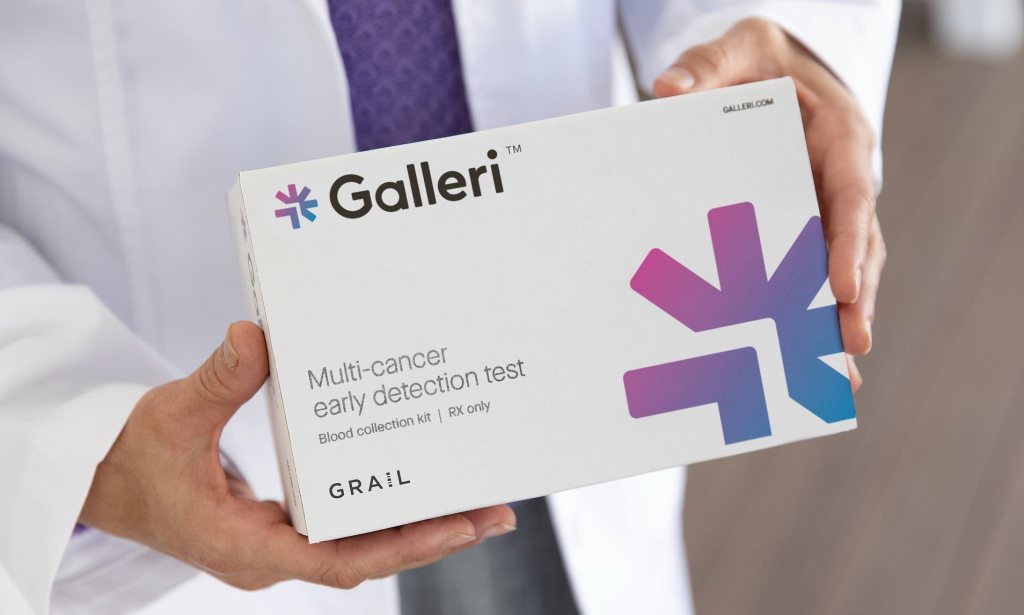
A revolutionary blood test has been discovered to precisely identify nearly two-thirds of lethal cancer cases, according to studies.
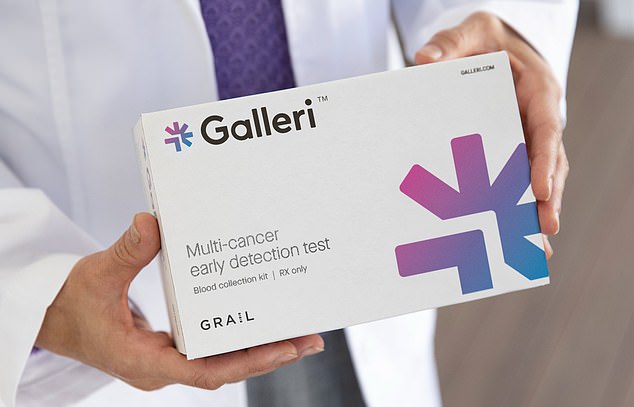
The Galleri test — referred to as the “holy grail” of cancer detection — identifies over 50 types of cancer, frequently detecting indicators prior to the onset of symptoms.
Currently, findings from a major US study with over 23,000 participants indicate it can correctly identify 62 percent of cases.
Researchers also found that it can accurately identify 74 percent of cases among the 12 deadliest cancers, such as colorectal, lung, and pancreatic.
Experts noted that the results, set to be announced at a top-tiercancer conference today, offer the confidence required to expand the test further.
Created by the American firm Grail, it identifies minute pieces of cancer DNA that are present in the blood.
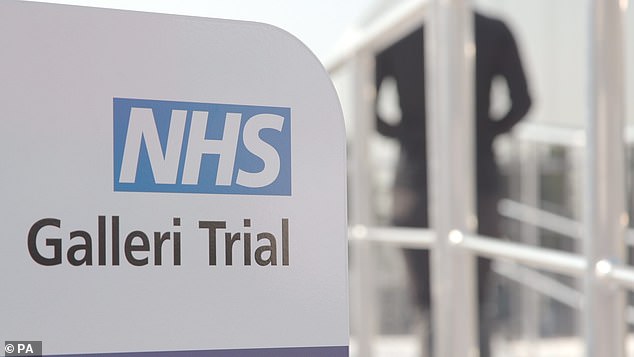
The NHS is currently carrying out a large-scale study of the test, involving over 140,000 participants, and has previously described it as a possible ‘gamechanger’.
Sir Harpal Kumar, president of International Business and BioPharma at Grail, the company that developed Galleri, and former director of Cancer Research UK, statedWe are extremely enthusiastic and believe this marks another significant advancement in fundamentally improving cancer results.
What we aimed to evaluate was the additional benefit the test offers compared to current screening methods?
And one of the most significant and thrilling outcomes is that it identified seven times more cancers than all the other screening programs combined.
He stated: “If we do receive positive outcomes from the NHS Galleri, the potential to detect significantly higher numbers of cancers prior to their clinical presentation implies that we should be able to identify many more cases at an earlier stage.”
This is especially useful for certain cancers where current screening methods are lacking – and for those that are usually detected at a late stage, such as pancreatic, head and neck, liver, and ovarian cancers, among others.
Once we receive those findings next year, we would expect the NHS to swiftly proceed with an implementation evaluation within the NHS.
In the American study, scientists enrolled 23,161 individuals who underwent the blood test and were monitored for a minimum of 12 months.
The test identified a cancer indication in 216 individuals, with 133 of them subsequently receiving a cancer diagnosis.
This corresponded to accurately detecting 61.6 percent of individuals who had cancer, a metric referred to as sensitivity.
In 92 percent of instances, the test was able to identify the specific organ or tissue where the cancer originated, potentially saving time and resources on additional scans and tests.
It also accurately excluded cancer in 99.6% of individuals who were free of the condition, a metric referred to as specificity.
However, the test showed better results for 12 cancers where tumors typically release larger quantities of abnormal DNA into the bloodstream and are associated with lower survival rates, such as bladder, colon, stomach, liver, lung, esophageal, and pancreatic.
The precision for this group stood at 73.7 percent during stages one to three, with the test proving more effective in detecting cancers at a later stage.
Cancer is divided into four stages, with stage four being the most advanced, where the majority of cancers are considered incurable.
The findings from the trial will be fully disclosed at the annual meeting of the European Society of Medical Oncology in Berlin.
In response to the results, Professor Nitzan Rosenfeld, head of the Barts Cancer Institute at Queen Mary University of London, who did not take part in the study, remarked that they were ‘impressive’.
The 62 percent accuracy rate was also“very promising and offers solid proof that this test might be safe and useful,” he added.
However, he emphasized that additional information was essential before implementing the test.
Professor Anna Schuh, a specialist in molecular diagnostics at the University of Oxford, who was also not part of the trial, stated that the 62% result was “disappointing because it is only slightly better than flipping a coin.”
She said: ‘Although it is more effective than existing screening tests, where most positive results ultimately prove to be false.’
The Grail states that its Galleri test will not substitute for regular cancer screenings and should be used alongside them.
The NHS currently offers screening initiatives for breast, cervical, and bowel cancers.
Approximately 385,000 individuals in the UK receive a cancer diagnosis annually, translating to over 1,000 new cases identified daily.
Studies released in the journalBMJ OpenIn May, it was discovered that an annual blood test for cancer could result in 49 percent fewer late-stage diagnoses and 21 percent fewer deaths within five years when compared to patients receiving standard care.
- Is this innovative research set to enable more effective cancer testing throughout the UK?
- Could a pioneering UK study revolutionize the identification of prostate cancer and save countless lives by detecting aggressive cases at an early stage?
- Could revolutionary annual blood tests represent a major advancement in detecting cancer early, reducing late-stage diagnoses by almost 50%?
- What potential does the NHS’s “exciting” new cancer blood test, priced at only £120, have in saving lives and reducing expenses?
- Can groundbreaking NHS blood tests genuinely revolutionize cancer treatment by identifying as many as 12 distinct forms of the disease at an earlier stage?

 jasdooit
Leave a comment