

A widely used medication for pain relief might havecancerfighting characteristics, reducing the likelihood of uterine, intestinal, lung, and prostate cancers, according to specialists.
Ibuprofen, a medication used to ease a range of issues such as headaches and muscle spasms, could also slow cancer progression and change the way DNA is organized inside cells, possibly enhancing immunotherapy approaches, according to medical professionals.
The analgesic, a non-steroidal anti-inflammatory drug (NSAID), functions by inhibiting two important enzymes known as COX-1 and COX-2 that transmit pain signals to the brain.
These enzymes metabolize fats in the body into prostaglandins, a substance linked to pain, with COX-2 being responsible for inflammation.
By preventing these pain signals, ibuprofen may assist in decreasing inflammation and cell proliferation—such as the growth of tumors—according to Professor Ahmed Eldbewidy, an expert in cancer biology and clinical biochemistry at Kingston University.
Writing in the Conversation, the researchers referenced a recent study, published in theEuropean Medical Journal, which discovered that the painkiller could reduce the risk of endometrial cancer, the most prevalent form of uterine cancer.
One of the major controllable risk factors for endometrial cancer, which develops in the uterine lining, is being overweight or obese, as additional body fat raises oestrogen levels—a hormone that may lead to unregulated cell proliferation.
Other recognized risk factors are age, hormone replacement therapy (HRT) that uses only oestrogen, diabetes, and polycystic ovary syndrome (PCOS)—which specialists believe could result from hormonal imbalances.

Women who experience early menopause, late menopause, or do not have children may face a higher risk of uterine cancer, with the number of cases doubling in the past two decades.
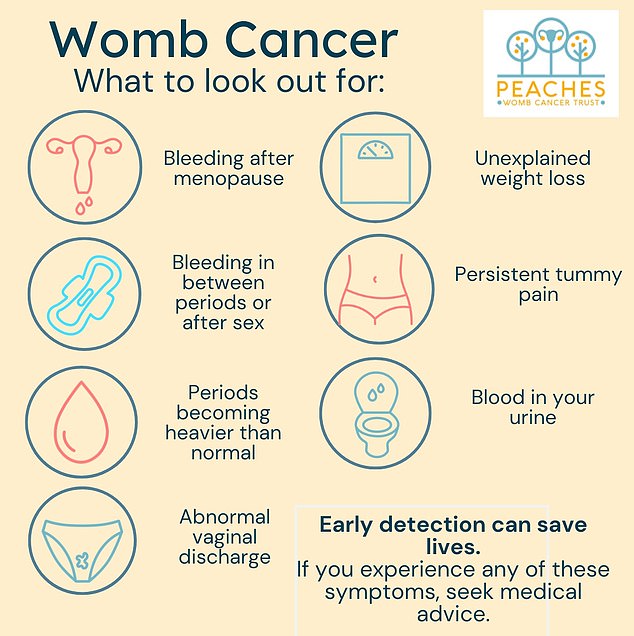
Uterine cancer usually originates in the inner layer of the uterus, leading to irregular bleeding, discharge that might look pink or brown, and ongoing stomach discomfort.
In the research, scientists examined information from more than 42,000 women between the ages of 55 and 74 participating in the Prostate, Lung, Colorectal and Ovarian (PLCO) Cancer Screening Trial, during a 12-year span.
They discovered that individuals who consumed a minimum of 30 ibuprofen tablets per month experienced a 25 percent lower risk of developing endometrial cancer compared to those who took fewer than four tablets a month—whereas aspirin did not demonstrate any significant impact.
The scientists mentioned that their results provide fresh understanding regarding possible methods to prevent cancer, particularly for women who have heart conditions.
However, the possible cancer-fighting properties of ibuprofen go further, according to Prof Eldbewidy; it could also lower the risk of bowel, breast, lung, and prostate cancers.
For example, a 2016 study discovered that individuals who had survived bowel cancer were less prone to experience a recurrence if they used ibuprofen. Additional research has indicated that this pain medication may restrict the growth of colon cancer, and someevidence even implies a possible protective benefit against lung cancer in smokers by decreasing long-term inflammation.
Nevertheless, the expanding range of studies is contradictory, with a recent analysis indicating that consistent use of NSAIDs such as ibuprofen might raise the likelihood of kidney cancer, underscoring the intricate relationship between inflammation and cancer.
For the time being, Professor Eldbewidy states: ‘The notion that a simple painkiller might aid in cancer prevention is both thrilling and thought-provoking.’
If subsequent research verifies these results, ibuprofen could potentially become a component of a wider approach to lowering cancer risk, particularly among those at higher risk.
However, since regular use involves considerable risks, experts recommend concentrating on lifestyle elements, such as consuming more anti-inflammatory foods, keeping a healthy weight, and staying physically active to help prevent illness.
Cancer cases are expected to reach unprecedented levels by 2040, with a British person being diagnosed every two minutes.
The study, conducted by a group of 60cancerOrganizations known as One Cancer Voices indicate that the most prevalent cancers—breast, prostate, and lung—are expected to reach record numbers, with over 63,000 cases forecasted in children and young individuals.
The risks
And it’s not as if ibuprofen is a miraculous medication, as medical professionals have long cautioned that frequent usage can raise the chances of kidney failure, stroke, and heart attack.
Dr. Dean Eggitt, a GP and CEO of the Doncaster Local Medical Committee, previously informed the Daily Mail that even slightly surpassing the prescribed dose over a period of a week or month, rather than just a single day, may result in lasting kidney harm.
This occurs due to the way the medication is metabolized in the body, causing irritation to the stomach lining and raising the likelihood of developing stomach ulcers, which may result in peritonitis.
Peritonitis develops when the abdominal lining gets infected, which may result from excessive use of pain medications.
If not addressed, the condition can pose a serious risk to life. The peritoneum surrounds internal organs such as the kidneys, liver, and intestines, which may suffer damage when the lining becomes infected.
- Can this common pain medication reduce the risk of bowel cancer by 50%?
- Is your reliable ibuprofen potentially causing serious harm to your well-being, posing dangerous risks such as heart failure and stomach ulcers?
- Could taking a simple daily aspirin potentially reduce your chances of developing severe colon cancer by half?
- Could you rethink the possible advantages of aspirin, even with previous concerns about bleeding dangers, particularly given recent findings that emphasize its positive effects for individuals with cancer?
- Are your preferred pain relievers potentially leading to a major health crisis? Learn about the concealed risks associated with excessive use of paracetamol and ibuprofen.




 jasdooit
Leave a comment