

A video meant to be viewed briefly before bedtime continues until morning. Although promising to avoid alcohol, one gives in to the temptation of having “just one drink.” Even after deciding to diet, one reaches for snacks, and despite having unnecessary items piling up, the payment button is clicked once more. Is there something you know you should stop but can’t? If so, you are addicted. Modern individuals face numerous addictions: alcohol, tobacco, food, shopping, gaming, and social media. They overeat, overwatch, overdrink, and overindulge. In a world where a single touch on a smartphone brings instant pleasure, dopamine plays a central role. Dopamine, a neurotransmitter produced in the human brain, is also known as the “pleasure hormone.” When released, it creates feelings of happiness and satisfaction, and the brain remembers this joy, encouraging repeated actions. If released too intensely or frequently, addiction develops.
In recent years, the term “dopamine” has become a popular buzzword in Korean society. Phrases such as “dopamine explosion” and “dopamine recharge” are frequently used in everyday conversations. In this context, the book *Dopamine Nation*, which examines modern-day addiction through a neuroscientific lens, has sold more than 200,000 copies in South Korea since its local release in 2022. This indicates that many individuals are highly conscious of addiction problems and desire to break free from them.
*The Dopamine Nation* is a worldwide bestseller available in more than 30 countries. Anna Lembke, 58, the writer and a psychiatry professor at Stanford University School of Medicine, who has worked with addiction patients for 25 years, was interviewed. “It’s genuinely challenging to live without addiction in this time. Our brains haven’t developed to keep up with this wealthy world. It’s like a cactus placed in a tropical rainforest, as we are surrounded by an overabundance of dopamine.”
She likened smartphones to “contemporary hypodermic needles delivering digital dopamine around the clock.” Professor Lembke cautioned, “An addicted brain is incapable of experiencing happiness, and addiction changes certain areas of the brain permanently,” but then offered a soft smile. “Nevertheless, there is hope. Regardless of the addiction, attempt to quit for just one month. Following that, simple, long-forgotten pleasures will be waiting.”
—In your opinion, what constitutes addiction?
◇Joy is Frequently Accompanied by Suffering
It refers to a condition where someone persistently uses a substance or engages in a behavior, even if it causes harm to themselves or others. Despite the desire to stop, they find it difficult, constantly thinking about it, leading to the breakdown of relationships or health. Individuals seek more intense experiences and may face withdrawal symptoms such as anxiety or depression when attempting to quit. What I highlight is that addiction is considered a disease of the brain.
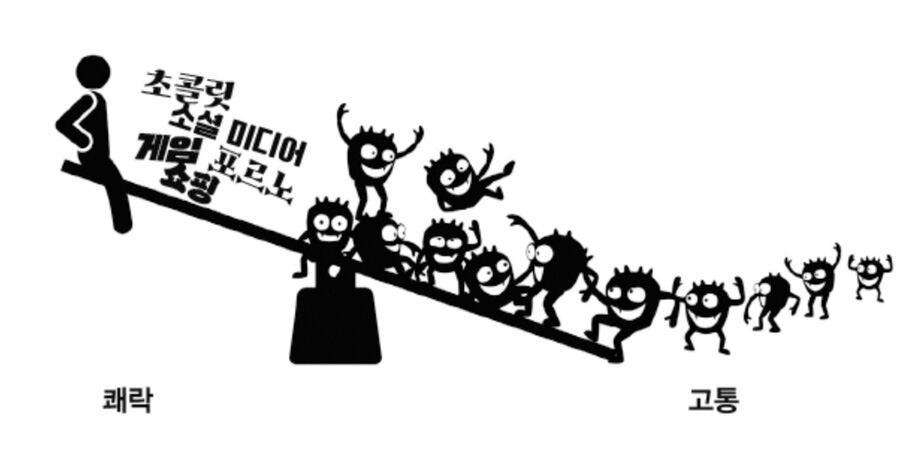
Why do people develop addictions? Professor Lembke proposed visualizing a teeter-totter in a playground. The brain handles both pain and pleasure within the same system, with each feeling at opposite ends of the teeter-totter. This teeter-totter constantly strives for balance. When dopamine is released, the teeter-totter shifts toward pleasure, but the brain quickly pushes down the pain side to bring things back into equilibrium. “I often liken this mechanism to ‘tiny monsters jumping onto the pain side.’ Whenever we experience pleasure, these creatures climb onto the pain side to restore balance. The issue is that they don’t depart right away. They stay, causing the brain to lean more toward pain. This is when a hangover occurs, and the desire for ‘just one more drink’ emerges.”
—What is the reason behind the brain’s structure?
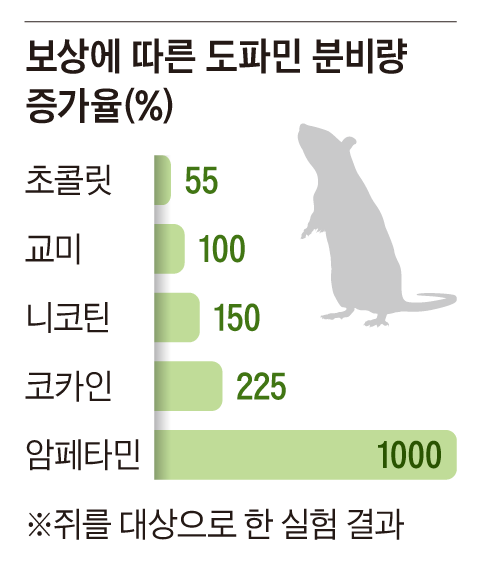
In a time of scarcity and risk, this seesaw provided a survival benefit. It kept us always wanting more. However, in today’s world filled with plenty and quick gratification, this system turns into a pitfall. If the state of pursuing ‘just a bit more’ persists for days, weeks, or months, the monsters grow in number and settle on the side of suffering. Eventually, one no longer experiences joy. One drinks or watches videos simply to escape the feeling of despair.
—Is dopamine itself bad?
No. It is crucial for survival. The problem lies in how it is acquired. Humans developed to receive minor rewards following substantial effort, yet now we gain major rewards with minimal effort. Regular exposure to artificially enhanced pleasure harms the brain’s reward system. Positive alternatives involve spending time in natural environments, engaging with others, or completing challenging tasks.
—Your book generated significant attention in South Korea.
Many Koreans appear to connect addiction problems with their personal experiences. South Korea quickly adopted capitalism and experienced impressive growth. Addiction represents the negative aspect of this success. Sudden transitions from collectivism to Western-style individualism led to a sense of identity confusion. In highly competitive, goal-oriented societies, people are more susceptible to addiction. Fast-paced technological progress has also increased digital addiction.
She got numerous emails from Koreans. “Accounts of digital addiction to YouTube, social media, OTT platforms, and gaming came in. Many described intense anxiety without their smartphones,” she said. She further noted, “Young men frequently shared difficulties with pornography or sexual addiction.”
Professor Lembke pointed out that the brain’s pleasure-point adjustment takes place not just on an individual level but also on a national scale. “Rates of depression, anxiety, and suicide are increasing rapidly in wealthy nations. Despite having plenty, we ironically experience a lack of dopamine. We are always seeking something, living in a state of addiction. Today’s individuals associate comfort with happiness, yet real happiness might be found not in significant comfort but in moderate discomfort and challenges.”
Professor Lembke has personally gone through addiction. “At around 40, I developed an unhealthy obsession with romance novels. At first, I didn’t understand how serious it was. I laughed and said, ‘Ha, I’m addicted to romance novels.’ I read them constantly, concealing the provocative covers behind medical journals, purchasing e-readers so I could read whenever I wanted. However, I became more and more depressed.”
◇Discard It in the Waste Bin—and Then Get Rid of the Bin
—How severe was it?
I was obsessed with reading for two years, until I had finished every book I could find. I found no pleasure in anything else, and spending time with my family took a backseat to reading novels. One early morning at 3 a.m., while reading an intense passage, I suddenly asked myself, ‘What am I doing?’ I attempted to stop, but I felt nervous, and without reading, my heart pounded, making it hard to sleep. I discarded my e-reader. After a month of completely avoiding books, both my body and mind felt more at ease.
—A month?
From my clinical experience, a minimum of four weeks of abstinence from addictive substances or behaviors is necessary to see results. Ceasing addictive behavior for four weeks reboots the brain’s reward system and lowers tolerance. The brain’s pleasure threshold resets. At first, the balance shifts towards discomfort, causing one to feel unwell. However, after 10–14 days, mood begins to improve. After a month, individuals often realize, ‘What I thought was helping was actually worsening my anxiety and depression.’ Many express, ‘I didn’t know I could feel this good.’ Naturally, this doesn’t mean addiction is completely resolved in four weeks. It marks the initial step in the recovery process, highlighting how addictive behavior impacts one’s life.
—What is the initial step in overcoming an addiction?
Physically prevent access to the addictive item and modify your surroundings to avoid even considering it. Discard it in the trash—and then get rid of the trash can. ‘Reducing usage’ is less effective than ‘completely stopping.’ For severe addictions, professional help is crucial.
Professor Lembke’s main focus is “digital addiction.” She recently acted as an expert witness in legal cases against Google (YouTube), Meta (Instagram), and ByteDance (TikTok) concerning social media dependency. “These platforms need to be held accountable for the damage they’ve done to young people,” she stated. She also mentioned, “Adults watching videos on their phones in front of children is similar to smoking.”
◇Smartphones Act as Digital Dopamine Injectors
—You likened smartphones to needles and digital content to narcotics.
When watching short-form videos, the brain’s dopamine reward system is triggered—similar to the effect of drugs or alcohol. The act of ‘watching videos’ is essentially the same as drug use. Smartphones serve as digital media injectors.
—Aren’t these metaphors exaggerated?
That’s rejecting the truth. Individuals justify it by saying, ‘That’s just the way things are now,’ as digital media becomes more accepted. Many studies connect higher rates of depression, anxiety, and suicide to greater online activity. When smartphones were taken out of schools, students showed better emotional balance, social abilities, and school results. In healthcare environments, patients suffering from depression or anxiety often felt better after limiting their use of electronic devices.
—Is some digital content especially damaging?
Short video clips and adult content. The level of addiction and excitement they generate is extremely high. I am particularly worried about kids and teenagers. Boys tend to be more at risk from adult material and video games, whereas girls face challenges with social media platforms. Their brains, which are still maturing, are much more prone to becoming addicted compared to adults. They need safeguarding.
Professor Lembke is the parent of four children. Before attending high school, none of them owned smartphones or electronic gadgets. “Our household didn’t have smartphones or Wi-Fi for a significant period. When my daughter started high school, she told me, ‘Mom, I can’t complete my homework without Wi-Fi.’ We then set up a Wi-Fi connection and purchased a laptop.”
—At what point did you provide your kids with smartphones?
Two weeks following the installation of Wi-Fi, my daughter stated, ‘I can’t socialize without a smartphone.’ I responded, ‘You can do without it.’ The three older children adapted well, but the youngest was different. She used her phone in class and failed a subject. I took her phone away. Initially, she was upset, but eventually, she settled down. Her grades improved, and she became more content. I am convinced that providing internet-enabled portable devices to children under 13 is completely inappropriate. Even after turning 13, rules such as ‘no devices in the bedroom’ are essential. Parents need to lead by example.
Professor Lembke commended South Korea’s planned restriction on smartphone usage in classrooms, calling it “a great step, eliminating slot machines from students’ pockets.” She further stated, “Addiction is a societal problem, not just an individual one, therefore governments need to take action.”
—What community initiatives are required?
Initially, reflect on ‘edutech.’ The idea that increased technology in schools is beneficial is already losing support. Following the implementation of technology, student performance in reading, writing, math, and creativity showed a decline. It’s intriguing that affluent tech entrepreneurs from Silicon Valley choose to send their children to schools without technology. Those who develop digital devices and content also need to share accountability. Similar to how children are not allowed to gamble in casinos, digital media should be subject to comparable regulations. Society needs to restore a culture of positive incentives, such as sports or community involvement, which encourage meaningful human interactions.
She finished her psychiatry residency at Stanford in 1998. As a recent graduate, she steered clear of patients struggling with addiction. “My father was an alcoholic, so I wanted to avoid addicts.” Her perspective shifted in 1999 while working at a private clinic. “A patient’s brother reached out after she was involved in a traffic accident. ‘She relapsed,’ he said. ‘Relapsed from what?’ I inquired. ‘Heroin. weren’t you treating her?’ I was shocked.”

◇Any Addict Can Improve
—Were you not aware that the patient was addicted?
I never inquired about drug use, even following a review of her family background. I overlooked her genuine suffering. I was a poor psychiatrist. That’s when I started delving into addiction seriously.
Professor Lembke stated, “It’s important to understand addiction as a neurological condition that can affect anyone. It is a physiological reaction when the brain encounters specific substances. Grasping this changes the perception of addicts from being seen as ‘weak’ or ‘morally flawed’ to ‘individuals requiring medical care.’”
—What have you gained from working with individuals struggling with addiction?
I discovered the strength of being truthful. Addiction leads to deception. At first, people lie to conceal their addiction, but eventually, every action becomes a lie. Individuals who maintain recovery have one thing in common: they steer clear of even minor lies to themselves or others. Recovery starts with acknowledging one’s actions and speaking the truth, no matter how challenging. This honesty transforms the brain and brings life back.
—Suggestions for individuals seeking to break free from addiction?
Your issue is not just personal. Everyone either experiences or will encounter addiction. To clarify, take a break for 30 days. A more significant transformation will happen than anticipated. Every person struggling with addiction can get better. You will find joy in basic pleasures such as walking or having meals with friends.
She wishes her tombstone to say, “Do hard things,” a statement directed at people in the era of addiction.




 jasdooit
Leave a comment