

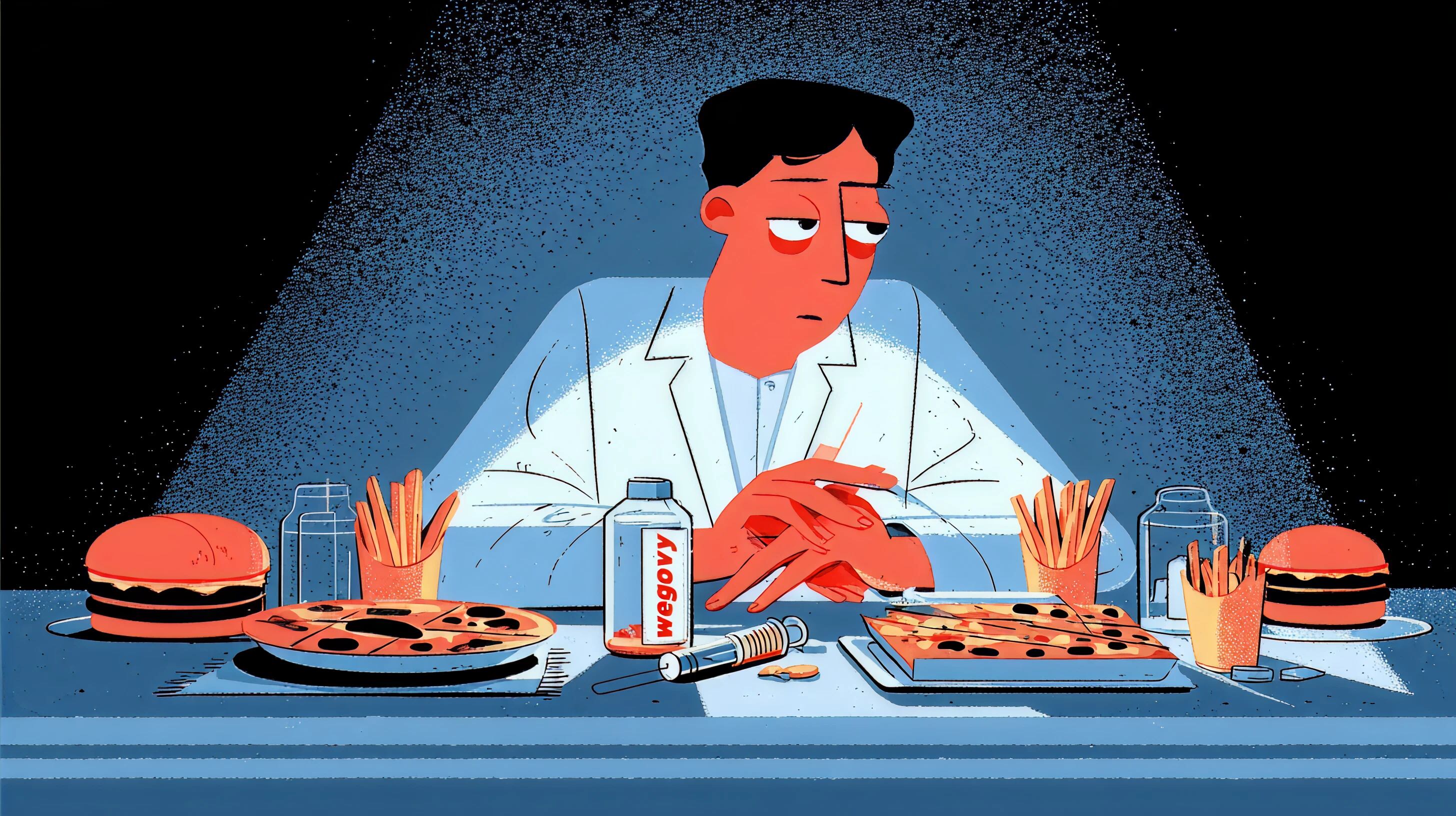
Nowadays, I frequently observe individuals placing wagers on the number of kilograms they will shed following the use of Wegovy. Those in my vicinity have even reported losing more than 30 kg. Their typical statement is, “I don’t feel like eating.” Individuals who previously had a habit of consuming entire large boxes of snacks at once now mention feeling satisfied after just a few bites.
As stated in the book *The Desire to Eat* by Choi Hyung-jin and Kim Dae-su, hunger is not solely a physical process but also an emotional response. This is evident in how food corporations combine various spices and artificial ingredients to encourage overeating even when the stomach is already full. It suggests that appetite is not a fixed state but an emotion that can be influenced. As the authors explain, “Humans are excellent energy hunters,” indicating that our brains constantly look for more energy than what is needed for basic survival. Even after feeling full, the idea that “there’s a separate stomach for dessert” comes from this perspective. Likewise, becoming a mukbang content creator like Tzuyang is not about innate talent but the outcome of continuous practice.
So, what does it mean to not only suppress hunger but completely eliminate the desire to eat? It suggests that the GLP-1 hormone influences the brain, decreasing appetite even when someone smells food. In addition, this hormone helps with weight loss and lowers the chances of developing diabetes, high blood pressure, and heart disease. Because of these findings, the U.S. has started offering health insurance coverage for patients with cardiovascular conditions. Now, we are in an age where appetite is being altered, not just controlled.
But is this entirely beneficial? The trend of showcasing workout and weight-loss progress on social media could diminish, giving way to a culture centered around drug use. As Susan Sontag noted, we should not impose moral judgments on illnesses—obesity is a medical condition, not a sign of “laziness.” Yet, if numerous issues can be easily addressed with medication, what does that mean for the value of exercise and self-control? Is Aristotle’s idea that “temperance brings the greatest joy” becoming outdated? The age of self-discipline is fading. Are we gaining more freedom, or losing strength?

 jasdooit
Leave a comment